


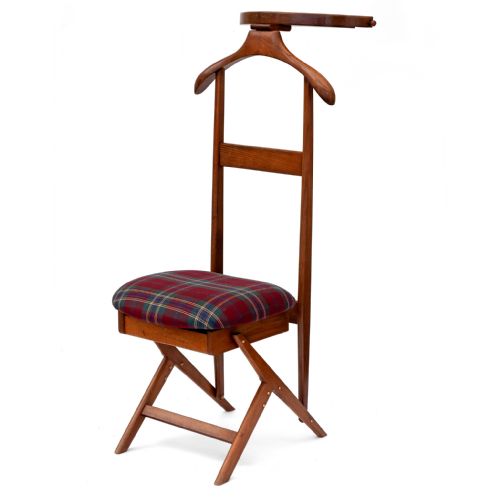


Vintage Folding Butler Stand
A vintage folding butler stand is a portable serving surface with a collapsible base, offering period character and practical utility for modern interiors.
Vintage Folding Butler Stand
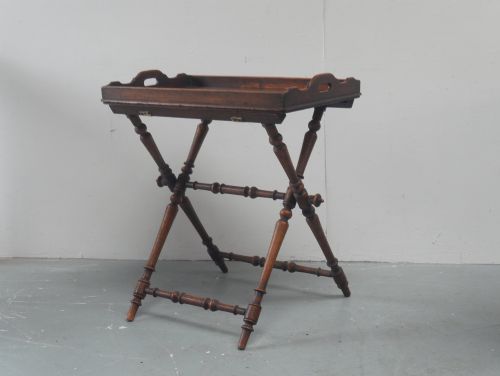
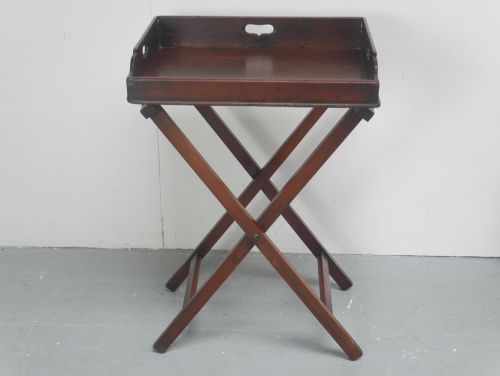
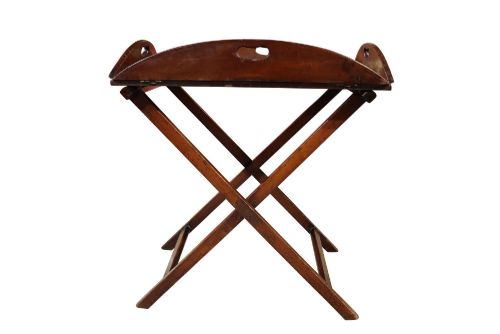
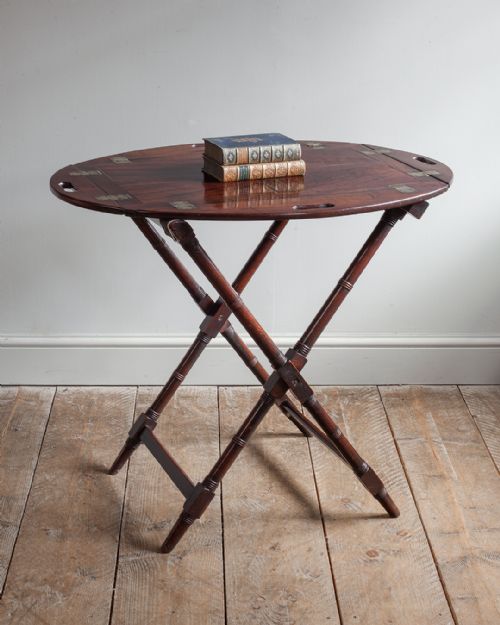
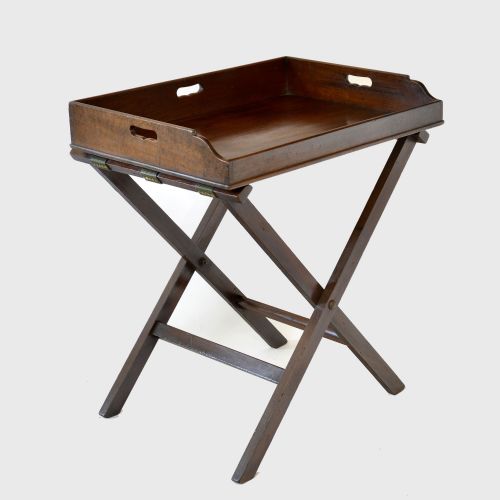
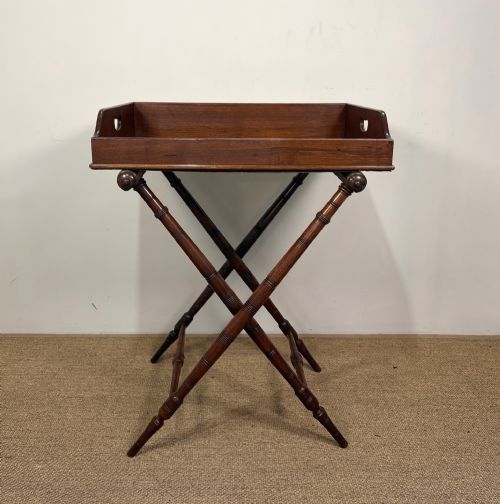
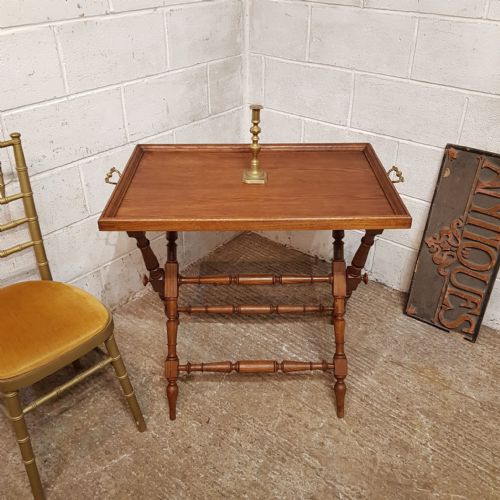
A vintage folding butler stand combines a removable serving tray with a collapsible X-frame base, designed originally for domestic service in large households. These pieces appear frequently as mahogany or oak tray tables originating from the Georgian, Victorian, and Edwardian eras.
The most common formats on this page pair rectangular timber trays with hinged folding stands, occasionally featuring gallery edges or integrated carrying handles. Alongside traditional butler trays, the selection includes occasional tables, valet stands, and related serving furniture.
Origins span English country workshops to continental examples, reflecting domestic utility across the eighteenth, nineteenth, and early twentieth centuries. Surviving pieces demonstrate how furniture was constructed for easy storage when not in use in the dining room or drawing room.
How they were made
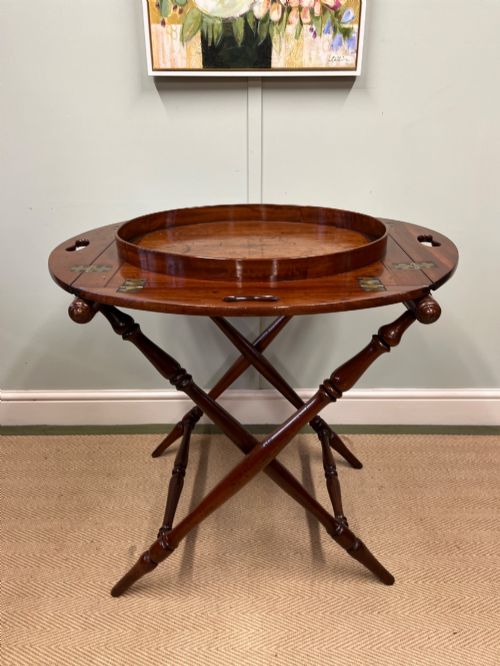
Cabinet makers utilised dense hardwoods like mahogany, oak, walnut, and beech to construct both the trays and the folding bases, ensuring structural rigidity under daily loads. Brass hinges and corner brackets frequently reinforce the joints and folding mechanisms, providing durable articulation.
Tray surfaces often incorporate raised gallery edges, sometimes shaped with hand-cut carrying apertures, joined to the base boards through traditional woodworking joints. Folding stands rely on intersecting cross-legs that pivot smoothly on central pins or pivots.
Webbing materials such as cotton and canvas occasionally appear within the construction of related folding stands and supports, adding flexible tension where required. Surface finishes range from polished timber patination to carved decorative details found on Victorian and Edwardian iterations.
Periods represented span the eighteenth, nineteenth, and early twentieth centuries.
What varies in quality
Quality separates pieces through the selection of timber grain and the precision of the joinery connecting the tray gallery to the base board. Dense, well-figured mahogany or quarter-sawn oak indicates superior workshop origin compared to utility grades.
The smoothness and stability of the folding mechanism dictate the grade of the stand, with tighter tolerances in the cross-frames marking superior execution. Original brass hardware and intact folding hinges preserve the integrity of the piece far better than later replacements.
Carving depth and proportion distinguish standard utilitarian items from fine decorative examples, such as carved walnut or inlaid Edwardian models. The survival of an original stand paired correctly with its tray elevates the coherence of the object.
Fratelli Rugitti
The Vintage Folding Butler Stand Glossary
- Butler tray
- A portable wooden tray with raised sides or gallery edges, often fitted with cut-out handles for carrying food and drinks. It rests upon a separate folding stand when in use.
- Folding stand
- A collapsible wooden base, typically formed of intersecting cross-legs that fold flat for compact storage. These frames support trays, tabletops, and related serving surfaces.
- Gallery
- A raised wooden border running around the perimeter of a tray or table top to prevent items from sliding off. This feature is frequently shaped or pierced for handles.
- Valet stand
- A freestanding piece of furniture designed to hold a suit, trousers, and accessories. These items share overlapping functional origins with traditional butler stands.
- X-frame
- A structural base design utilising two crossed legs that pivot at the centre. This geometry allows the entire support to fold flat when separated from the tray.
Vintage Folding Butler Stand: Frequently Asked Questions
What is a butler stand?
A butler stand is a collapsible wooden frame designed to hold a removable serving tray. Historically used by domestic staff to transport and present refreshments, it functions today as a versatile occasional table.
The design allows the entire unit to fold flat when not in use, making it practical for modern spaces that require flexible furniture. Most examples consist of X-frame legs paired with a rectangular timber tray.
How do I date a butler stand?
Dating relies on timber choice, construction techniques, and stylistic markers visible on the tray and stand. Georgian and Regency pieces typically feature solid mahogany with subtle cockbeading, while Victorian examples often incorporate heavier oak or carved walnut.
Edwardian iterations frequently introduce lighter timbers, inlay work, or alternative formats like cake stands. Examining the brass hardware and joinery helps confirm the period of manufacture.
Are the tray and stand original to each other?
Many surviving trays and stands have been reunited over time due to the portable nature of the pieces. Matching timber patination, wear patterns, and correct sizing provide the best indicators of an original pairing.
Expert inspection of the support ledges and base dimensions reveals whether the tray sits securely and was constructed for that specific frame. Even assembled pairs offer excellent utility and period charm.
How do I care for antique timber?
Antique mahogany and oak require simple maintenance using soft cloths and occasional applications of appropriate beeswax or furniture polish. Avoiding direct sunlight and stable humidity levels protects the timber from drying out or splitting.
Keeping brass hardware clean and ensuring the folding mechanism operates without excessive friction preserves the working parts of the stand. Regular light care maintains the natural patination of the wood.