


Victorian Oak Drink Stand
These Victorian oak drink stand options bring together solid timber and cut crystal, offering a practical setup for hospitality that holds up to daily use.
Victorian Oak Drink Stand
A victorian oak drink stand combines sturdy timber frames with designated spaces for bottles and glassware, often taking the form of a tantalus or a folding tray table. These pieces served a clear purpose in nineteenth-century interiors, keeping refreshment close at hand in studies or drawing rooms.
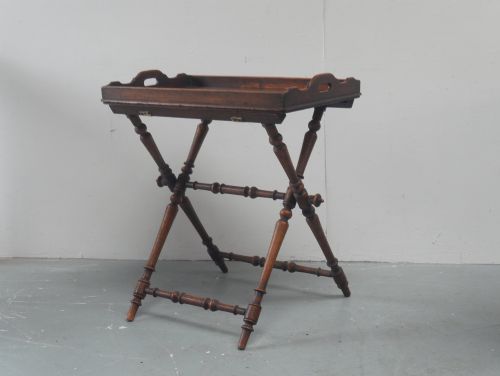
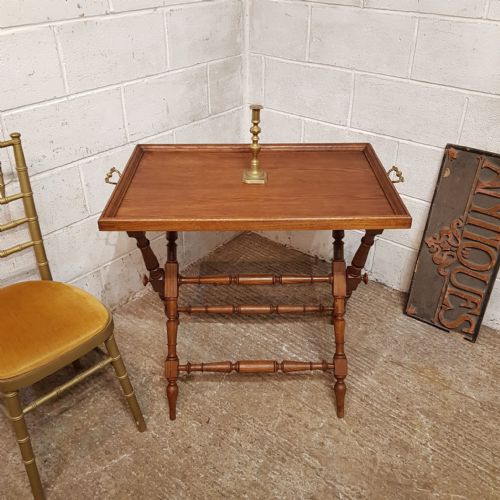
The versions most commonly found here range from robust butlers trays on folding stands to locking decanter frames fitted with brass mounts. They reflect the practical tastes of the period, utilising heavy oak alongside glass and metal to create enduring service pieces.
How they were made
Makers relied primarily on solid oak, sometimes accented with marquetry stringing or carved details such as lion masks. Brass mountings and silver plate provided structural reinforcement and decorative contrast for the timber frames.
Cut glass and crystal bottles formed an integral part of the design, fitted securely into locking frameworks or resting upon removable trays. Joinery methods of the period ensured these stands could support heavy decanters without losing stability.
Some stands retain their original locking mechanisms, meaning the key remains the ultimate guard against unauthorized afternoon sips.
What varies in quality
Quality rests heavily on the crispness of the carving, the weight of the brass fittings, and the integrity of the original glass bottles. Pieces featuring intricate marquetry or specialised locking mechanisms stand apart from simpler utility items.
The condition of the timber surface and the precision of the folding or stationary joinery also distinguish finer examples. Superior stands maintain tight joints and unblemished cut crystal that match the ambition of the original design.
The Victorian Oak Drink Stand Glossary
- Tantalus
- A locking drink cabinet that holds decanters securely while displaying their contents through a wooden and metal bar. The design prevents guests or servants from accessing the spirits without a key.
- Butlers tray
- A removable wooden tray with hinged or fixed sides, designed to sit upon a folding stand for serving refreshments. It allowed staff to transport glasses and bottles easily between rooms.
- Marquetry
- The art of applying thin veneers or inlay of different woods to create decorative patterns on a surface. This technique added visual complexity to otherwise plain oak panels.
- Gothic Revival
- An architectural and decorative style drawing on medieval forms, featuring pointed arches and heavy carved motifs. Pieces in this style display a darker, more dramatic aesthetic.
- Silver plate
- A thin layer of silver fused to a base metal, commonly used for the handles, lock plates, and mounts on drinks furniture. It provided the appearance of solid silver at a lower cost.
Victorian Oak Drink Stand: Frequently Asked Questions
How do I use a tantalus?
A tantalus secures your decanters behind a locking metal bar, requiring a key to release the bottles for pouring. It keeps spirits safely contained while displaying the crystal clearly.
Place the stand on a sturdy surface in a dining room or study where the locking mechanism is easily accessible for serving guests.
Are the trays removable?
Many butler tray styles lift completely off their folding wooden bases to allow easy transport of glasses and bottles. This dual functionality made them practical for serving drinks across different rooms.
Check the specific construction of the stand to see if the tray lifts away or remains fixed to the frame.
How do I care for the oak?
Keep the timber clean using a soft cloth and avoid placing the stand in direct sunlight or near heat sources that might dry out the wood. Regular dusting preserves the natural finish without requiring heavy polishes.
Treat the brass mounts and glass components separately with appropriate non-abrasive cleaners to maintain their condition.
What styles are available?
The selection includes plain utilitarian trays, Gothic Revival pieces with heavy carving, and Flemish Renaissance Revival designs featuring lion masks. Each style reflects the diverse aesthetic preferences of the nineteenth century.
Choose a style that complements your existing interior decoration, ranging from simple country pieces to more ornate cabinets.