








Wooden Folding Screen
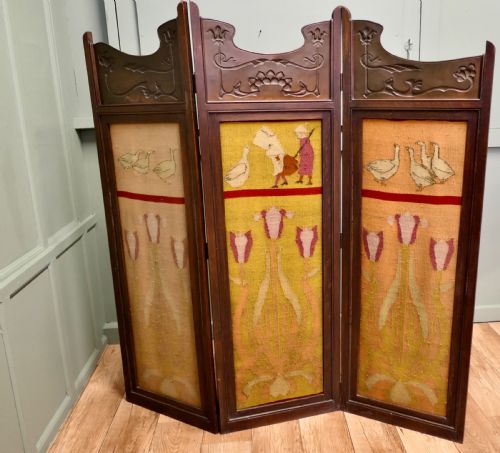
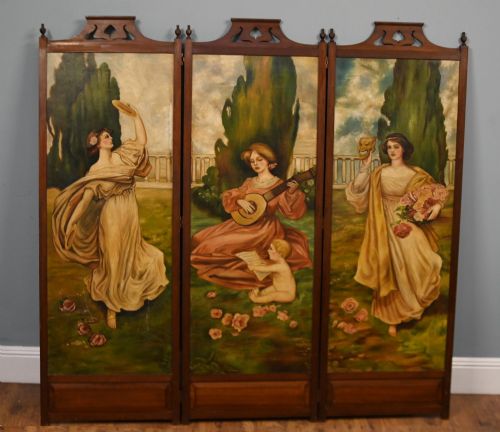
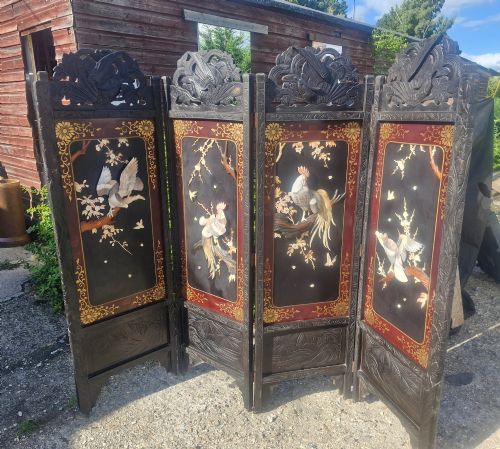
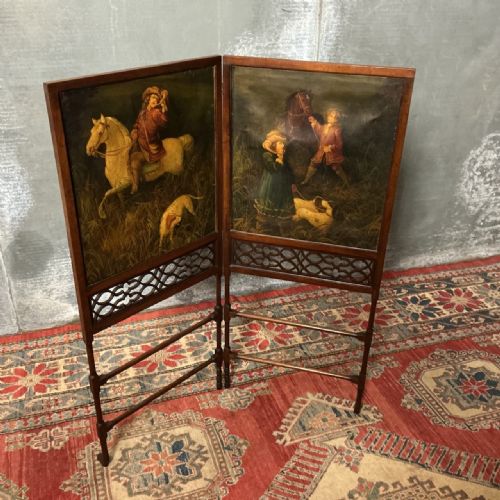
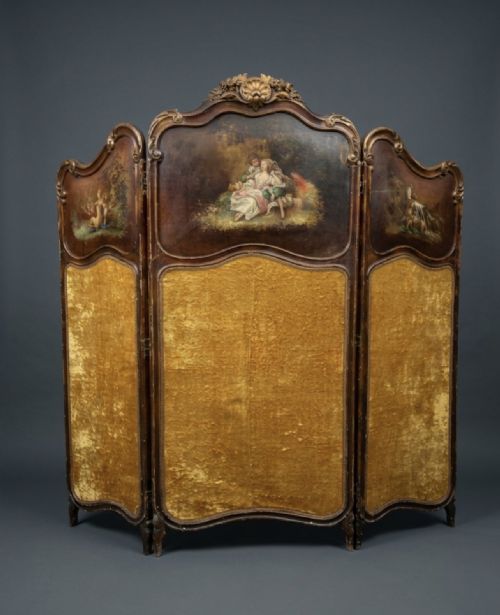
A wooden folding screen partitions a room or frames a hearth with panels of lacquer, needlepoint, carved bone, or oil paint.
Wooden Folding Screen
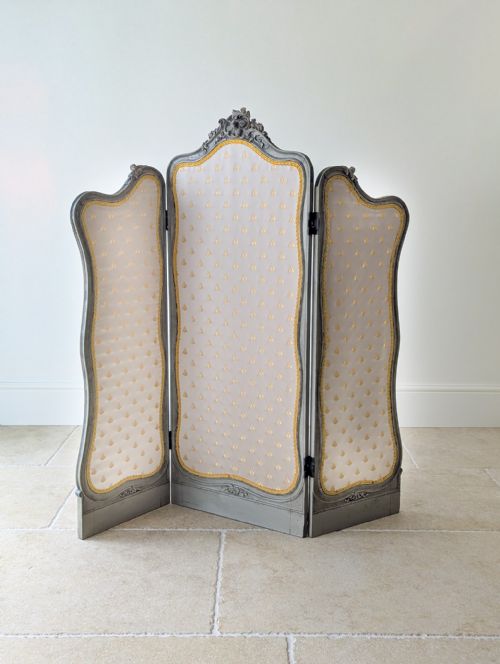
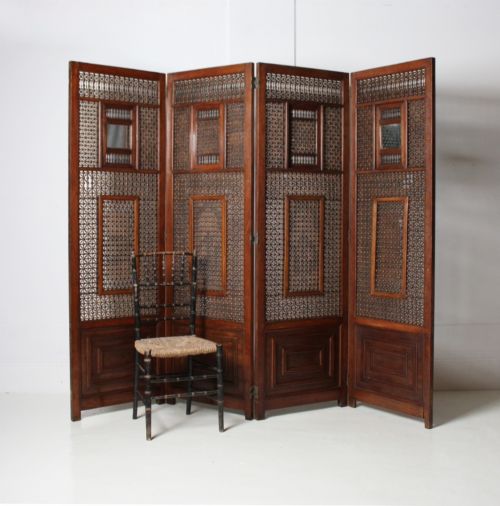
A wooden folding screen serves to divide a larger space or shield a hearth, appearing across periods from the eighteenth century to the mid-twentieth century. The selection includes multi-panel room dividers alongside smaller fire screens and modesty screens designed for specific domestic duties.
Makers utilised woods such as mahogany, oak, walnut, and padauk, often constructing frames of three, four, or more hinged leaves. Some pieces incorporate metamorphic designs that transform from a firescreen into an occasional table.
Origin influences form significantly, with English and French examples displaying painted panels, needlepoint, or glass, while Chinese and Japanese variations present lacquered surfaces, coromandel work, or deep bone carvings.
Construction and materials
Frames are built from hardwoods like mahogany, oak, and walnut, joined with hinges to allow multiple folds. Lighter woods and painted pine also appear, particularly on modesty screens and simpler room dividers.
Surface decoration involves diverse techniques, including black lacquer, coromandel incisions, oil paintings, and hand-embroidered wool or needlepoint panels mounted directly into the woodwork.
Wooden Folding Screen Retail Price Guide 2026
Typical asking prices for wooden folding screen among the pieces listed under this phrase on Sellingantiques today, from the lower quarter to the upper quarter. They describe what is for sale here now, not the wider market.
Craftsmanship ranges from French painted modesty boards and English needlepoint to deep-carved Chinese coromandel lacquer and Anglo-Indian padauk.
Judging the work
Quality rests upon the depth of the carving and the execution of the decorative panels, from naive wool work to intricate bone figures and fine oil paintings. Solid hardwoods and substantial brass or bronze hardware distinguish the sturdier architectural examples from lighter decorative boards.
The precision of the joinery and the durability of the hinges dictate how well a multi-fold screen stands over time without sagging or straining its joints.
The Wooden Folding Screen Glossary
- Coromandel lacquer
- A Chinese technique where layers of dark lacquer are carved to reveal coloured grounds beneath. This method creates a textured, low-relief surface often seen on eight-fold room dividers.
- Modesty screen
- A small portable partition historically placed to shield a person from draughts or direct view. These often feature painted panels or fabric inserts.
- Metamorphic screen
- A convertible furnishing that functions as a firescreen and alters into an occasional table. It combines two domestic utilities into a single wooden frame.
- Mashrabiya
- An architectural element adapted into panels featuring intricate wooden lattice work. It filters light and air while providing privacy.
- Fretwork
- Ornamental pattern work created by cutting designs through solid wood. This technique appears on the upper or lower sections of room dividers.
Wooden Folding Screen: Frequently Asked Questions
How are wooden folding screens used today?
They serve to section off open-plan rooms, create quiet corners, or conceal storage areas. Smaller versions act as decorative backdrops or hearth guards.
Their mobility allows owners to rearrange living spaces easily without altering permanent walls.
What materials make up these screens?
Frames consist of woods such as oak, mahogany, walnut, and padauk. Insets range from glass and brass to hand-painted canvas, needlepoint, and lacquered wood.
Some Asian examples incorporate carved bone figures set directly into the wooden panels.
How do I date an antique screen?
Dating relies on stylistic clues, construction methods, and materials such as Edwardian mahogany or Victorian needlepoint. Hardware like hinges and screws also helps determine the period.
Comparing the decorative style, whether Art Nouveau, Chinoiserie, or French Rococo Revival, narrows down the era of manufacture.
Are fire screens different from room dividers?
Fire screens are smaller single-panel or metamorphic pieces designed to protect a room from radiant heat when the hearth is unlit. Room dividers comprise three, four, or more panels intended to partition a space.
Some fire screens double as occasional tables when the panel folds flat.