
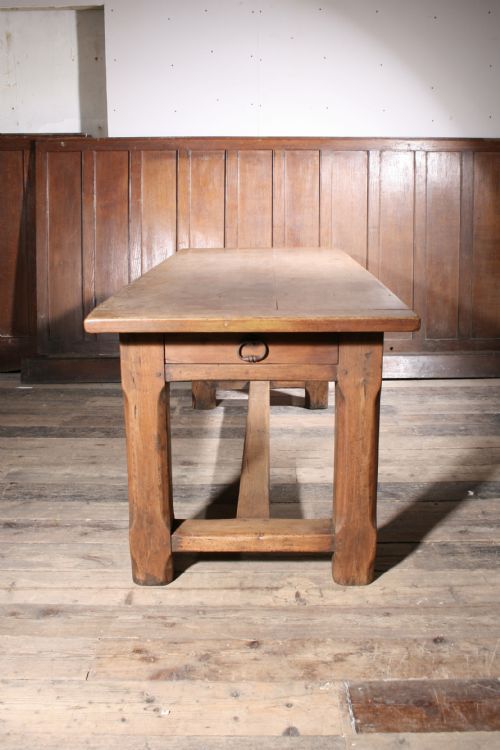
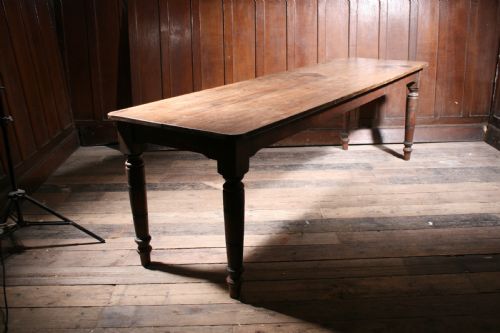
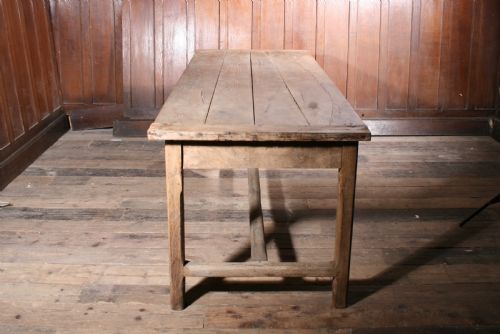
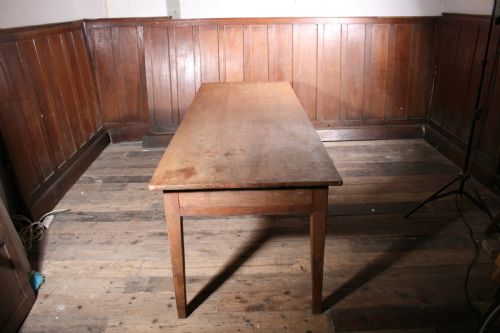
Wooden Farmhouse Kitchen Table
A wooden farmhouse kitchen table brings solid oak, pine, or fruitwood into daily use, offering the honest utility of past centuries.
Wooden Farmhouse Kitchen Table
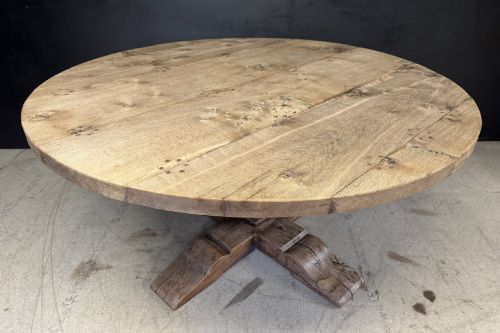
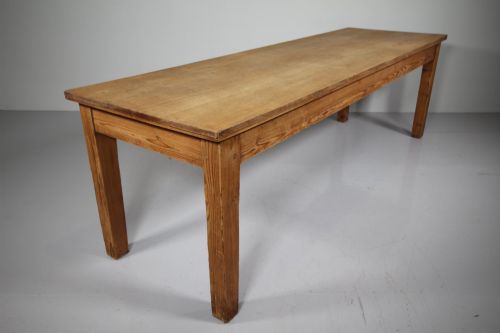
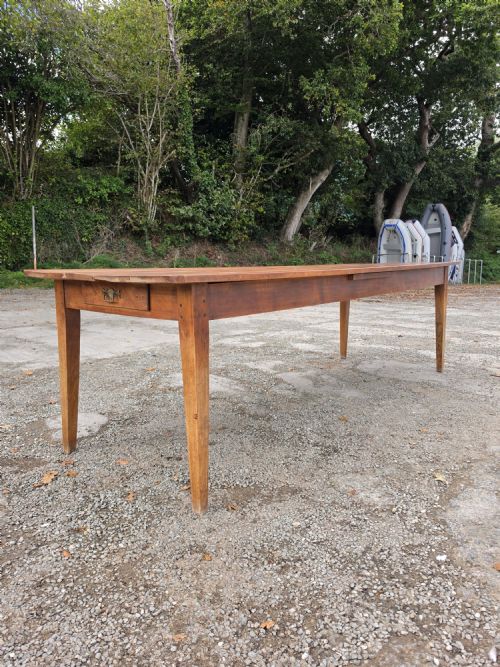
When you search for a wooden farmhouse kitchen table, you encounter robust dining tables, prep tables, and serving tables shaped by generations of practical use. The version you are most likely to meet on this page is a nineteenth-century oak or pine example, often carrying the simple lines of English, French, or Scottish country traditions.
The evidence spans the eighteenth century through to the 1930s, encompassing styles from rustic farmhouse and French provincial to Georgian and Victorian country. These forms served as the working heart of the home, built to handle daily preparation, dining, and communal gathering.
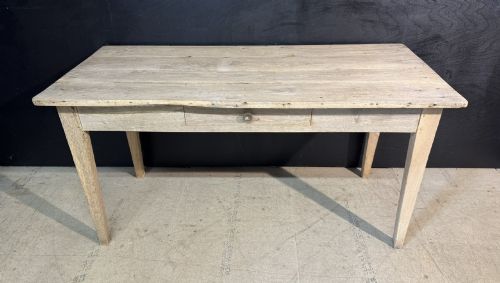
Object types on offer range from expansive refectory boards and extending dining tables to dresser bases and console tables. Woods shift from pale pine and golden oak to fruitwood, elm, cherrywood, and satin birch, reflecting the regional timber available to local makers.
How they were made
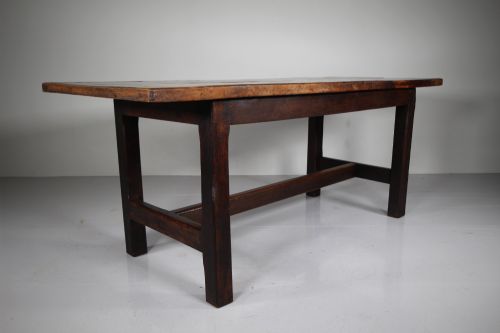
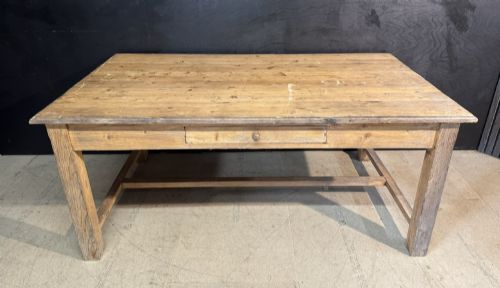
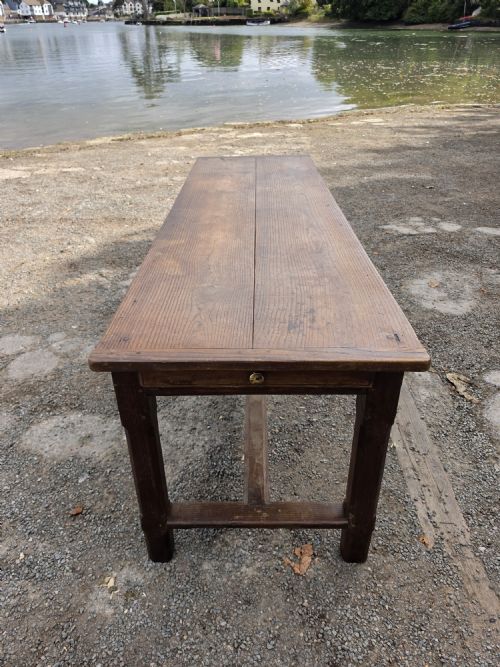
Makers relied primarily on solid hardwoods and softwoods such as oak, pine, fruitwood, elm, and cherrywood, often pairing different timbers for tops and frames. Construction prioritised stability and endurance, utilising heavy planks joined to sturdy legs with structural stretchers or potboards.
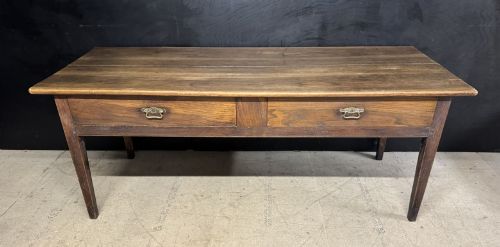
Surface finishes vary from wax and polished grain to traces of old paint, showing the natural wear of decades. Iron and brass hardware occasionally appeared in drawers or extension mechanisms, though timber joints remained the primary method of assembly.
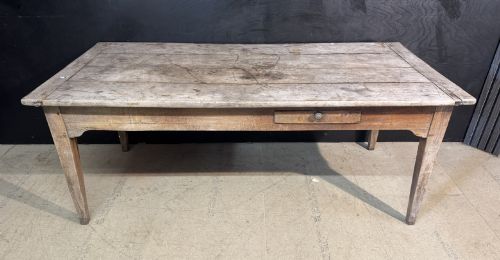
Several tables show traces of old paint and flour dust in the grain, reminding us these boards once fed whole farming communities.
What varies in quality
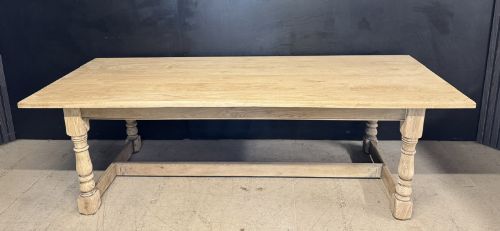
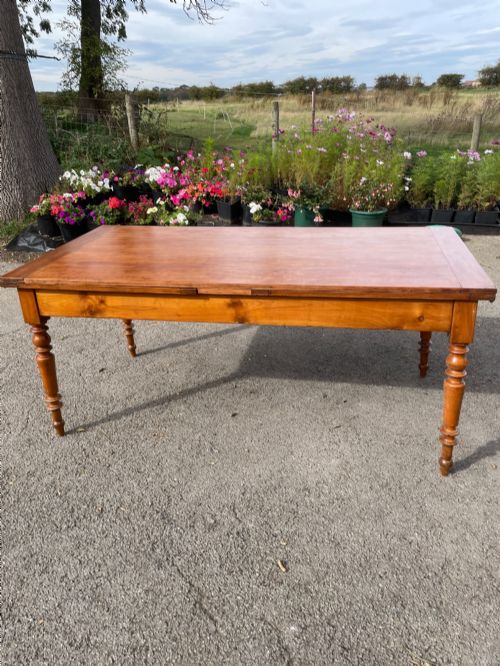
The distinction between a standard utility board and a superior piece lies in the selection and integrity of the timber, such as a thick two-board elm top or figured golden oak. Superior examples display thoughtful proportions, balanced leg turnings like bobbin or tapered styles, and robust structural joinery that maintains rigidity across large spans.
Provenance and regional character also separate pieces, with well-documented French cherrywood, Spanish elm, or late eighteenth-century English oak carrying distinct local craftsmanship. The harmony between the original top and base, alongside untouched patination on the wood, defines the upper tier of the range.
The Wooden Farmhouse Kitchen Table Glossary
- Refectory table
- A long narrow dining table traditionally used in monastic refectories and later adopted in domestic farmhouse settings. These pieces often feature stretcher bases for added stability.
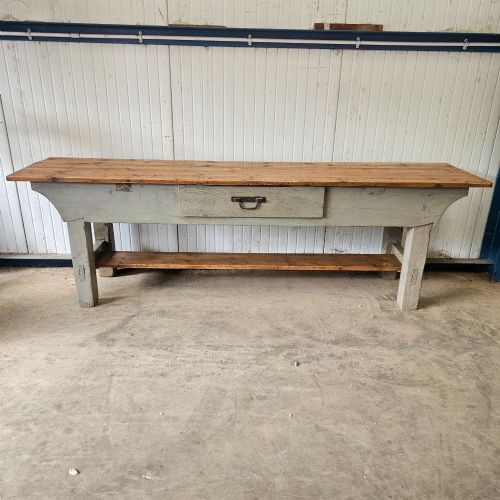
- Potboard dresser base
- A low sideboard or table base featuring an open lower shelf used historically for storing pots and kitchen utensils. This form provides substantial surface space alongside open storage.
- Fruitwood
- Timber milled from fruit-bearing trees such as cherry, pear, or apple, known for a smooth grain and warm tone. It was frequently utilised in French provincial cabinet making.
- Bobbin legs
- Turned furniture legs shaped to resemble a series of wooden bobbins or spools linked end to end. This decorative turning style appears frequently on seventeenth and nineteenth-century pieces.
- Harvest table
- A large dining table designed to accommodate farm workers during seasonal harvests, typically characterised by long proportions. These tables often use pine or oak construction.
Wooden Farmhouse Kitchen Table: Frequently Asked Questions
How do I choose the right size?
Consider the daily seating capacity you require and measure your kitchen space to allow comfortable clearance around all sides. Refectory and extending formats offer flexibility for accommodating additional guests.
Account for the leg placement beneath the top, as stretcher rails or trestles can occasionally restrict chair storage. Matching the table length to the proportions of your room ensures the piece anchors the space effectively.
Are these tables suitable for daily dining?
These tables were originally built for heavy daily use, making them naturally suited to modern family kitchens and dining rooms. Solid timber construction handles regular meals, homework, and food preparation with ease.
Maintenance involves simple cleaning and occasional waxing to protect the historic surface. The existing patina absorbs normal wear gracefully without requiring delicate handling.
How do I identify French styles?
French farmhouse and provincial pieces often feature fruitwood, cherry, or oak timbers with warmer tones and softer grain patterns than English oak. Turned legs, drawer configurations, and stretcher designs differ subtly from British regional cabinetry.
Details like two-board elm tops or specific fruitwood species point directly to continental workshops. Examining the timber selection and joinery helps clarify the geographic origin.
What is a potboard base?
A potboard base incorporates an open slatted or solid shelf positioned low between the legs, near the floor. This shelf served as a practical storage area for heavy pots and kitchen stoneware.
Today, the lower board provides a display shelf for baskets, ceramics, or books. It adds both structural rigidity to the frame and useful lower storage.