



Wooden Entryway Console
A wooden entryway console sets the tone for a home, offering a surface for letters and keys that grounds a hallway.
Wooden Entryway Console
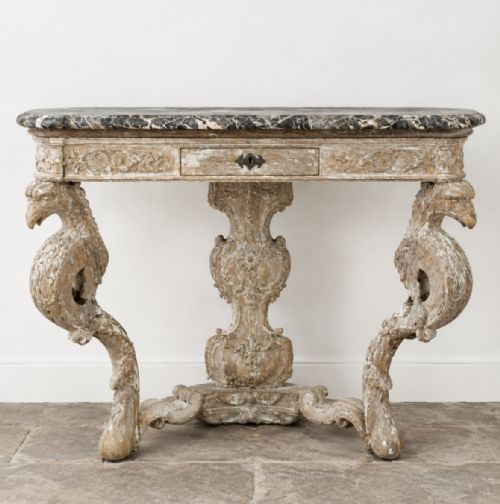
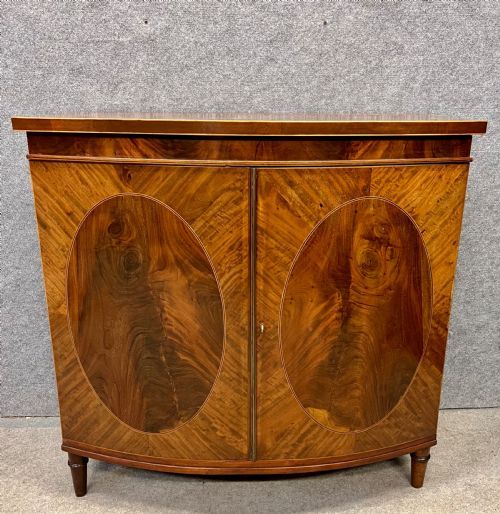
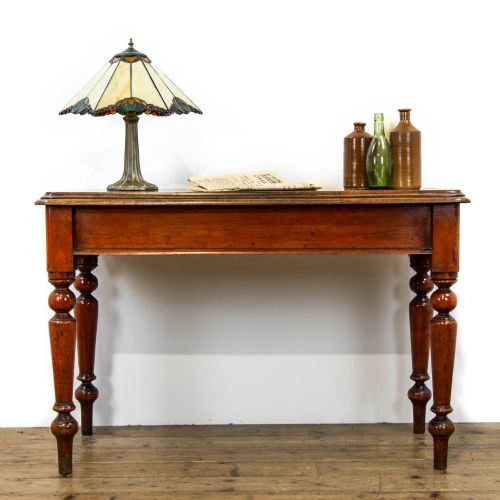
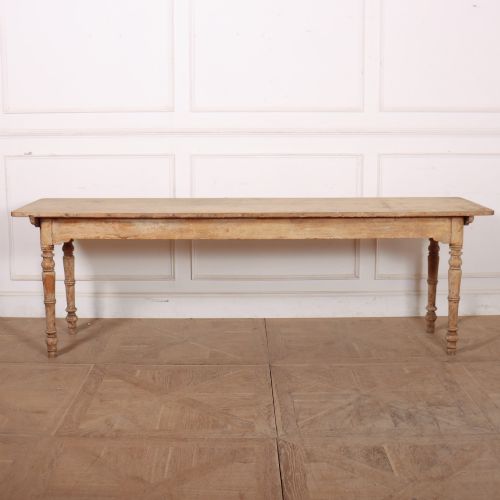
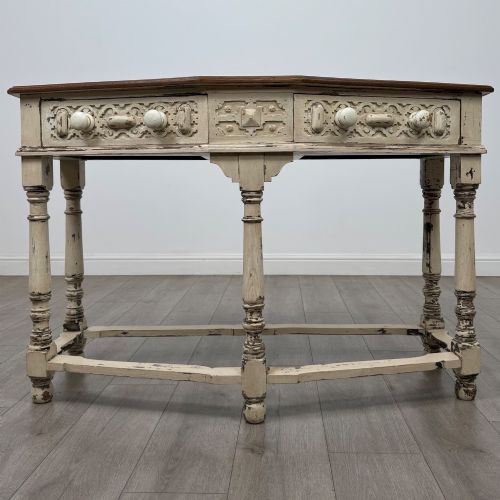
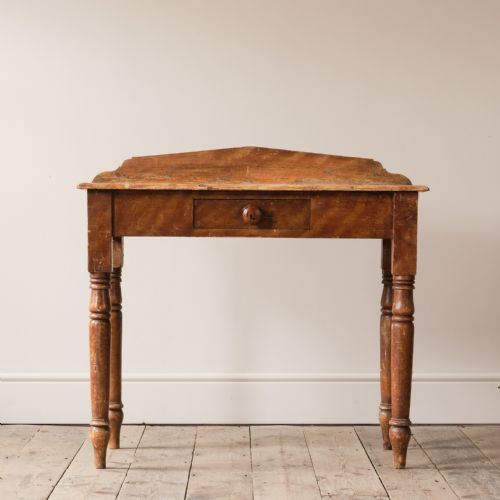
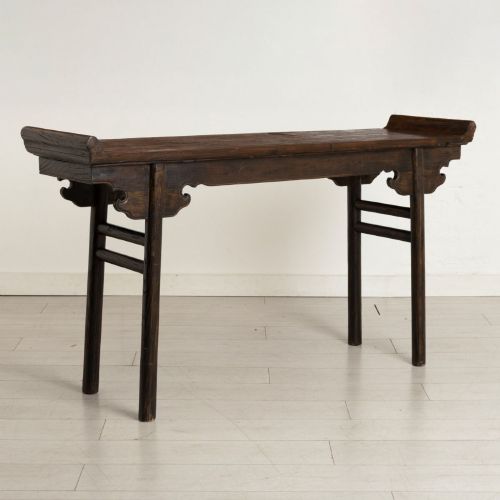
A wooden entryway console takes several forms across the periods represented on this page, appearing as console tables, hall tables, side tables, and hall stands. These pieces function as narrow furnishings designed to sit flush against a wall in a passage or reception space.
The version most commonly met here is the mahogany console table from the nineteenth century, often featuring a marble top, a mirror back, or a serpentine front. Oak and walnut examples also appear frequently, alongside painted wood finishes and demi-lune shapes suited to compact areas.
Materials and construction
Cabinet makers utilised dense hardwoods such as mahogany, oak, and walnut, frequently selecting figured veneers like burr birch and flame mahogany for visible surfaces. Marble tops provide a durable, cool landing surface for heavy items, while brass hardware secures joints and embellishes drawer fronts.
Joinery methods range from traditional mortise and tenon frames to carved embellishments influenced by Georgian, Regency, and Rococo styles. Surfaces finish either with a polished wood sheen or layers of original paint applied to pine and sycamore.
The inventory spans the eighteenth, nineteenth, and early twentieth centuries, including Georgian, Regency, and Arts and Crafts styles.
Distinctions in craftsmanship
Quality rests in the selection of timber and the ambition of the carving, where a finely figured mahogany or burr walnut veneer denotes a superior commission. Plain pine with original paint offers a different, domestic charm compared to the elaborate parcel gilt and carved details found on Rococo or Adam-style pieces.
Structural integrity depends on how cleanly marble inserts fit into wooden frames and how tightly carved mirrors integrate with hall stands. The depth of the timber moulding and the crispness of turned legs separate standard utility pieces from high-status hall furniture.
The Wooden Entryway Console Glossary
- Demi-lune
- A half-moon shape designed to fit flat against a wall. This form saves floor space in narrow hallways.
- Serpentine
- A gentle undulating curve along the front edge of a table. It requires careful timber selection and cutting.
- Parcel gilt
- Woodwork partially decorated with gold leaf. This technique highlights carved details against a darker wood ground.
- Trestle table
- A board supported by two or more vertical frames. This form provides sturdy support without bulky corner legs.
Wooden Entryway Console: Frequently Asked Questions
What is the difference between a console table and a hall stand?
A console table is primarily a narrow surface meant to stand against a wall, sometimes paired with a wall-hanging mirror above it.
A hall stand is a larger, combined piece of furniture that incorporates vertical woodwork, clothes hooks, an umbrella well, and frequently a fitted mirror.
How do I choose the right size for a narrow hallway?
Measure the clearance space between your doorway and the opposite wall to ensure people can walk past comfortably. Demi-lune and bowfront shapes reduce sharp corners in tight passages.
Check the depth of the table top, as smaller hall tables take up minimal floor space while still offering a surface for post.
Are marble top tables difficult to maintain?
Marble provides a hard-wearing surface that resists water and heat better than polished wood. It wipes clean easily with a damp cloth.
Take care to avoid acidic liquids on unsealed stone, as they can etch the polished surface over time.
How can I tell a Georgian piece from a Victorian one?
Georgian furniture typically displays restrained classical proportions and fine mahogany craftsmanship, often associated with Adam or Chippendale styles.
Victorian pieces tend to be heavier in scale, sometimes featuring elaborate carving, burr veneers, or integrated mirror backs designed for dramatic hallway displays.