


Wooden Decanter Caddy
These wooden decanter caddy pieces are sturdy table carriers designed to hold fine glass bottles securely within reach.
Wooden Decanter Caddy
A wooden decanter caddy provides a practical method for moving multiple glass bottles from a sideboard to a table without risking knocks or spills. These containers appear across several distinct historical eras, ranging from restrained Georgian designs to more elaborate Victorian and Edwardian examples.
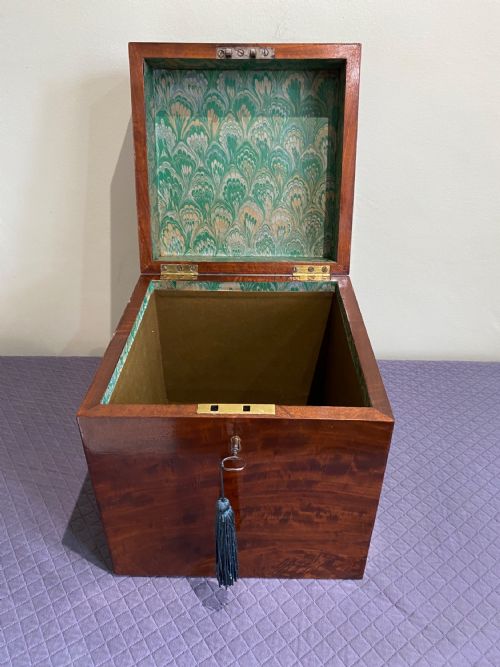
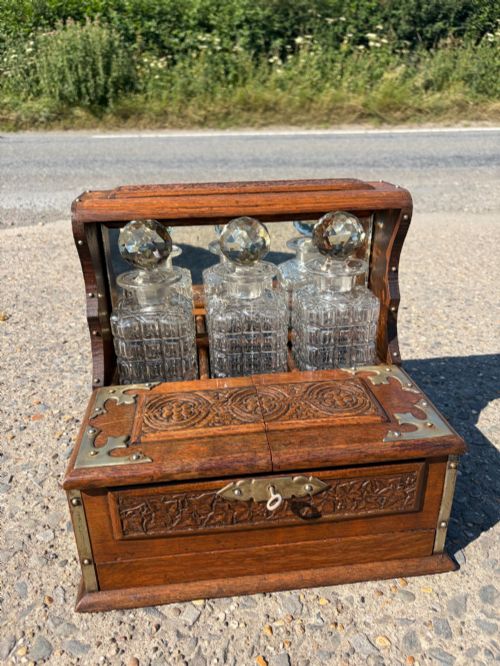
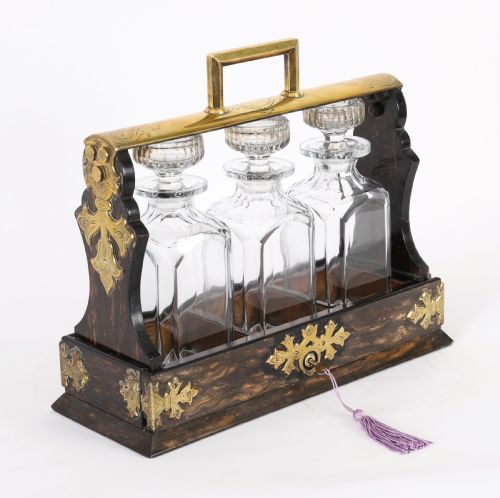
Most items found here take the form of tabletop carriers, bottle stands, or lockable tantalus frames fitted with cut glass decanters. The primary timbers used in their construction include mahogany and oak, frequently enhanced with brass handles, mounts, or protective bottle sections.
Buyers will encounter various configurations designed for two, three, or four vessels, often accompanied by matching drinking sets. Whether presented as an open frame or a secure box, each piece reflects the hospitality customs of its period.
How they were made
Cabinetmakers utilised dense hardwoods such as mahogany, oak, and walnut to build rigid frames capable of supporting the heavy weight of glass decanters filled with liquor. These timbers were joined with precise carpentry techniques to withstand regular lifting and transit.
Metal components, particularly brass mounts, handles, and locking mechanisms, were integrated into the wooden bodies to provide structural reinforcement and functional security. Cut glass decanters and stoppers were then shaped to fit snugly within the designated compartments of each caddy.
Some lockable caddies were nicknamed after a mythological king because the drink remained tantalisingly visible yet out of reach.
What varies in quality
The standard of a caddy rests upon the selection of timber grain, the precision of the joinery, and the weight of the brass hardware fitted to the frame. Superior examples display thoughtful proportions and robust construction that keep the vessels secure during handling.
The inclusion of original cut glass decanters that match the specific compartments adds significantly to the integrity of the piece. Subtle details in the brass casting and the finish of the wood separate standard utility items from finer cabinetwork.
The Wooden Decanter Caddy Glossary
- Tantalus
- A locking drink cabinet or frame that displays glass decanters while preventing unauthorized access to the contents. The mechanism typically holds the bottle stoppers firmly in place until the front bar is unlocked.
- Caddy
- A small box, container, or frame traditionally used for storing and transporting provisions such as tea, tobacco, or bottles. In this context, it refers specifically to bottle holders and serving stands.
- Georgian
- Design style spanning the reigns of the four British monarchs named George, known for classical proportions and quality mahogany construction. Pieces from this era emphasise clean lines and functional elegance.
- Victorian
- Period of decorative arts associated with the reign of Queen Victoria, encompassing varied revivals and heavy oak frameworks. Items from this time often feature robust brass mounts and elaborate locking mechanisms.
Wooden Decanter Caddy: Frequently Asked Questions
How do you lock a tantalus?
A tantalus secures bottles by means of a metal retaining bar that traps the stoppers underneath a hinged or sliding top bracket. When the key is turned in the integrated lock, the mechanism drops or shifts to release the bar so the decanters can be lifted free.
This clever design allowed hosts to display expensive spirits while keeping them safe from household staff or guests. The lock itself is usually mounted discreetly into the wooden base or upright partition.
What wood was used?
Makers relied heavily on sturdy hardwoods such as mahogany and oak to support the considerable weight of glass decanters. Walnut also appears across certain continental and domestic examples, offering a richer brown tone and distinct grain patterns.
These timbers were chosen for their durability and resistance to warping under frequent handling and movement. Brass hardware was frequently added to reinforce corners and provide secure mounting points for handles.
Can I replace missing decanters?
Finding exact replacement decanters for an antique caddy can prove challenging because the compartments were often cut or custom-fitted to specific glass dimensions. When searching for replacements, matching the exact base diameter and height is essential to ensure the bottles sit correctly in the frame.
Many collectors accept pieces with associated or matched glassware, provided the bottles suit the overall style of the wooden carrier. Checking the neck height and stopper shape will help determine whether a potential replacement fits beneath a locking bar.
How do I clean the wood?
Maintenance requires gentle dusting with a soft, dry cloth to remove everyday particles without disturbing the polished surface of the timber. Applying a light coat of appropriate wax periodically helps nourish the grain and protects the finish from drying out.
Harsh chemical cleaners and excessive moisture should be avoided, as they can damage antique polishes and corrode adjacent brass fittings. Taking care with liquid spills around the wooden base will preserve the integrity of the joins.