






Vintage Liquor Caddy
A vintage liquor caddy secures your finest spirits behind locked crystal and polished wood, bringing Victorian and Georgian ceremony straight to the sideboard.
Vintage Liquor Caddy
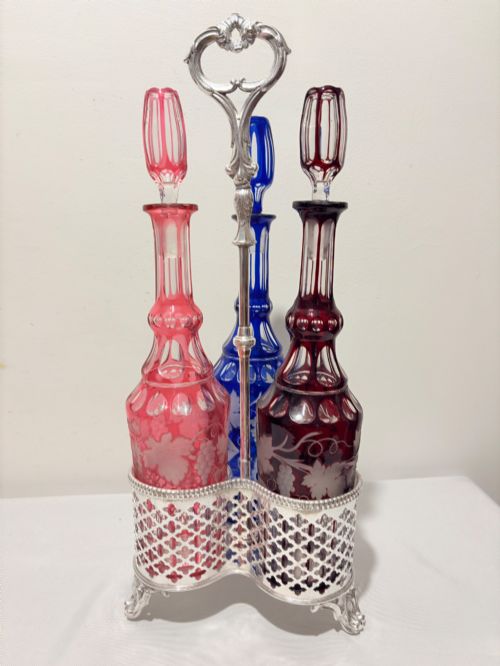
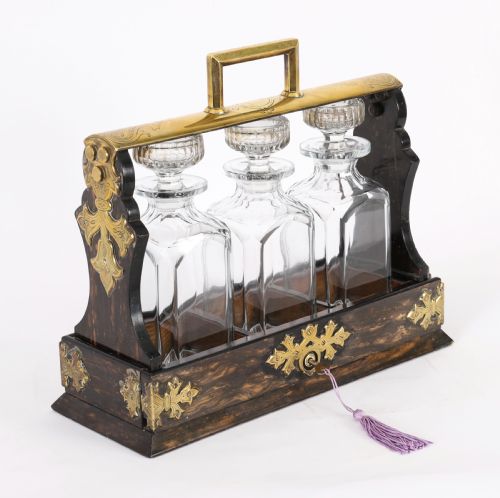
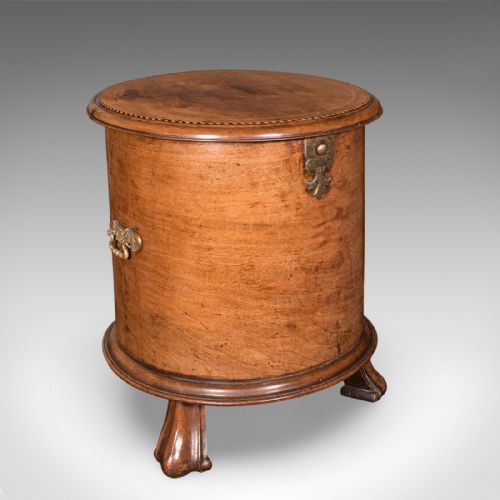
A vintage liquor caddy encompasses secure tantalus frames, fitted cellarettes, decanter stands, and bottle carriers designed to house spirits safely. These pieces range from substantial 18th-century mahogany wine coolers to late-Victorian oak frameworks fitted with three cut crystal decanters.
The version most commonly met on this page is the Victorian oak or mahogany tantalus, often brass-mounted and engineered with a locking mechanism that restrains the bottle stoppers. Alongside these sit silver-plated decanter stands and barrel dispensers holding tot pails from the nineteenth century.
Origins stretch across English, French, and Irish workshops, spanning Georgian, Regency, and Napoleon III aesthetic movements. Form follows function closely, whether the object takes the shape of a low floor-standing cellarette or a portable tabletop bottle carrier.
How they were made
Joinery relies on dense timbers like mahogany, oak, walnut, and satinwood, frequently enhanced with decorative inlay work and robust brass mounts. Woodworkers constructed sturdy carcasses capable of supporting the heavy weight of full glass decanters and liquid contents.
Glass elements combine heavy lead crystal with cut patterns or frosted finishes, shaped into decanters and barrels to showcase the spirits within. Metalwork components utilise silver plating over base metal alongside functional brass locking bars and carrying handles.
Vintage Liquor Caddy Retail Price Guide 2026
Typical asking prices for vintage liquor caddy among the pieces listed under this phrase on Sellingantiques today, from the lower quarter to the upper quarter. They describe what is for sale here now, not the wider market.
Object forms span tabletop decanter stands, multi-bottle tantalus frames, and floor-standing wine coolers.
What varies in quality
The standard of the timber selection and the precision of the inlay determine the visual distinction of the piece, with figured grains and crisp Sheraton Revival stringing marking out finer examples. Heavier gauge brass hardware and intact, working locking mechanisms with original keys elevate the utility and build integrity.
The quality of the glassware plays a decisive role, particularly where heavy cut crystal decanters match the exact contours of the frame without wobble or replacement. Original matching stoppers and undamaged silver-plated frames separate standard utilitarian barware from distinguished entertaining pieces.
Freemans of Norwich
The Vintage Liquor Caddy Glossary
- Tantalus
- A locking drink container that holds decanters securely within a metal bar frame so the contents remain visible yet inaccessible without a key.
- Cellarette
- A lockable cabinet or stand originally built to store wine bottles near the dining table before serving.
- Tantalus frame
- The structural metal or wooden framework, often fitted with a locking handle, designed to trap decanter stoppers.
- Tot pail
- A small bucket or container paired with barware dispensers for holding ice or water.
- Sheraton Revival
- A late nineteenth-century design style drawing on eighteenth-century neoclassical furniture forms, featuring delicate inlay and polished veneers.
Vintage Liquor Caddy: Frequently Asked Questions
How do you open a vintage tantalus?
Most tantalus frames operate with a small key that releases the vertical locking bar, allowing it to slide or hinge backward to free the decanters.
Without the original key, a locksmith or specialist dealer can often assist, as forcing the mechanism frequently damages the surrounding wood or silver plating.
Are the decanters usually original to the caddy?
Decanters frequently suffer breakage over decades of use, meaning many caddies now house matched replacements rather than the glass they left the workshop with.
Checking that the bases fit snugly into the wooden or metal base recesses helps determine whether the glassware belongs to the frame.
Where should I place a cellarette at home?
A cellarette suits a dining room, study, or living space where it can serve as a functional sideboard or freestanding drinks station.
Keeping the wood away from direct heat sources and strong sunlight preserves the finish and prevents the timber from drying out.
How do I date a liquor caddy?
Dating relies on combining the wood species, cabinetmaking style, lock technology, and the cut of the crystal decanters.
Georgian and Regency pieces tend to show simpler, heavier architectural lines, while Victorian examples often incorporate elaborate brass mounts and mechanical locking bars.