




Wooden Davenport Bureau
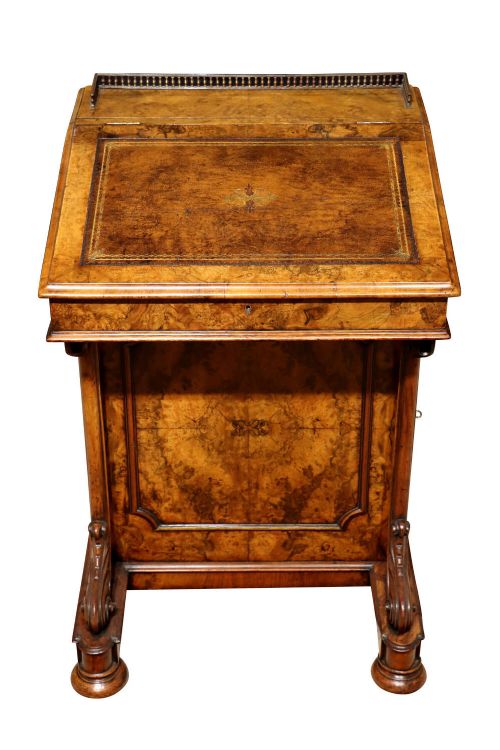
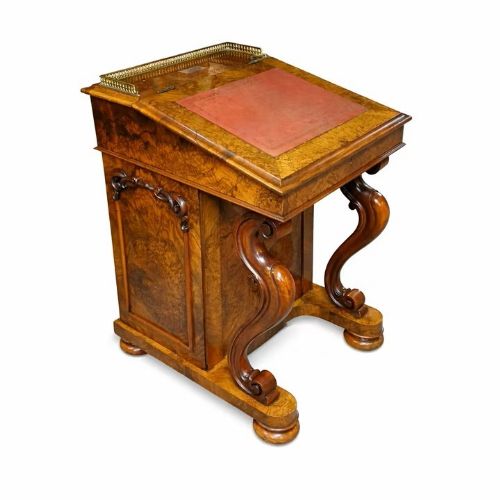
These wooden davenport bureau pieces are compact writing desks offering fitted storage and sloped working surfaces for practical daily use.
Wooden Davenport Bureau
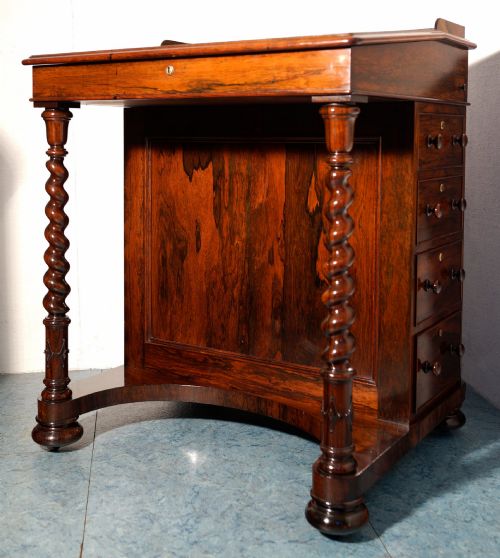
A wooden davenport bureau is a compact writing desk designed with a sloped writing surface and a set of drawers accessed from the side. Buyers seeking these items will find pieces primarily originating from the Victorian and Regency periods, alongside 19th-century Dutch and Anglo-Indian variants.
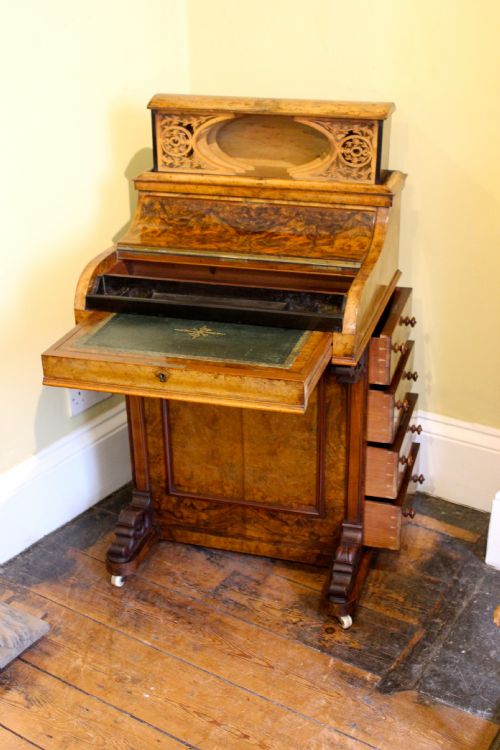
The most common examples on this page are constructed from burr walnut and mahogany, often featuring specialised interiors such as satinwood fitted compartments. Forms range from standard sloping desks to piano top and slide front variants, reflecting the evolution of this desk type through the nineteenth century.
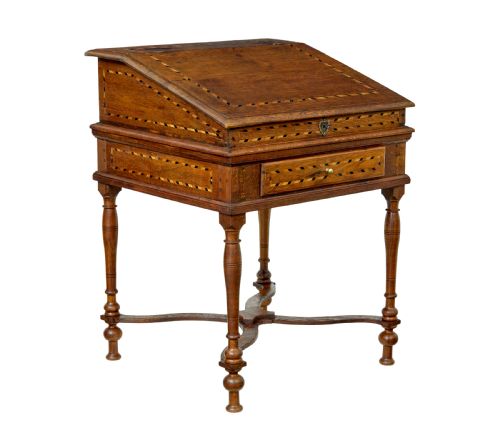
Desks and writing tables within this selection showcase diverse regional influences, including inlaid oak examples and heavily carved Anglo-Indian designs. Buyers encounter everything from diminutive proportions suited to smaller spaces to larger clerks desks built for utility.
How they were made
Makers constructed these desks using dense hardwoods like mahogany, walnut, and oak, frequently applying decorative burr walnut veneers to the primary surfaces. Secondary timbers and contrasting woods such as satinwood, fruitwood, and amboyna provided interior detailing for drawers and stationery compartments.
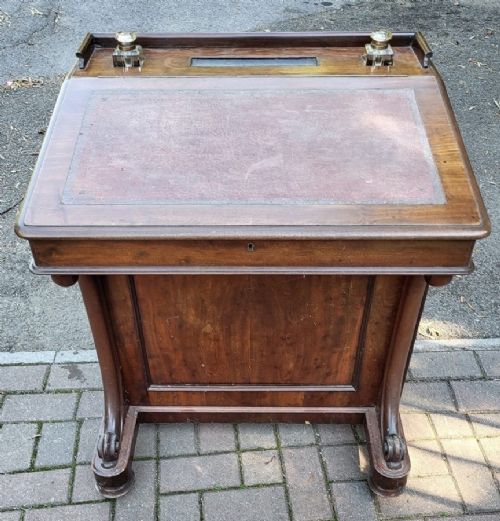
Construction techniques incorporated brass hardware for handles and galleries, alongside inset leather panels on the writing slopes for a suitable writing surface. Glass components and intricate carving appear on specific regional variants, demonstrating varied cabinet-making traditions across the periods.
Listings feature Victorian, Regency, and 19th-century periods, utilising materials including burr walnut, mahogany, brass, leather, and oak.
What varies in quality
Quality in a wooden davenport bureau rests upon the choice of timber and the precision of the cabinet work, particularly in the figuring of burr walnut veneers and the execution of inlaid details. Finer pieces demonstrate superior joinery in the internal stationery fittings and drawer construction, maintaining structural integrity over decades of use.
The sophistication of the mechanism distinguishes different grades of desks, especially in piano top and pop-up or slide front configurations where internal components must operate smoothly. The refinement of secondary woods and the presence of documented makers elevate the standing of individual pieces.
Gillows
The Wooden Davenport Bureau Glossary
- Davenport
- A small pedestal desk featuring a sloped writing surface hinged above a set of drawers. This form became popular during the nineteenth century for domestic correspondence.
- Burr walnut
- Timber taken from the warted growths on walnut trees, yielding highly figured patterns used for decorative veneer. Cabinet-makers prized this wood for its swirling grain.
- Satinwood
- A durable, yellowish wood utilised for fine interior cabinetry and stringing. It provides a bright contrast to darker primary timbers.
- Slide front
- A desk configuration where the writing surface moves forward to reveal internal compartments. This mechanism allows easier access while seated.
- Piano top
- A descriptor for davenports featuring a roll-top or cylinder lid reminiscent of a piano fall. These variants often conceal complex pop-up stationery fittings inside.
Wooden Davenport Bureau: Frequently Asked Questions
What is a davenport desk?
A davenport desk is a small, compact writing desk featuring a sloping top and drawers situated on the side rather than beneath the user.
These pieces were originally designed for domestic use in Victorian and Regency parlours where space was limited.
How do piano top davenports work?
Piano top davenports utilise a roll-top or cylinder mechanism that retracts to uncover the writing surface and interior compartments.
Some advanced versions feature pop-up mechanisms that elevate internal stationery drawers automatically when opened.
What woods were used for davenports?
Makers constructed these desks using substantial hardwoods such as mahogany, oak, and walnut, often embellished with burr walnut veneers.
Interiors frequently incorporated lighter secondary timbers like satinwood and fruitwood for contrast.
Are davenports suitable for modern writing?
The sloping leather-insets and integrated drawers provide a functional surface for correspondence and laptop use in contemporary settings.
Their compact footprint allows them to fit easily into smaller studies or living rooms.