

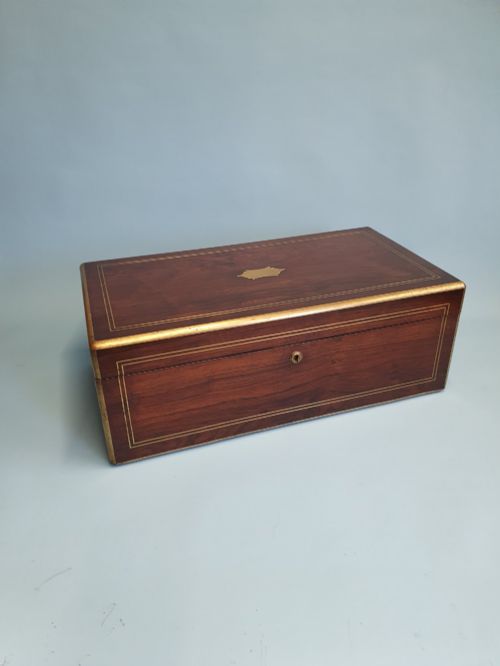
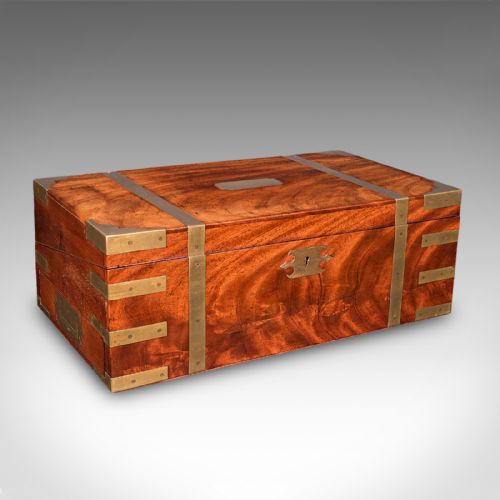


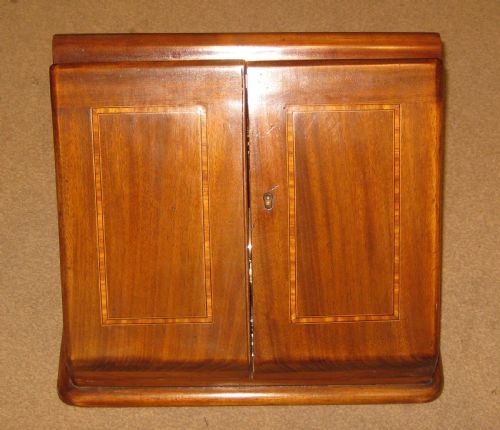
Wooden Correspondence Slope
A wooden correspondence slope organises letters and writing materials, combining functional desk storage with handsome cabinet-making from the Georgian, Regency, and Victorian eras.
Wooden Correspondence Slope
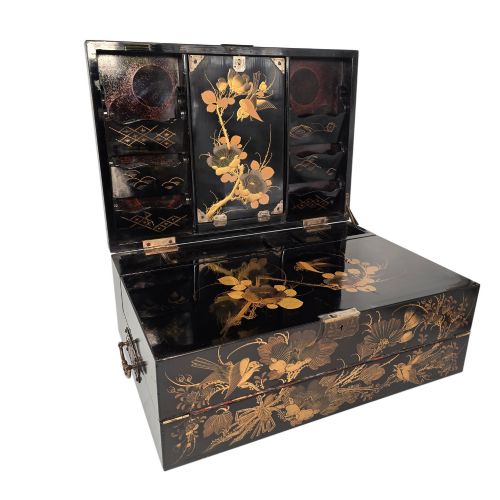
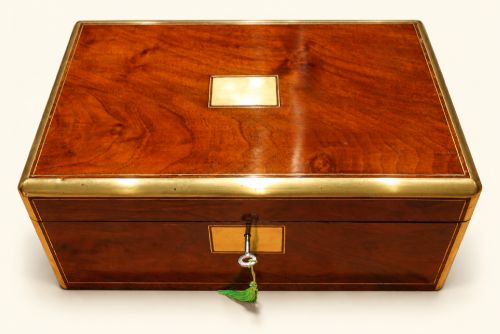
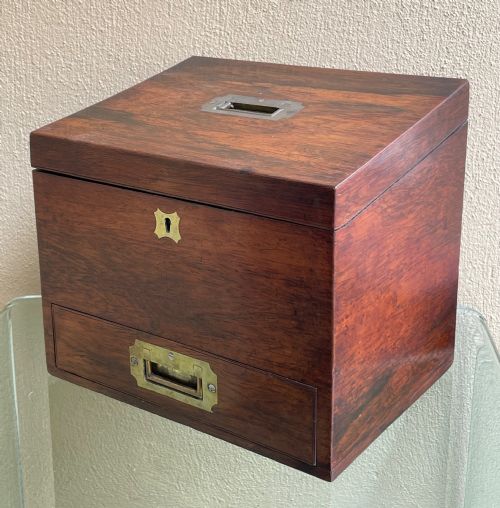
A wooden correspondence slope brings together portable desk boxes, stationery cabinets, and letter racks designed for the nineteenth-century writer. When searching for a wooden correspondence slope, collectors encounter campaign pieces, bi-fold folding slopes, and upright stationery boxes.
The selection ranges from early Georgian rosewood formats to late Victorian walnut and oak cabinets fitted with interior compartments. Many examples combine writing surfaces with dedicated slots for answered and unanswered post.
Makers of the period utilised durable hardwoods to construct these desk accessories, frequently incorporating brass hardware for travel and campaign use. Regional variations span English workshops, Irish cabinets, and Anglo Indian brass-mounted productions.
Materials and construction
Cabinet-makers built these boxes using dense timbers such as mahogany, walnut, rosewood, and oak, often selecting burr walnut veneers for decorative surfaces. Mother-of-pearl inlay, brass mounts, and hand-painted porcelain plaques frequently ornament the exterior panels.
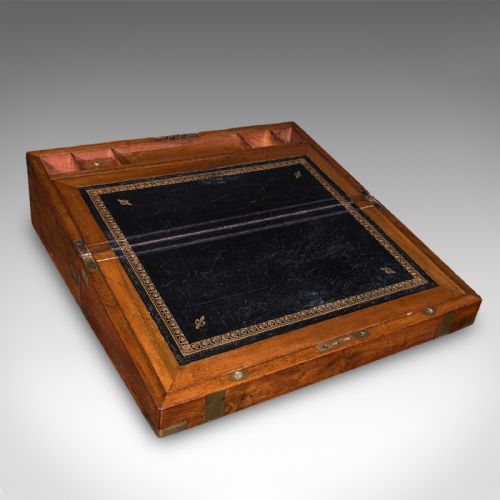
Interiors reveal fitted leather writing surfaces, secret drawers, and segmented slots designed to hold stationery and correspondence upright. Campaign versions integrate robust brass corners and carrying handles to withstand regular travel.
Wooden Correspondence Slope Retail Price Guide 2026
Typical asking prices for wooden correspondence slope among the pieces listed under this phrase on Sellingantiques today, from the lower quarter to the upper quarter. They describe what is for sale here now, not the wider market.
Listings feature Victorian, Regency, and Georgian periods, utilising materials such as rosewood, mahogany, walnut, oak, and brass.
Markers of distinction
The standard of a wooden correspondence slope rests upon the choice of timber figure, the precision of the brass or mother-of-pearl inlay, and the integrity of the internal fittings. Finer pieces retain original leather inserts, working locks, and concealed compartments that operate smoothly.
Simpler production boxes offer basic storage without the complex bi-fold mechanisms, secret drawers, or hand-painted porcelain details found on high-end Victorian and Georgian examples. The inclusion of specialised dividers for letters and post elevates the utility and interest of the box.
Austin
The Wooden Correspondence Slope Glossary
- Correspondence slope
- A portable desk or cabinet designed specifically for holding writing paper, envelopes, and incoming letters. These pieces often feature an inclined writing surface alongside vertical storage slots.
- Campaign style
- Furniture and accessories built with sturdy brass corners, flush handles, and robust timbers for military officers travelling on duty. Such items prioritise portability and durability.
- Bi-fold writing slope
- A box that opens to reveal a hinged, folding writing surface lined with leather or velvet, concealing storage space and secret compartments underneath.
- Stationery cabinet
- An upright desk accessory featuring shelves and partitions designed to organise letters, envelopes, and writing paper in an office or library setting.
Wooden Correspondence Slope: Frequently Asked Questions
How were stationery boxes used?
Stationery boxes and correspondence chests sat on a desk or library table to keep writing paper, envelopes, and pens neat and ready for use. Upright slots allowed users to separate answered and unanswered post.
Victorian households relied on these cabinets to manage daily correspondence before the widespread use of manufactured envelopes and fountain pens.
How do I date a wooden slope?
Dating a wooden correspondence slope involves examining the timber, construction methods, and hardware styles used by the cabinet-maker. Georgian and Regency pieces typically favour rosewood or mahogany with understated lines, while Victorian examples often incorporate burr walnut, inlay, and more complex internal stationery dividers.
Campaign pieces from the nineteenth century display characteristic brass strapping and flush handles designed for travel.
Where should I place a slope?
A wooden correspondence slope looks effective placed upon a library table, partner's desk, or a chest of drawers where its timber grain can be appreciated. Many collectors display them closed as decorative boxes, while others open the slope to reveal the fitted interior and leather writing surface.
Keeping them away from direct sunlight and excessive heat protects the delicate veneers and original leather linings from drying out.