

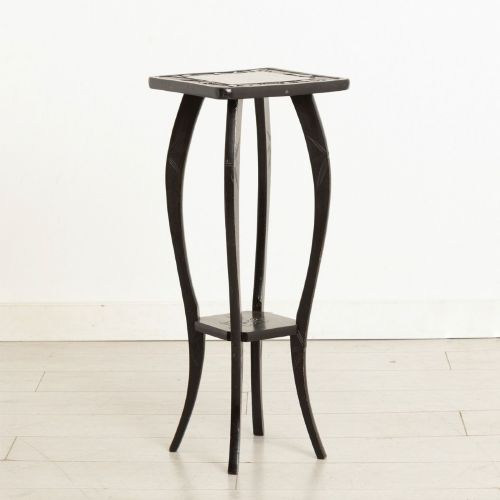

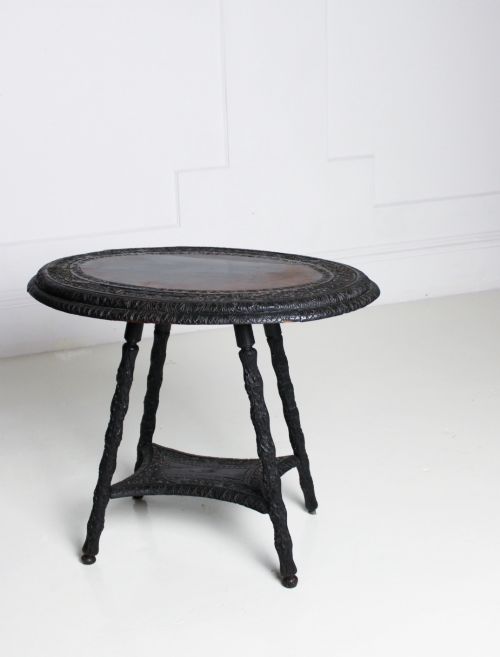
Wooden Corner Stand
These wooden corner stand pieces turn awkward room angles into useful display or storage space with period character.
Wooden Corner Stand
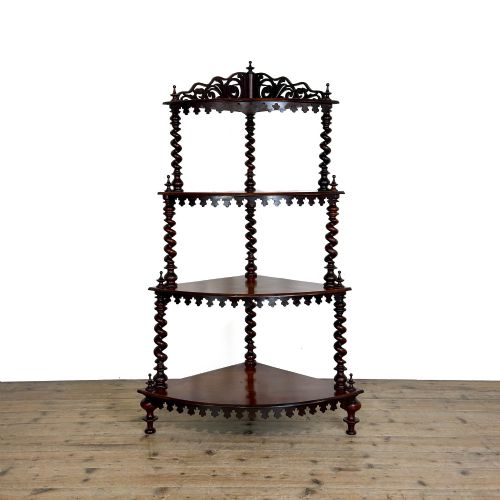
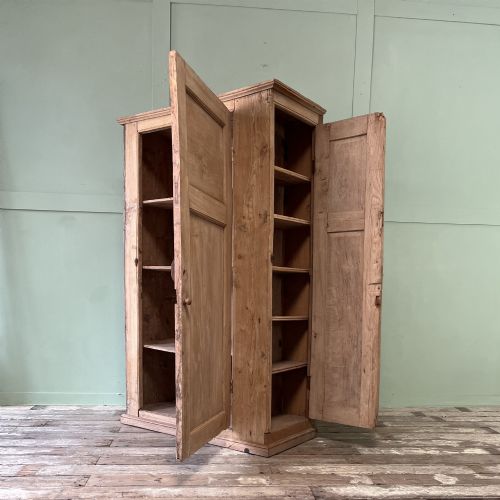
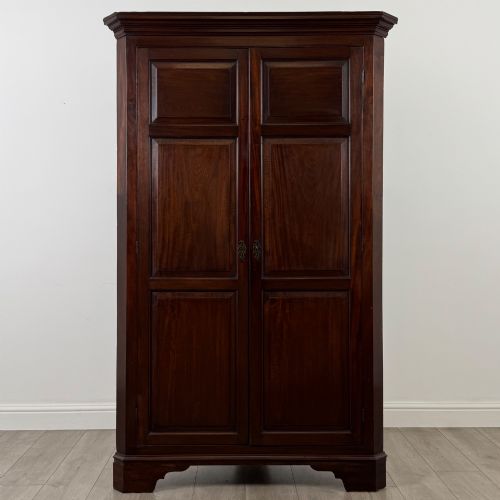
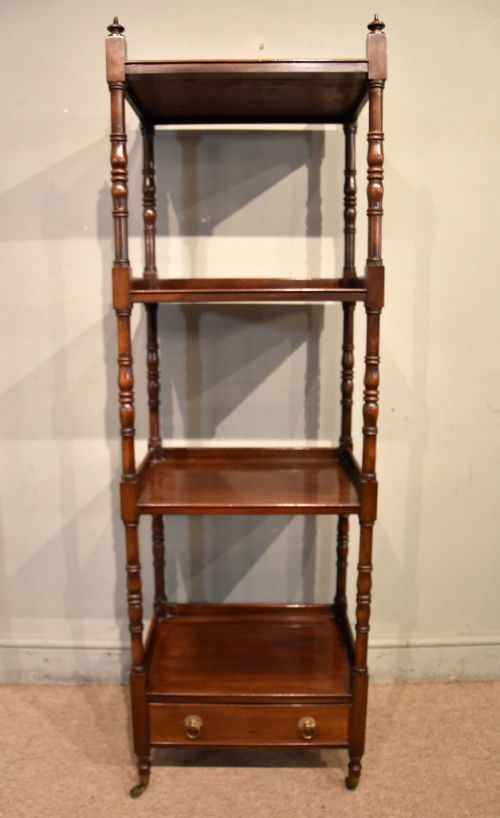
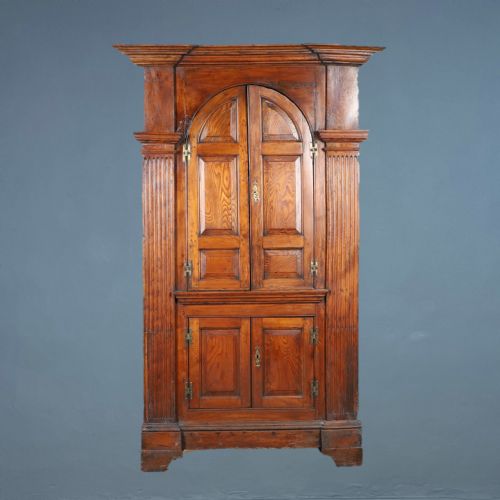
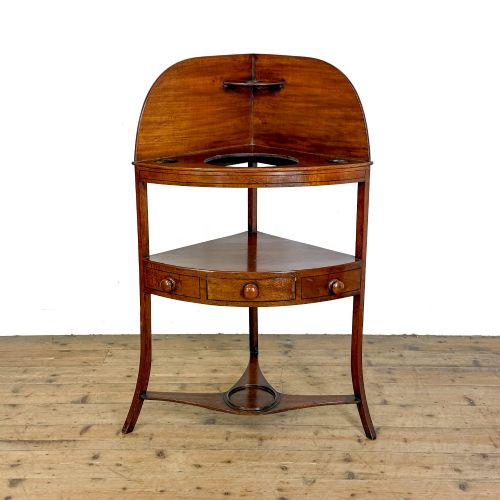
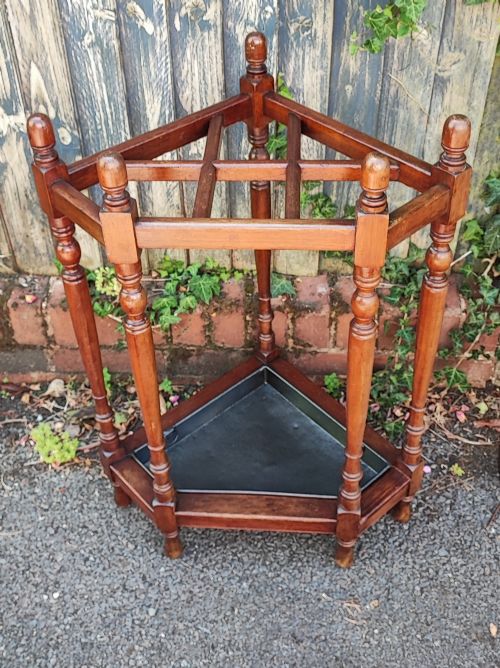
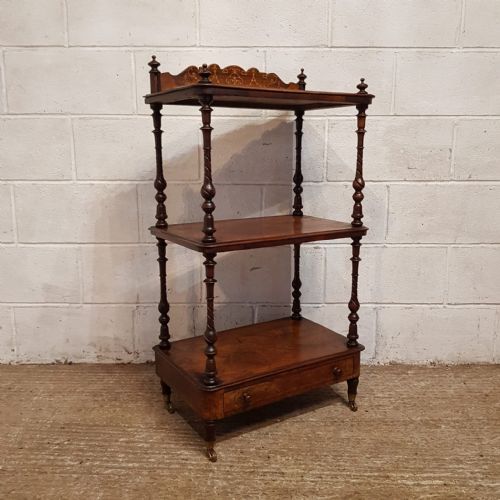
A wooden corner stand utilises neglected room angles, appearing primarily as floor standing corner cabinets, multi-tiered whatnots, and washstands across this selection. These pieces serve practical household needs while fitting neatly into room junctions.
Georgian and Victorian examples dominate the selection, bringing period timber and traditional forms into domestic interiors. Pieces range from enclosed cupboards with panelled doors to open shelving tiers designed for display.
Makers adapted these stands for various domestic functions, including corner washstands with basin rings and tiered whatnots for ornaments. The form remains remarkably adaptable for modern rooms needing compact storage.
How they were made
Cabinetmakers relied on dense hardwoods like mahogany, walnut, and oak to construct stable corner frames that endure centuries of use. Secondary timbers such as elm and beech appear in vernacular pieces and interior framing.
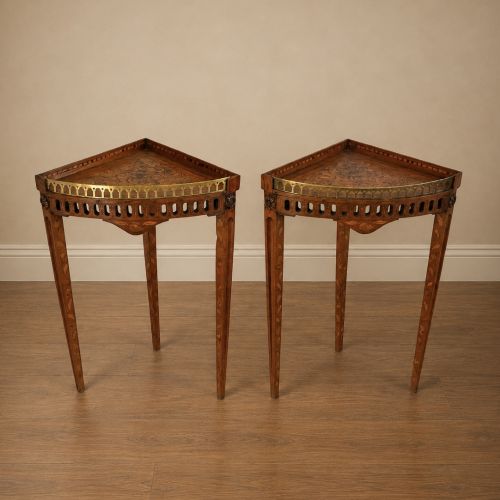
Surface decoration involves marquetry inlay, boxwood stringing, and brass galleries, combining structural joinery with decorative detail. Burr walnut veneers and ebonised finishes introduce distinct grain patterns and dark tones to the construction.
The selection spans Georgian, Victorian, Edwardian, and Regency eras alongside Arts and Crafts and Moorish Revival styles.
What varies in quality
Quality depends upon the selection of timber veneers, such as burr walnut or figured mahogany, and the precision of marquetry inlay work. Cabinetmakers who matched grain patterns across panels achieved a superior visual harmony.
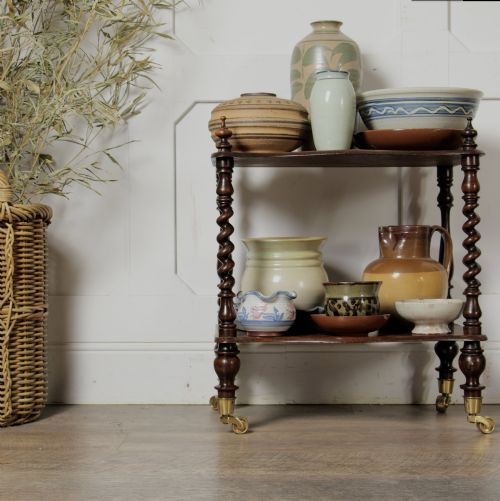
The sophistication of the structural joinery and turning, from barley twist uprights to fine bracket feet, separates standard utility items from exhibition pieces. Original brass fittings and intact galleries elevate the finish of individual stands.
Liberty & Co
The Wooden Corner Stand Glossary
- Whatnot
- A set of open shelves standing on legs, used for displaying ornaments and books. Multiple tiers provide graduated storage space.
- Marquetry
- Decorative veneer work forming pictures or patterns by using thin slices of wood and other materials. Craftsmen assemble these elements precisely onto the primary surface.
- Washstand
- A small table designed to hold a wash basin, jug, and related toilet articles. Many feature cut-out top rings for basins and lower shelves for storage.
- Bracket foot
- A foot forming a small bracket, often shaped with a scroll or ogee profile, supporting cabinet corners. This support style appears frequently on Georgian cupboards.
Wooden Corner Stand: Frequently Asked Questions
Where do I put a wooden corner stand?
These stands fit directly into empty room intersections, making use of space that standard rectangular furniture cannot occupy.
They work effectively in dining rooms for display or in hallways and bedrooms for compact surface storage.
How do I identify a Georgian corner cupboard?
Georgian examples often feature solid mahogany or oak construction with fielded panel doors and traditional brass H-hinges. Look for architectural crown mouldings and bracket feet typical of eighteenth-century design.
Interior configurations usually include shaped wooden shelves and small spice drawers tucked inside the main cupboard space.
What is the difference between a whatnot and a cabinet?
A whatnot consists of open tiered shelves designed specifically for displaying decorative objects, ornaments, and small collections.
Cabinets feature enclosed doors, either panelled or glazed, which conceal the interior contents and protect stored items from dust.
Can these stands hold heavy items?
Solid hardwood construction in mahogany and oak provides strong support for everyday decorative objects, lamps, and books.
Heavier loads should go on the lower fixed shelves, while upper tiers suit lighter ornaments and smaller display pieces.