



Wooden Cocktail Cart
A wooden cocktail cart brings period hospitality into a room, offering a mobile surface for glassware and bottles.
Wooden Cocktail Cart
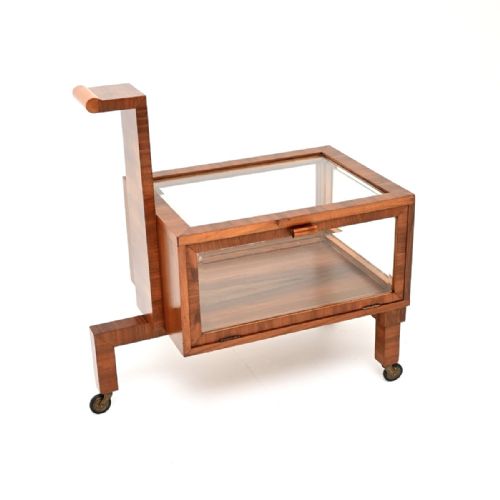
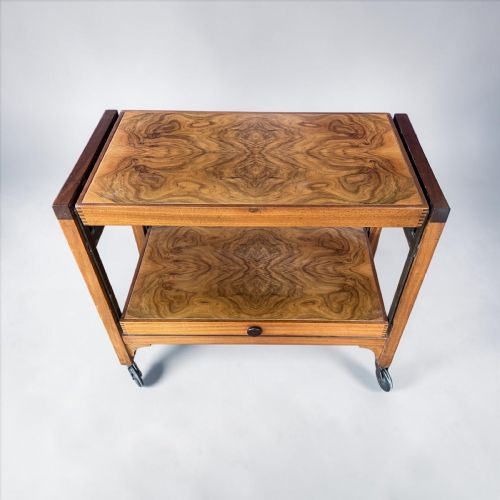
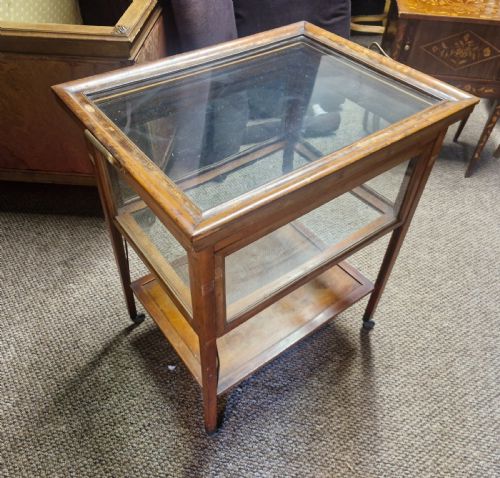
A wooden cocktail cart is a movable piece of furniture designed to hold drinks, glassware, and bar accessories for entertaining guests. The pieces listed under wooden cocktail cart span several decades, featuring drinks trolleys, tea trolleys, and serving trays from the Edwardian period up through the 1930s.
Origins include English workshops and makers such as Lusty of Leicester, reflecting both domestic tea culture and later cocktail habits. Forms range from circular drinks bar carts to metamorphic serving trolleys and novelty bar ware trays.
Materials and construction
Construction relies heavily on figured walnut and mahogany timbers, sometimes paired with beech frames and cane binding. Artisans shaped these woods into circular frames, drop-side tea trolleys, and display cases.
Metal and brass components often form the wheels, castors, and handles that provide mobility, while glass inserts serve as protective or decorative surfaces on shelves and removable trays.
Wooden Cocktail Cart Retail Price Guide 2026
Typical asking prices for wooden cocktail cart among the pieces listed under this phrase on Sellingantiques today, from the lower quarter to the upper quarter. They describe what is for sale here now, not the wider market.
Charlie Chaplin makes a surprise appearance in the bar ware tray selection, bringing silent film comedy straight to the cocktail hour.
Factors that define quality
Quality rests upon the choice of timber figure, such as richly grained figured walnut, and the sophistication of the joinery and mechanisms. Metamorphic designs and streamline Art Deco forms demand higher precision in woodwork than standard tea trolleys.
The integrity of secondary materials like cane binding, brass hardware, and removable glass trays also distinguishes standard utility items from finer bespoke pieces.
Lusty of Leicester
The Wooden Cocktail Cart Glossary
- Drinks trolley
- A movable stand or small cart equipped with wheels for serving beverages and glassware. These pieces often feature multiple tiers and handles for steering.
- Drop sides
- Hinged flaps on the edges of a surface that can be raised to extend the top or lowered when space is limited. They are commonly found on tea and serving trolleys.
- Metamorphic
- Describing furniture designed to transform its shape or function through folding, sliding, or pivoting mechanisms. Art Deco examples utilise this to alter the serving surface.
- Figured walnut
- Timber cut to highlight decorative natural grain patterns such as curls or swirls. This veneer or solid wood denotes higher aesthetic ambition in cabinetmaking.
Wooden Cocktail Cart: Frequently Asked Questions
What is a wooden cocktail cart?
A wooden cocktail cart is a movable piece of furniture used for serving and displaying drinks. They include drinks trolleys, tea trolleys, and bar carts.
Most examples date from the Edwardian era through the Art Deco period of the 1920s and 1930s. They often feature wheels, handles, and multiple tiers for bottles and glassware.
How were tea trolleys used?
Tea trolleys served afternoon tea and cakes in the home, featuring drop sides and removable trays to transport items easily between rooms.
Over time, many of these same forms adapted to hold cocktail equipment and glassware as entertaining habits shifted towards the bar cart style.
How do I identify an Art Deco trolley?
Art Deco trolleys typically feature geometric shapes, circular designs, or streamline forms. They frequently utilise figured walnut and bold silhouettes characteristic of the 1920s and 1930s.
Details such as cane bound beech or novelty trays depicting figures like Charlie Chaplin also point directly to this vibrant era of design.
Are the trays on these carts removable?
Many serving carts and trolleys include a removable tray built into the top tier. This allowed hosts to lift the tray off the cart and place it directly onto a table.
Edwardian mahogany cabinets and Art Deco serving trolleys both incorporate this practical feature for ease of service.