
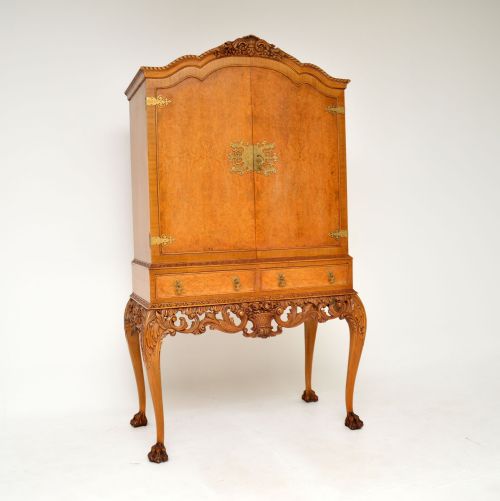


Wooden Cocktail Bar
A wooden cocktail bar brings home the social theatre of mixing drinks, spanning eras from Victorian back and front bars to Art Deco cabinets.
Wooden Cocktail Bar
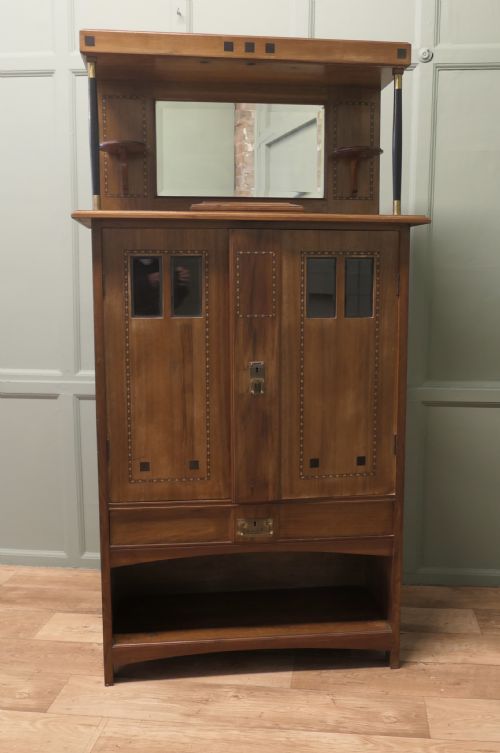
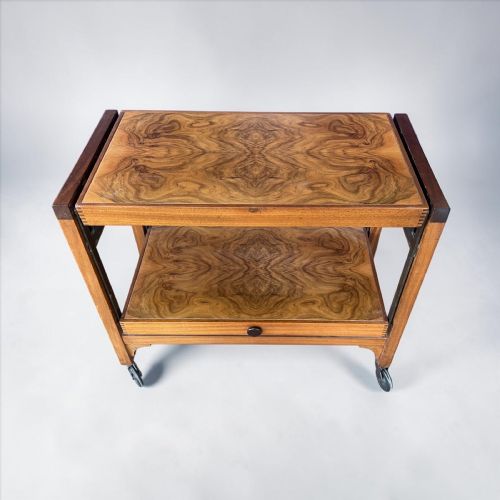
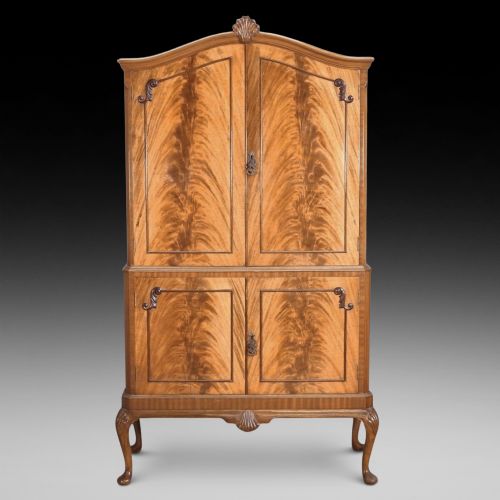
A wooden cocktail bar encompasses a variety of forms designed for entertaining, ranging from elaborate drinks cabinets and home bars to mobile serving trolleys and bar carts. When searching for a wooden cocktail bar, buyers encounter pieces spanning from the Victorian period through the Edwardian era and into the 1930s and 1940s. The most frequent discoveries on this page are Art Deco walnut drinks cabinets and circular trolley carts from the 1930s.
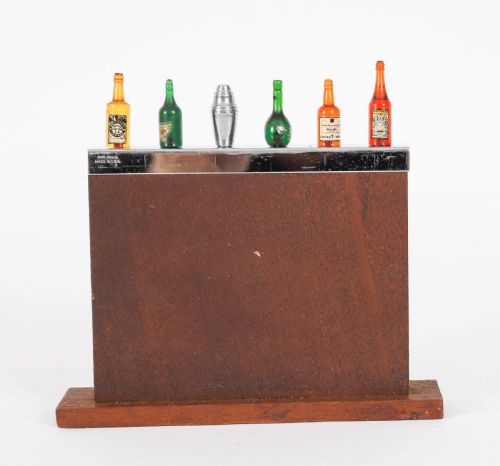
Cabinet forms often feature fitted interiors with drop-down writing or mixing surfaces, glass shelves, and space for glassware and bottles. Trolley variants offer mobility, incorporating brass wheels, removable trays, and tiered shelving for serving guests. Period examples also include specialised novelty barware sets, serving trays, and complete wine bar and stool sets originating from English and French makers.
Materials and construction methods
Construction relies heavily on traditional cabinet-making timbers, most notably burr walnut, figured walnut, mahogany, and oak. Artisans utilised these woods for their rich grain patterns, often enhancing them through marquetry inlay or high-gloss polishing to suit the prevailing aesthetic of the period.
Metal and glass components complement the woodwork extensively. Chrome and brass feature as structural framing, handles, and gallery rails, particularly on 1930s trolleys, while glass inserts provide functional surfaces for bottle storage and display.
The listings span from 19th-century Victorian back bars to 1940s novelty items, highlighting walnut, mahogany, oak, brass, and chrome.
Distinctions in craftsmanship
Quality reveals itself in the selection of timber veneers, such as figured walnut and burr oak, where book-matched grain patterns demonstrate superior material selection. Superior cabinetwork includes precise joinery, smoothly operating metamorphic mechanisms, and substantial hardware integration.
The distinction between standard production and exceptional manufacture also rests on interior detailing. Finely appointed cabinets include mirrored backs, specialised glassware racks, and intact original removable trays, whereas lesser examples feature simplified internal fittings.
Lusty of Leicester·Waring & Gillows
The Wooden Cocktail Bar Glossary
- Metamorphic
- A descriptive term for furniture that transforms its shape or function through folding, sliding, or expanding mechanisms. These pieces shift from compact side tables or cabinets into extended serving stations.
- Marquetry
- The art of applying decorative veneer pieces in wood to a structure to form intricate patterns and pictures. Craftsmen use contrasting timbers to create geometric or pictorial designs on cabinet doors.
- Burr Walnut
- A specialised wood grain obtained from growths on walnut trees, prized for its swirling, mottled patterns. It is frequently utilised on prominent surfaces of Art Deco and Queen Anne style cabinets.
- Barware
- Utensils and accessories used in the preparation and serving of drinks, including cocktail sticks, trays, and shakers. These items often reflect the novelty designs popular in the 1930s and 1940s.
- Streamline
- A late phase of Art Deco design characterised by aerodynamic curves, long horizontal lines, and smooth surfaces. This aesthetic heavily influenced English and French drinks trolleys from the 1930s.
Wooden Cocktail Bar: Frequently Asked Questions
What is a metamorphic drinks trolley?
A metamorphic drinks trolley is a piece of furniture engineered to alter its configuration for serving purposes. These designs expand or unfold to provide additional surface area when entertaining.
Such pieces combine the utility of a side table with the mobility of a bar cart, utilising clever hinges and folding leaves typical of the 1930s.
How do I identify an Art Deco cocktail cabinet?
Art Deco cocktail cabinets are characterised by geometric symmetry, rich wood veneers like walnut and macassar, and contrasting metal accents. They often feature curved silhouettes or streamlined profiles.
Interiors typically include mirrored backing, glass shelving, and pull-out mixing trays designed for the cocktail culture of the interwar period.
What is the difference between a cabinet and a trolley?
A drinks cabinet is a stationary piece of furniture designed to securely store bottles, glassware, and mixing equipment behind doors. They often feature drop-front desks that double as preparation counters.
In contrast, a drinks trolley or bar cart is a mobile unit mounted on wheels or castors, intended for transporting and serving refreshments directly to guests.
How should I care for a vintage wooden bar?
Maintenance involves protecting the wooden surfaces and metal hardware from moisture and direct sunlight. Regular dusting with a soft cloth preserves the polished finish of walnut and mahogany.
Use coasters for drinks placed on the surface to prevent water rings from penetrating the vintage polish or veneer.