

Wooden Chest with Lock
A wooden chest with lock is a secure container for valuables, papers, and provisions, offering period craftsmanship and robust security.
Wooden Chest with Lock
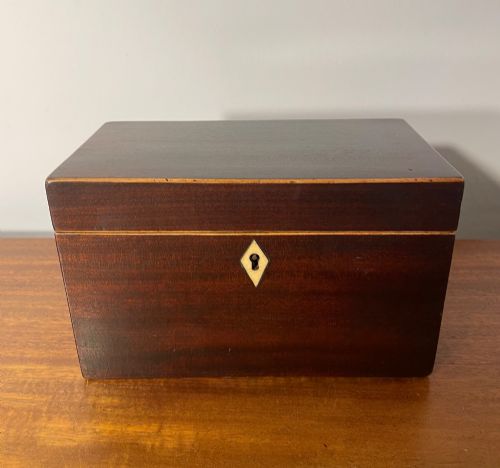
A wooden chest with lock spans centuries of storage forms, ranging from small table boxes and tea caddies to large blanket chests and dampchiya dowry trunks. Buyers encounter diverse regional traditions, including Spanish painted blanket chests, Flemish coffers, and Rajasthani iron-banded trunks.
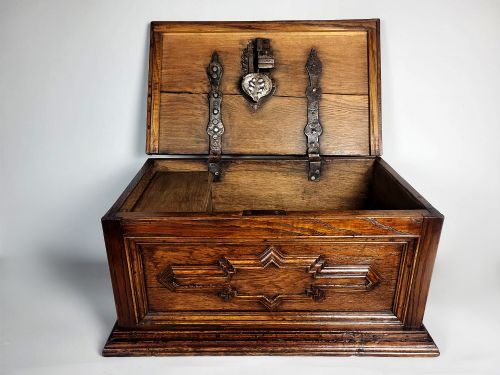
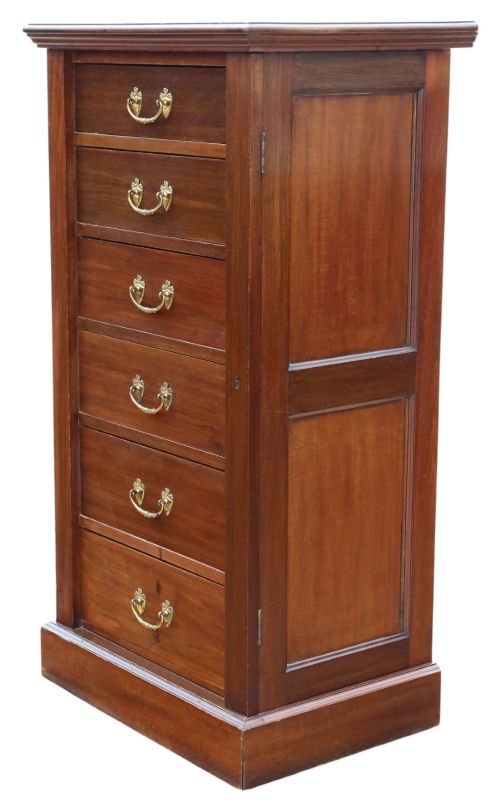
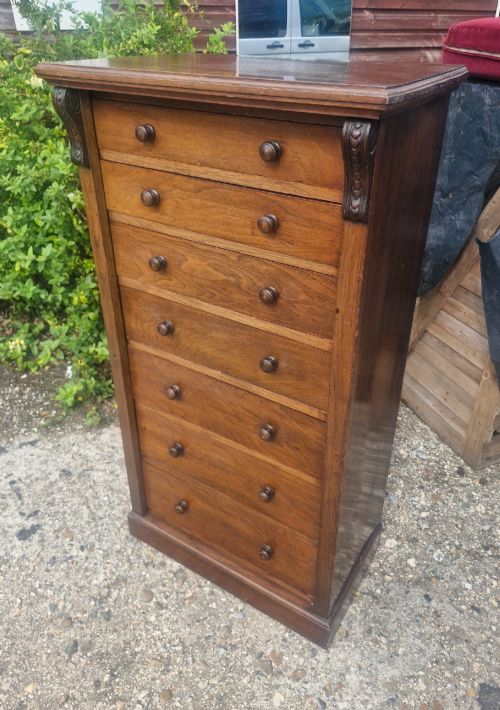
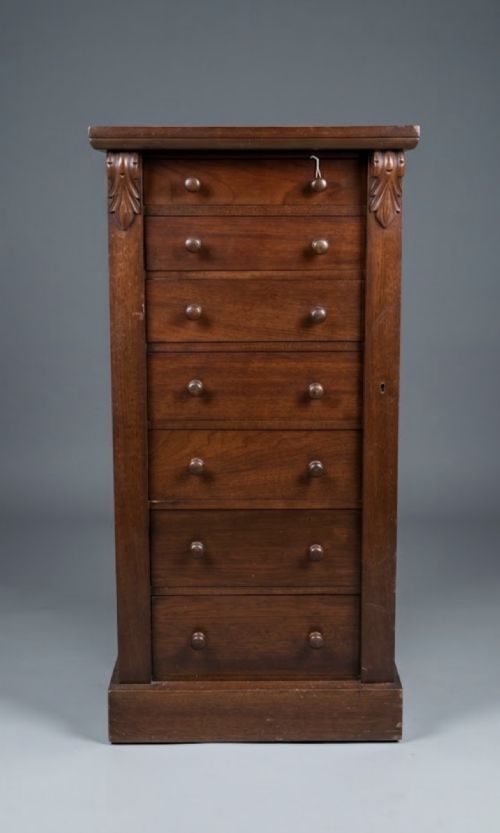
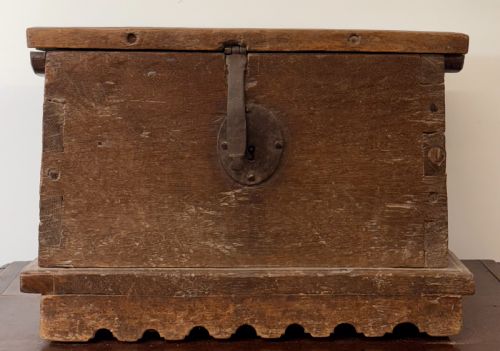
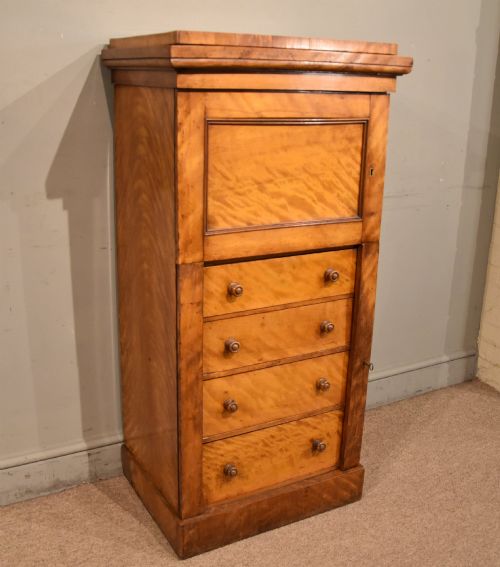
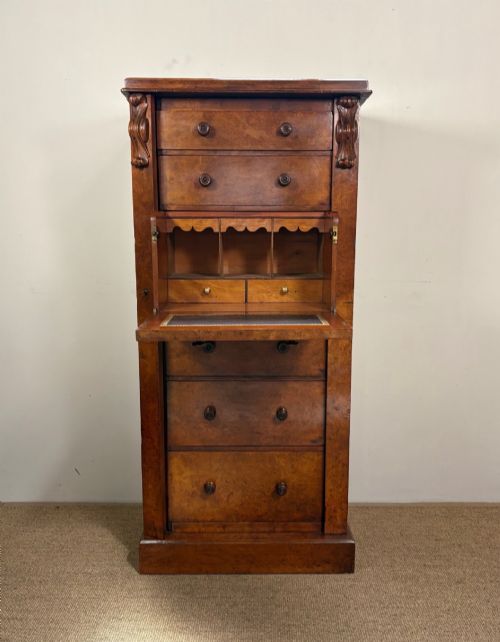
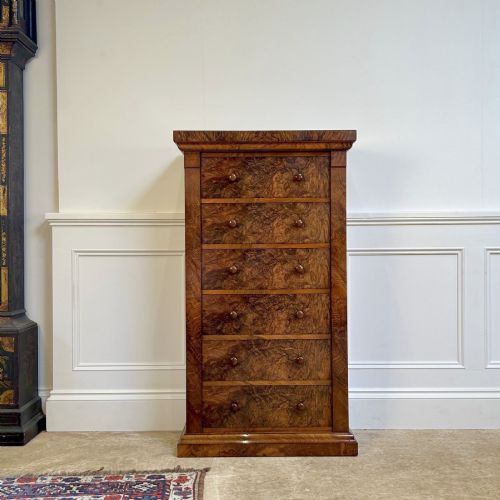
Earlier examples frequently take the form of carved oak bible boxes or Charles II safe boxes, whilst later pieces include Victorian mahogany Wellington chests, rosewood marquetry tea caddies, and solid pine trunks. These objects served domestic, ceremonial, and travelling functions across different social strata.
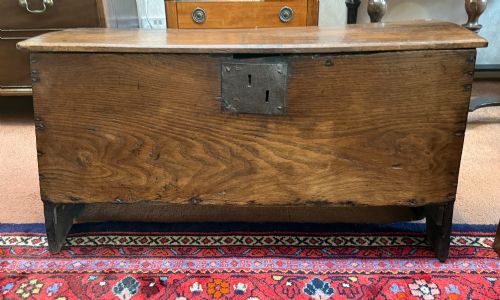
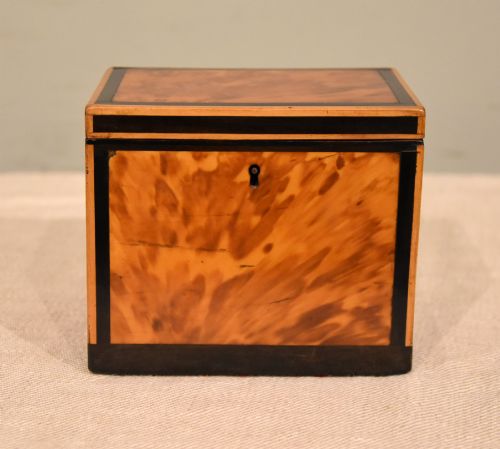
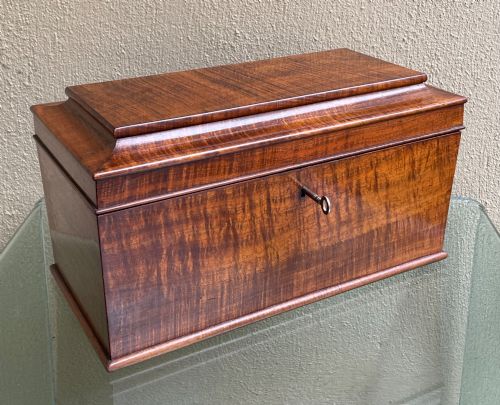
The most common versions on this page are compact tea caddies and robust oak chests, reflecting both personal valuables storage and household linen keeping. Construction periods stretch from the late sixteenth century through the Victorian era into the twentieth century.
Materials and Construction
Carpenters and cabinetmakers utilised native and exotic timbers such as oak, mahogany, walnut, pine, burr elm, and rosewood, often applying carved decoration, painted finishes, or marquetry inlay. Iron and brass feature prominently in strapwork, hinges, and corner brackets to reinforce the wooden structures.
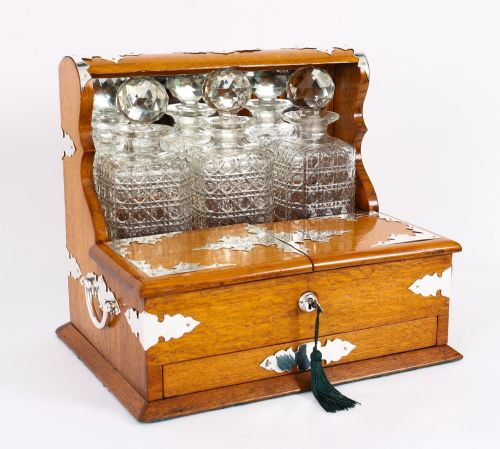
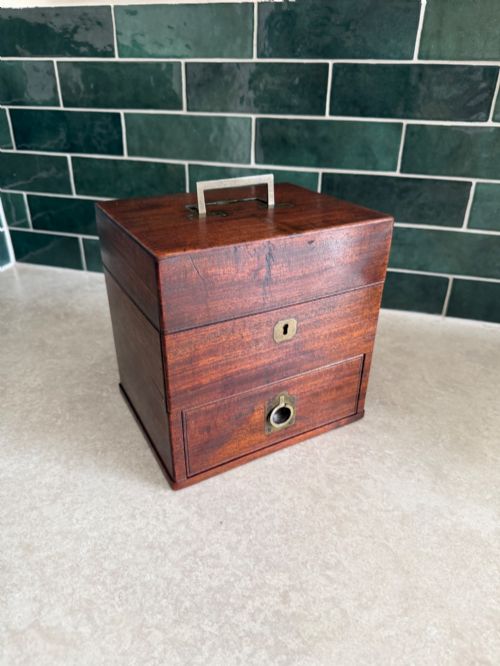
Security relied on complex steel, iron, or brass locks, sometimes accompanied by secret drawers or internal locking mechanisms operated with original keys. Side lifting handles on heavier trunks facilitated movement, whilst dovetailed or panelled joints ensured long-term durability.
Listings feature timbers including oak, mahogany, pine, walnut, rosewood, and burr elm, spanning the sixteenth to the twentieth century.
Evaluating Quality
Quality rests in the integrity of the timber, the subtlety of the carving or inlay, and the sophistication of the locking mechanism. Superior pieces retain their original working locks and keys, alongside uncompromised internal configurations like secret drawers and fitted compartments.
Refinements such as complex steel locks, burr veneers, and precise dovetailing distinguish high-status collector cabinets and safe boxes from utilitarian pine trunks and blanket chests. The survival of original decorative surfaces, whether Moorish style decoration or floral marquetry, elevates a piece.
The Wooden Chest with Lock Glossary
- Tea caddy
- A small lidded box designed to store tea leaves safely, often fitted with internal compartments and a secure lock due to the historical high cost of tea.
- Coffor
- An archaic term for a sturdy chest or box, typically constructed with heavy timber frame and panel techniques for transporting or storing valuables.
- Dampchiya
- A traditional low dowry chest originating from Rajasthan, frequently reinforced with iron banding and equipped with specialised locking systems.
- Marquetry
- The art of applying pieces of veneer to a structure to form decorative patterns, frequently utilised on Victorian rosewood tea caddies and decorative cabinets.
Wooden Chest with Lock: Frequently Asked Questions
What were wooden chests with locks used for?
These containers secured high-value items, important documents, family Bibles, tea leaves, and textiles against theft and moisture.
Smaller boxes served tabletop or personal storage roles, whilst large trunks and coffers held household linens or dowry goods.
How do I identify a 17th-century oak bible box?
Seventeenth-century bible boxes display traditional hand-carved ornamentation, such as geometric patterns or demi-lune front panels, executed in solid oak.
They generally feature pegged joints, iron hinges, and primitive yet robust locking mechanisms fitted to the interior lid.
Are original keys common on these chests?
Original keys remain relatively scarce because small keys were easily lost over centuries of domestic use.
When present, matching complex steel or brass keys significantly enhance the historical completeness and functionality of the piece.
How should I care for antique wooden chests?
Keep wooden chests away from direct sunlight, radiators, and rapid humidity changes to prevent the timber and veneers from splitting.
Apply traditional wax polish occasionally to nourish dry surfaces and maintain the natural lustre of the wood.