





Wooden Carrier Tray
A wooden carrier tray is a practical piece of utilitarian furniture, and these examples combine honest craftsmanship with domestic utility.
Wooden Carrier Tray
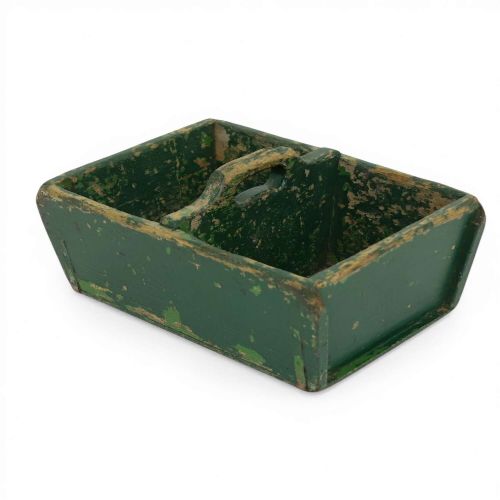
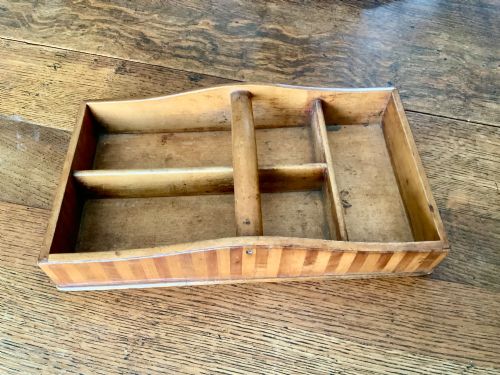
When you search for a wooden carrier tray, you encounter a varied selection of utilitarian items spanning the eighteenth, nineteenth, and early twentieth centuries. These pieces encompass functional forms such as cutlery trays, housekeeper carries, bottle caddies, and garden trugs designed for daily domestic or outdoor labour.
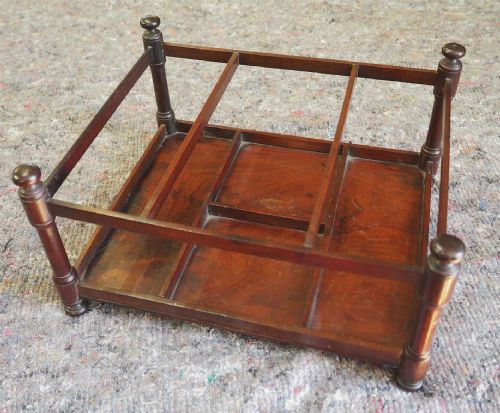
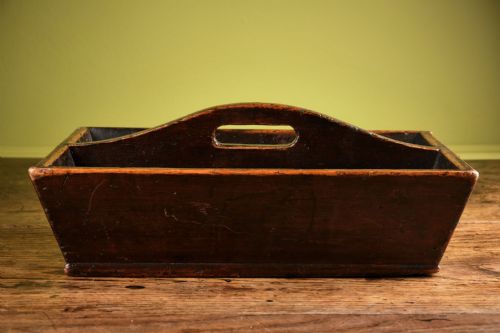
You are most likely to meet regional vernacular pieces made from native timbers like pine, oak, and fruitwood alongside more refined Georgian mahogany examples fitted with brass hardware. The selection bridges the gap between humble working-class tools and structured dining room accessories.
How they were made
The construction relies heavily on durable native woods such as oak, pine, and fruitwood, shaped through traditional carpentry methods suited to heavy daily use. Makers frequently incorporated brass handles, dividers, or reinforcement brackets to withstand the strain of carrying bottles, cutlery, or books.
Surface finishes range from simple painted or scrubbed pine in Welsh and Scandinavian country pieces to polished mahogany in Regency and George III items. This variety reflects whether the object was intended for the scullery, the garden, or the formal dining table.
Listings span the eighteenth, nineteenth, and early twentieth centuries, featuring materials like mahogany, oak, pine, fruitwood, and brass.
What varies in quality
Quality in these items rests upon the selection of timber and the integrity of the joinery rather than ornate decoration. A four-section wine carrier with precise brass fittings sits at a different level of craftsmanship than a rustic nailed pine cutlery box, though both serve their purpose.
The distinction lies in the subtlety of the shaping and the retention of original surfaces, such as untouched fruitwood patination or robust artisan construction, which separate utilitarian survivals from workshop-made items.
The Wooden Carrier Tray Glossary
- Trug
- A shallow wooden basket or container traditionally used for gathering garden produce or carrying tools. They are constructed from split or solid wood depending on the regional tradition.
- Cutlery tray
- A compartmented wooden box designed to hold knives, forks, and spoons for transport between the kitchen and the dining table. Many feature a central upright partition with a handle.
- Vernacular
- Everyday objects made by local artisans using regional styles and readily available materials, lacking the academic design of metropolitan furniture. Welsh and Scandinavian country pieces often display these traits.
- Fruitwood
- Dense timber gathered from fruit-bearing trees such as pear, apple, or cherry, prized by makers for its fine grain and pleasing warmth when polished.
Wooden Carrier Tray: Frequently Asked Questions
What were wooden carrier trays used for?
These items served practical roles around the house, garden, and dining room for transporting cutlery, decanters, books, and garden tools.
Housekeepers and servants relied on them to move household goods efficiently between rooms.
How do I tell Georgian trays from Victorian ones?
Georgian examples typically feature refined timber choices like mahogany, often with brass mounts and subtle shaping tailored for the dining room.
Victorian and later pieces lean towards robust utility, utilising pine, oak, or fruitwood for garden work boxes and kitchen carries.
Are these trays suitable for daily use?
Most of these pieces were built for heavy domestic labour and remain robust enough for modern handling.
Their solid construction in oak, pine, and mahogany allows them to function well in contemporary homes.
What is a vernacular wooden tray?
A vernacular tray is an item made by local craftsmen following regional traditions rather than formal design patterns.
These pieces use local timbers like Welsh pine or Scandinavian pine and focus entirely on utility.