
Wooden Captains Armchair
A wooden captains armchair is a sturdy low-backed seat built for the study or office, bringing robust country craftsmanship and practical comfort.
Wooden Captains Armchair
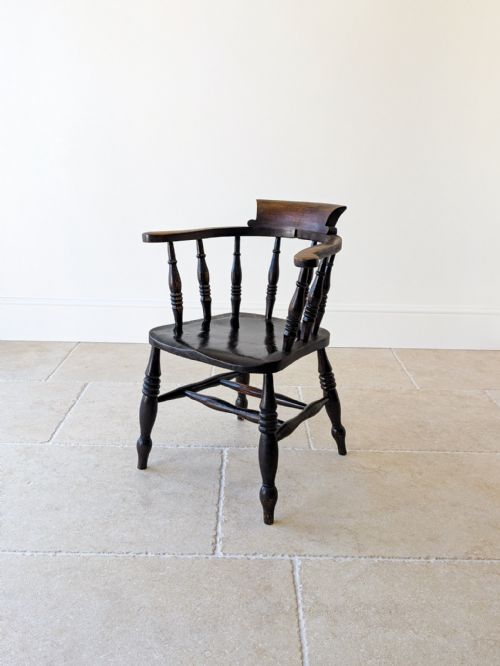
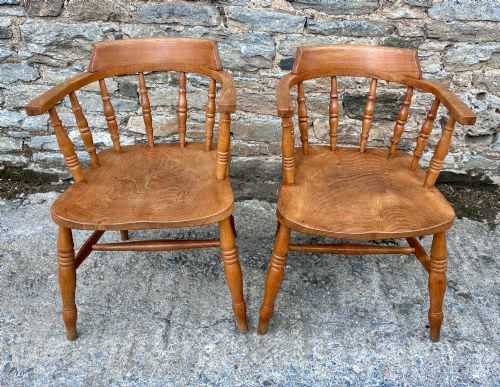
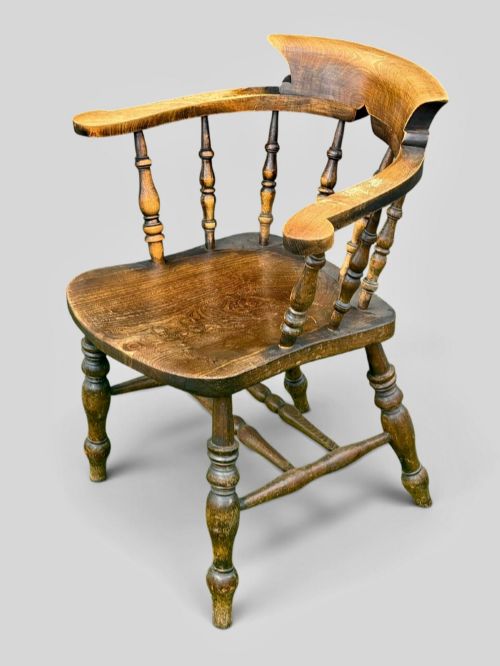
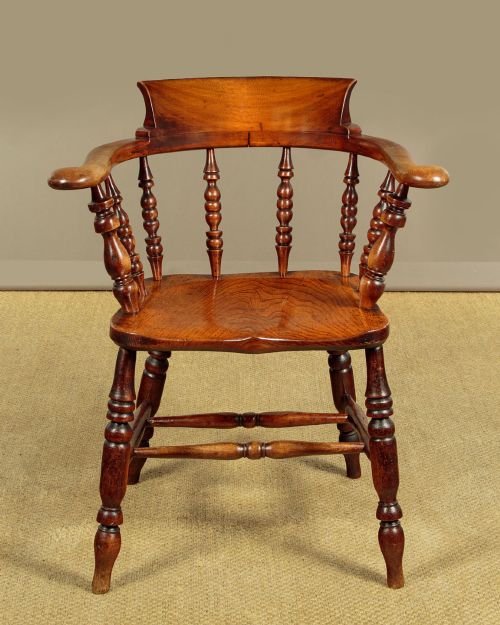
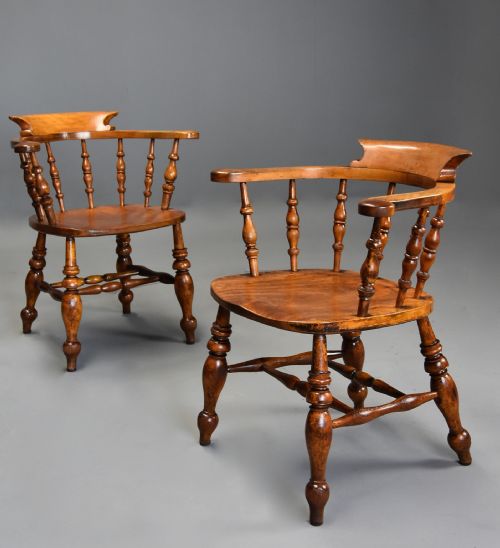
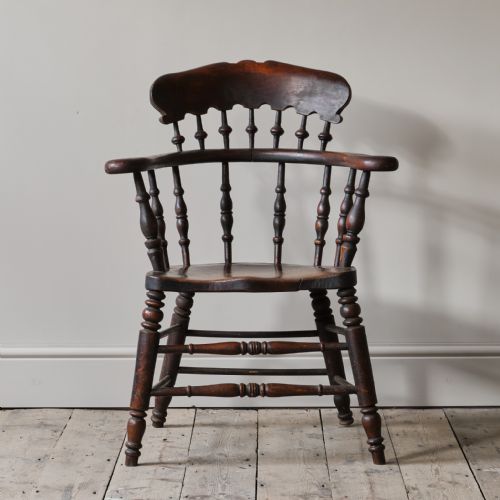
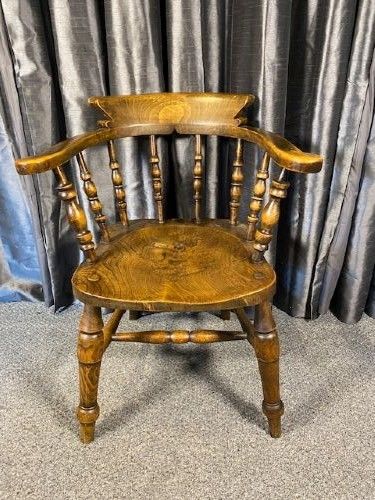
A wooden captains armchair, often associated with the smoker's bow or Windsor tradition, offers a low-slung, curved backrest supported by turned spindles. These chairs frequently serve at desks, tables, or within country house studies.
The selections span the Victorian and Edwardian eras, stretching from the mid-nineteenth century into the early twentieth century. Most examples found here originate from English provincial workshops and country houses.
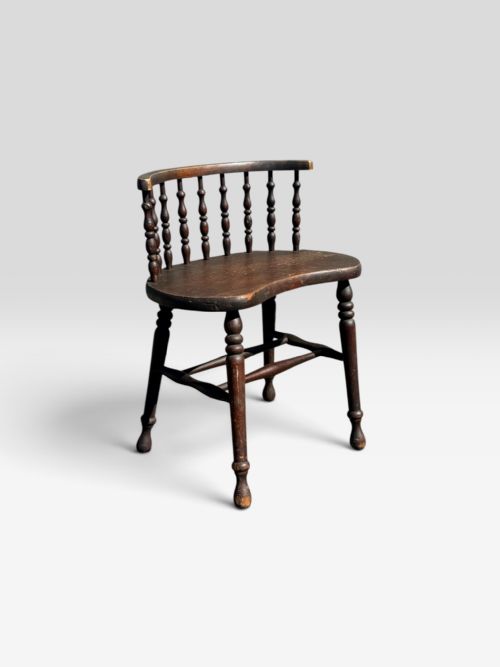
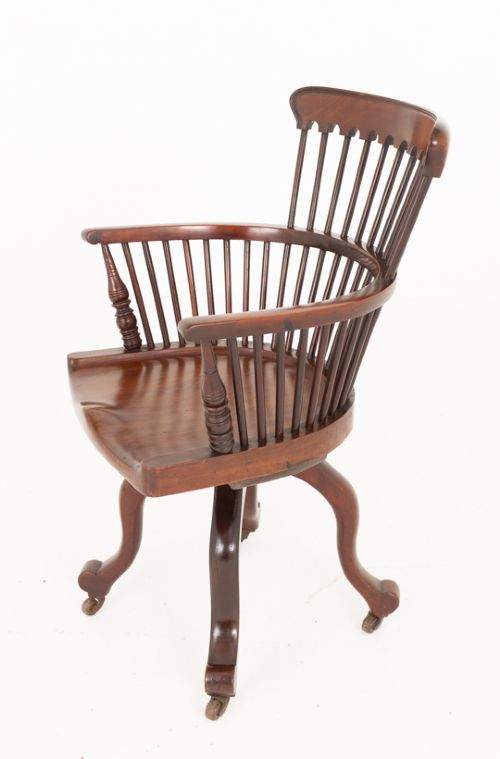
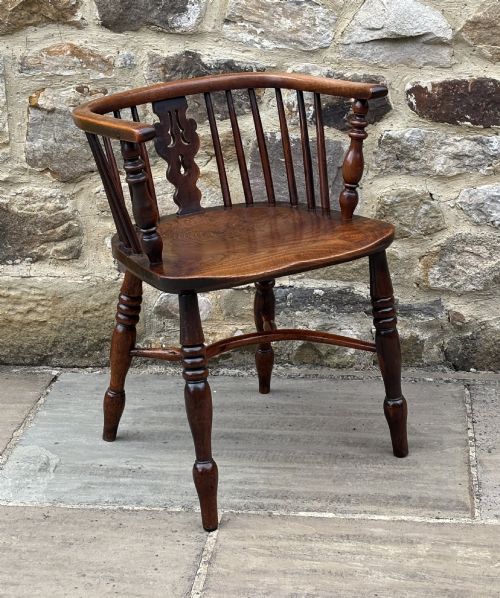
Makers utilised familiar regional forms, producing low-back Windsor variants, swivel office seating, and sturdy library armchairs. The primary function remains a robust, supportive seat designed for long hours of desk work.
Materials and Technique
Carpenters relied on native hardwoods, pairing elm seats with ash, beech, or birch for the bentwood arms and spindles. Selected pieces incorporate mahogany, walnut, or oak for formal office settings and revival styles.
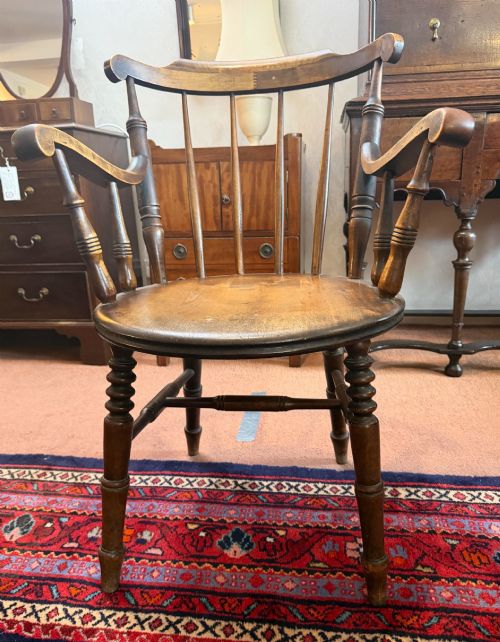
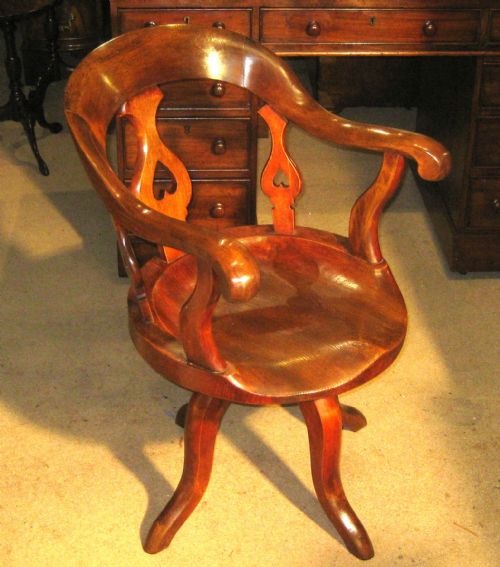
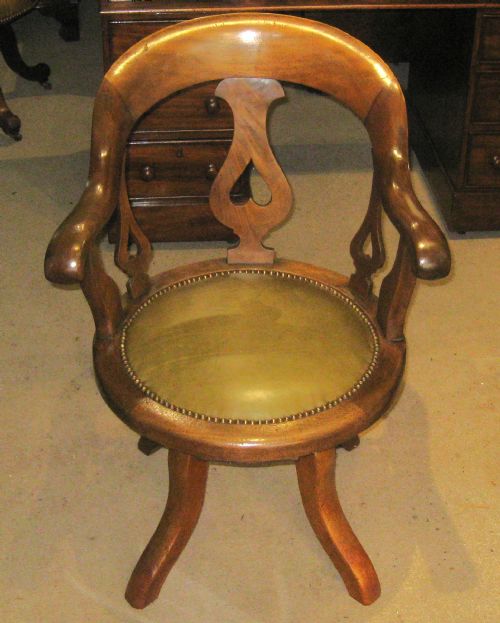
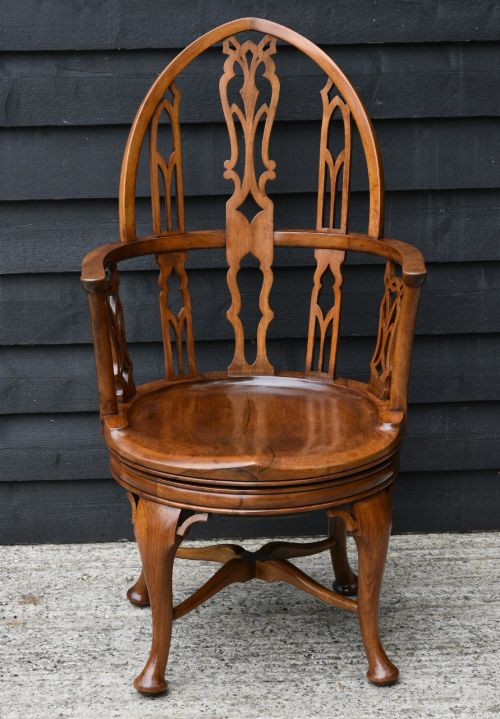
Construction techniques combine steam-bent continuous arm rails with saddled solid wood seats, joined using traditional pegging and spindle turning. Revolving desk variants integrate brass and iron swivel mechanisms beneath the timber frame.
Listings feature woods including elm, beech, oak, ash, mahogany, and walnut, spanning the Victorian and Edwardian periods.
The Measure of Quality
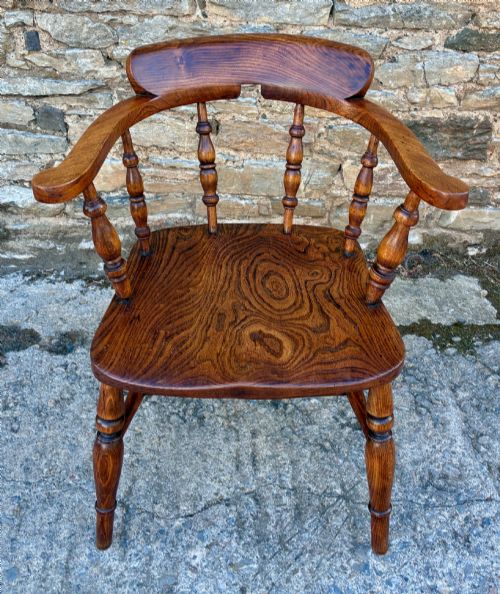
Distinction across the range lies in the depth of timber grain and the warmth of the original surface patina developed through decades of handling. Grain figures in elm seats and the fluidity of steam-bent ash arms elevate certain pieces above standard utility furniture.
Proportion and structural integrity define the better examples, where turned spindles align precisely and the joinery remains tight without excessive modern intervention. The integration of swivel mechanisms in walnut or mahogany desk chairs also alters the sophistication of the build.
Howard and Sons
The Wooden Captains Armchair Glossary
- Smoker's bow
- A low-backed Windsor derivative featuring a continuous curved armrail and spindle supports, commonly used in provincial settings.
- Windsor chair
- A wooden chair built with a solid saddle-sculpted seat into which the legs and back spindles are direct-tenoned.
- Carver chair
- An armchair designed to match a set of dining or office chairs, typically featuring open arms.
- Spindle
- A cylindrical, turned wooden rod used vertically to support the backrail or arms of the chair.
- Patina
- The deep surface sheen and mellow tone acquired by wood through age, wear, and regular polishing.
Wooden Captains Armchair: Frequently Asked Questions
How do I date these armchairs?
Dating relies on examining the timber selection, turnings, and construction methods. Mid-nineteenth-century examples often display deep elm grain and hand-turned ash components, while Edwardian versions may show machine precision or lighter oak frames.
Revolving mechanisms and brass hardware also offer clues. Standard Windsor forms appeared throughout the Victorian era, whereas swivel desk variants became more common toward the end of the nineteenth century.
Are they comfortable for daily desk use?
Yes, the saddle-shaped wooden seat and curved backrest provide natural ergonomic support for prolonged sitting. Many people use them daily at writing desks or dining tables.
For extra cushioning, a small pad or loose cushion can be placed on the solid elm seat. Their low arms allow the chair to tuck neatly beneath most standard desk heights.
Where should I place one at home?
These armchairs fit naturally into studies, home offices, and libraries as functional desk seating. Their modest proportions also allow them to serve as accent chairs in hallways or bedrooms.
Pairing a nineteenth-century elm or oak model with a plain wooden table highlights its provincial character. They complement both traditional country interiors and more eclectic modern rooms.