



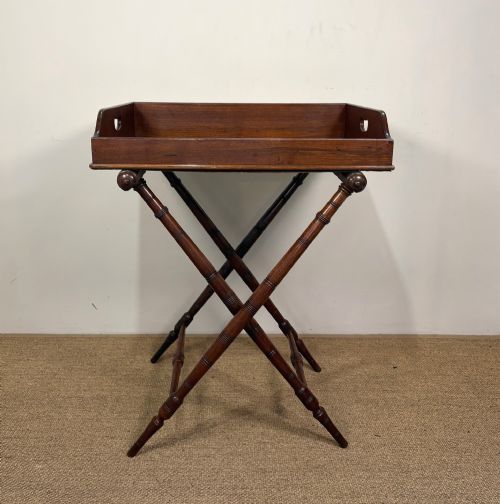

Wooden Butler Stand
A wooden butler stand combines a portable serving tray with a folding support, offering a practical surface for drinks and small items.
Wooden Butler Stand
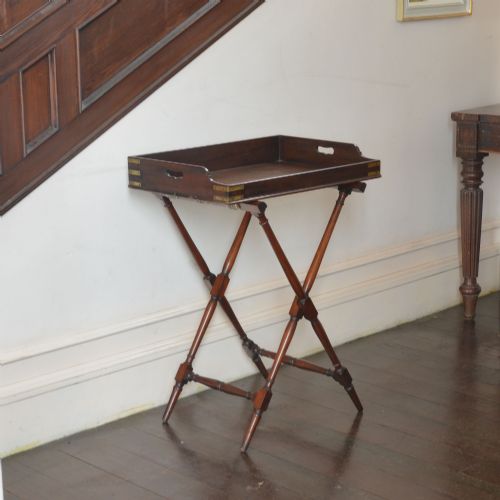
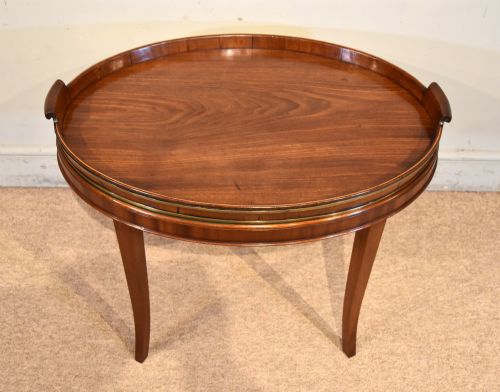
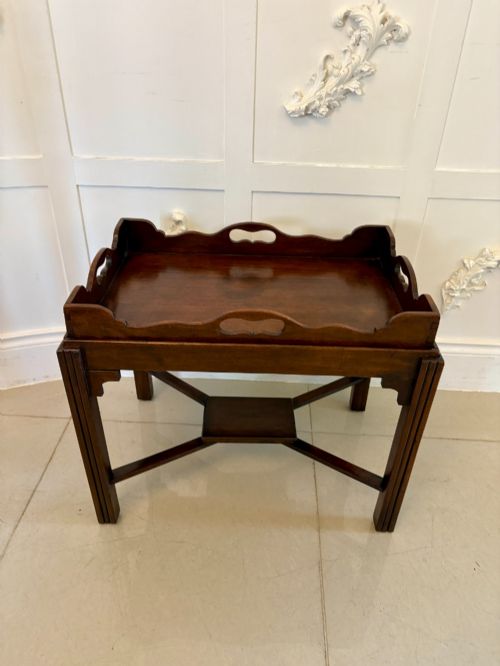
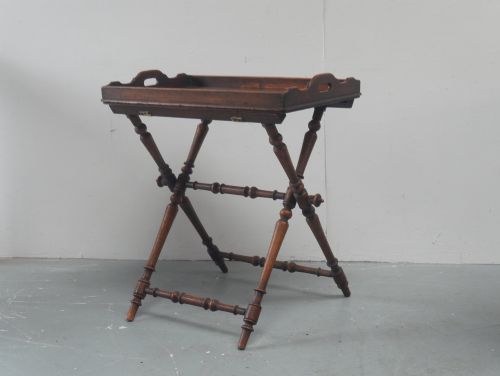
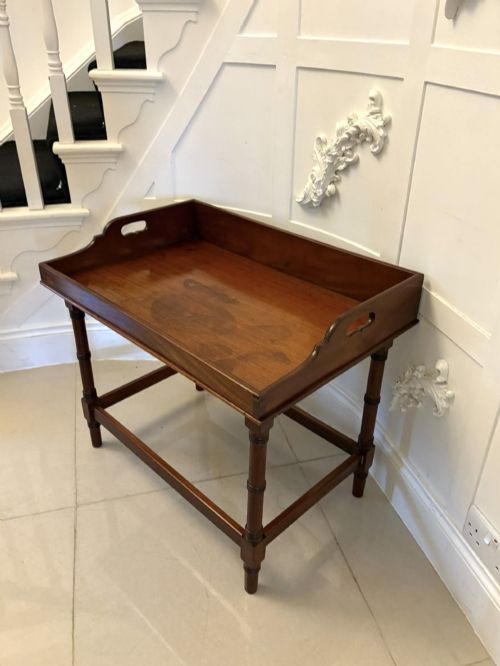
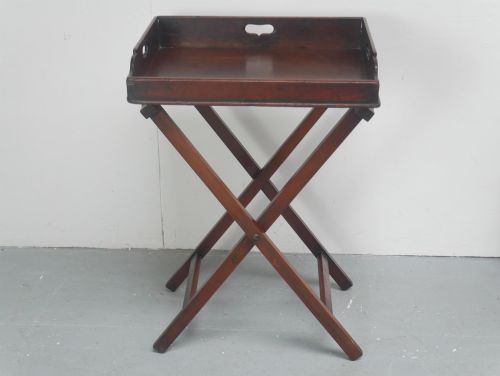
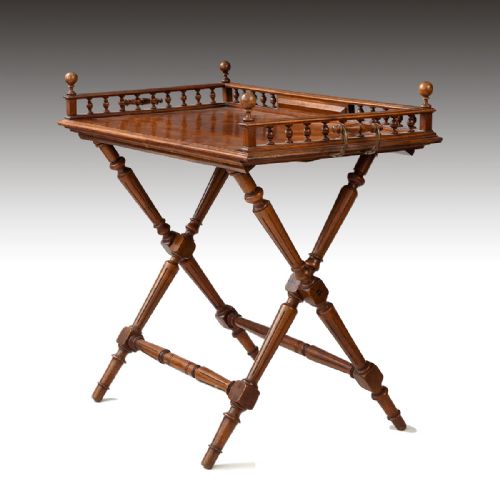
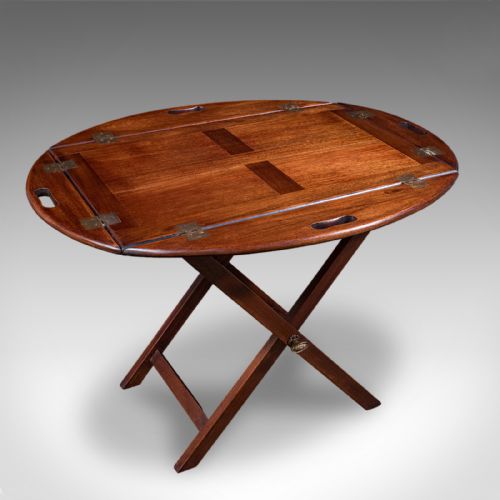
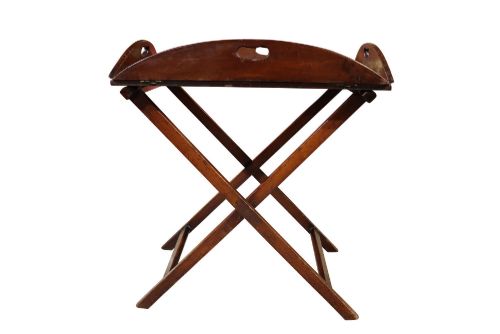
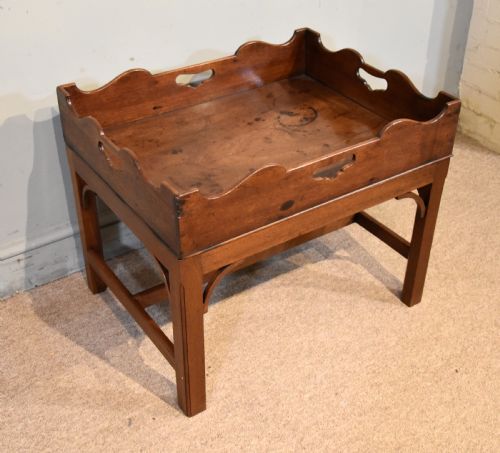
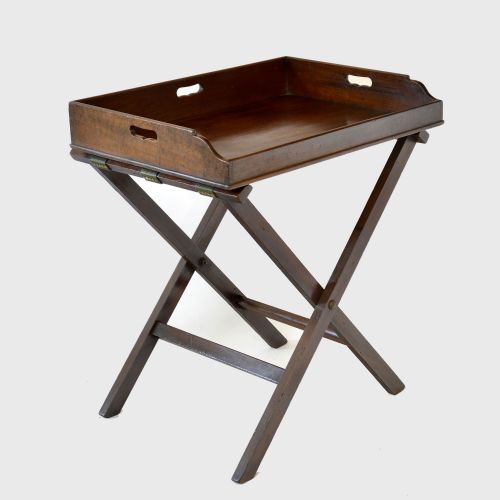
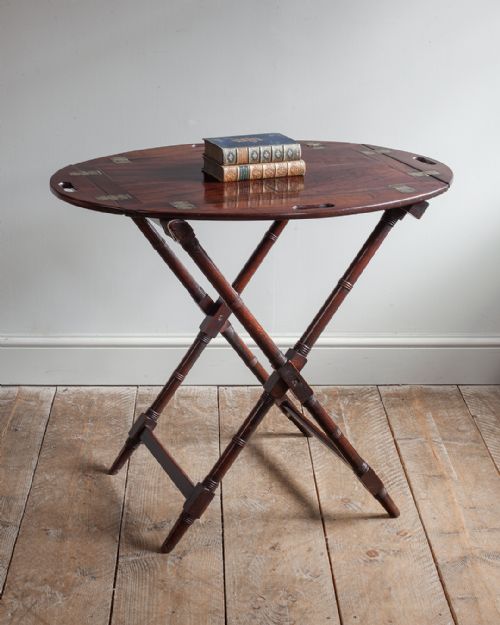
A wooden butler stand typically pairs a removable rectangular, oval, or drop-flap tray with an independent folding X-frame base. These pieces span the eighteenth, nineteenth, and early twentieth centuries, encompassing Georgian, Victorian, and Edwardian periods.
The selection here includes occasional tables, side tables, and coffee tables alongside traditional serving trays on stands and valet stands. Walnut, mahogany, and oak form the primary timbers for these serving surfaces and supports.
Materials and Construction
Cabinet makers utilised dense hardwoods such as mahogany, walnut, and oak to construct the trays and folding bases, occasionally incorporating burr walnut veneer or marquetry for decorative effect. Brass hinges and fittings appear frequently on folding mechanisms and drop-flap supports.
Joinery techniques include pegged joints and dovetailing on tray corners to withstand the movement of lifting and setting down heavy service items. Some examples incorporate cotton or fabric webbing to support the tray structure.
Wooden Butler Stand Retail Price Guide 2026
Typical asking prices for wooden butler stand among the pieces listed under this phrase on Sellingantiques today, from the lower quarter to the upper quarter. They describe what is for sale here now, not the wider market.
One unexpected Victorian iteration carries a complete boat and oars design right onto the drinks tray.
Build and Proportion
The standard of a wooden butler stand rests upon the crispness of the timber carving, the precise fit of the folding stand, and the retention of its original base. Finer examples display figured mahogany or burr walnut veneers with robust, tight-fitting joints.
Pieces that retain their original folding support command greater interest than marriages of later trays to unrelated bases. Subtle variations in edge mouldings and hand-carved handles distinguish workshop standards.
Fratelli Rugitti
The Wooden Butler Stand Glossary
- Tray Top
- A serving surface with raised edges designed to prevent items from sliding off during transport. These edges often feature carved hand-grips or shaped galleries.
- Folding Stand
- A collapsible wooden support, commonly configured as an X-frame, that holds the removable tray at a convenient height. It allows for compact storage when not in use.
- Drop-flap
- Hinged side panels on a tray that can be lowered or raised to alter the surface area of the serving top. Brass brackets often support these flaps when extended.
- Valet Stand
- An upright wooden furniture piece designed to hold garments, which appears alongside traditional serving stands in the broader category. It serves a similar organising purpose in domestic rooms.
- Marquetry
- The art of applying pieces of veneer to a structure to form decorative patterns. This technique appears on select decorative tabletops.
Wooden Butler Stand: Frequently Asked Questions
What is a wooden butler stand?
A wooden butler stand is a portable serving tray set upon a collapsible or fixed wooden base. It was traditionally used in grand households for carrying and serving drinks or food.
Today, these stands function as versatile side tables or coffee tables in living spaces. The removable tray allows for easy service, while the folding base stores flat.
How do I date a butler stand?
Dating relies on timber selection, structural joinery, and stylistic details such as Georgian bracket feet or Victorian carved decoration. Finer mahogany and walnut usually indicate eighteenth or early nineteenth-century origins, while oak examples often align with the later nineteenth century.
Examine the hardware and the underside of the tray for tool marks or age-related patina. Original folding stands matching the exact timber and wear of the tray provide the most reliable chronological markers.
Are tray stands stable enough for daily use?
Most wooden butler stands are built from sturdy hardwoods like mahogany, oak, or walnut designed for regular weight bearing. The X-frame folding mechanism locks securely when opened to support everyday items.
Care should be taken with antique hinges and webbing straps on older folding bases. Placing moderate loads on the centre of the tray ensures safe daily service.
How should I care for the wood?
Maintain the timber surfaces by dusting regularly with a soft, dry cloth and avoiding harsh chemical cleaning products. Periodic applications of appropriate wax preserve the natural finish and protect against moisture.
Keep these pieces away from direct heat sources and strong sunlight to prevent the timber or veneer from drying and splitting. Use coasters under wet glasses to protect antique polished surfaces.