
Wooden Box Settle
A wooden box settle is a high-backed seat with enclosed storage beneath, offering sturdy seating and draught-proof shelter in one heavy piece of furniture.
Wooden Box Settle
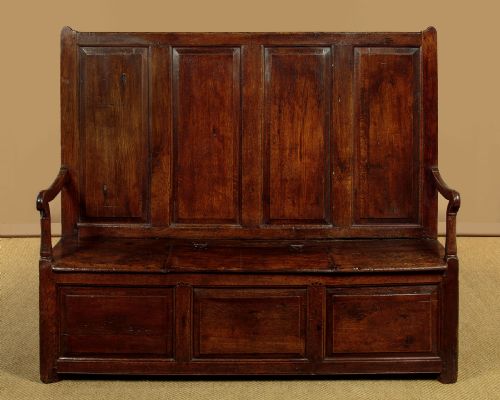
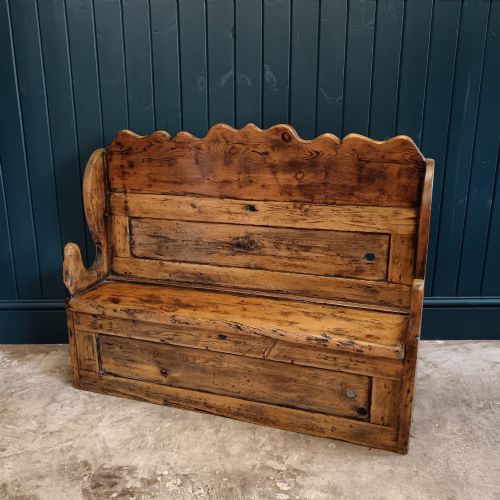
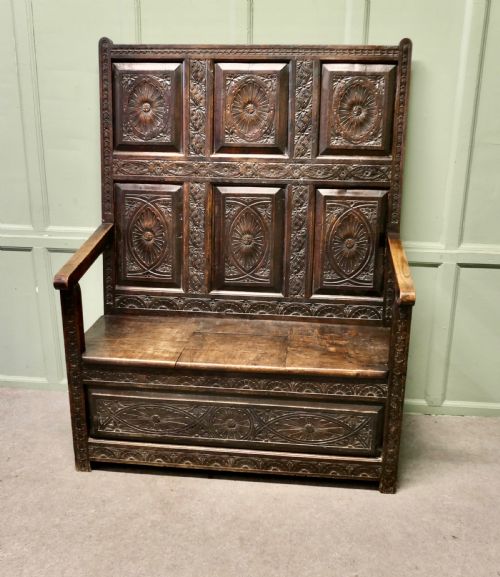
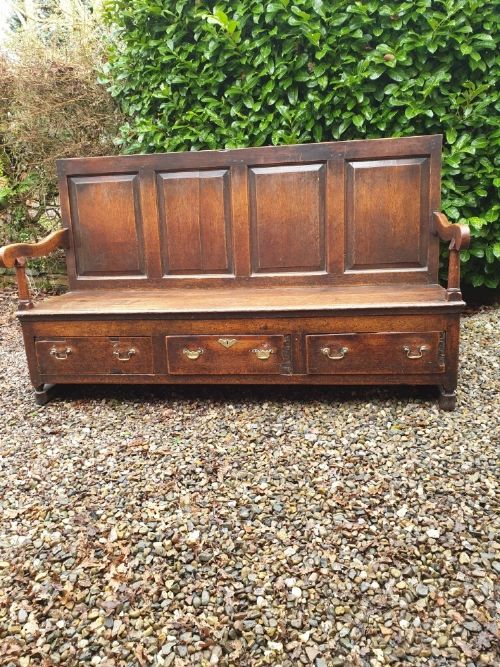
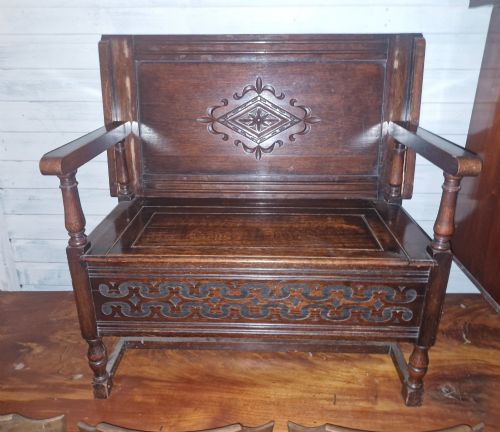
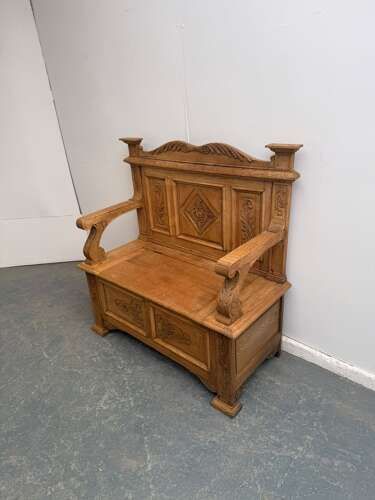
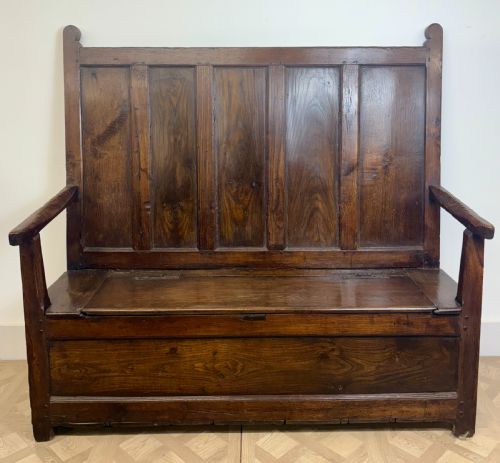
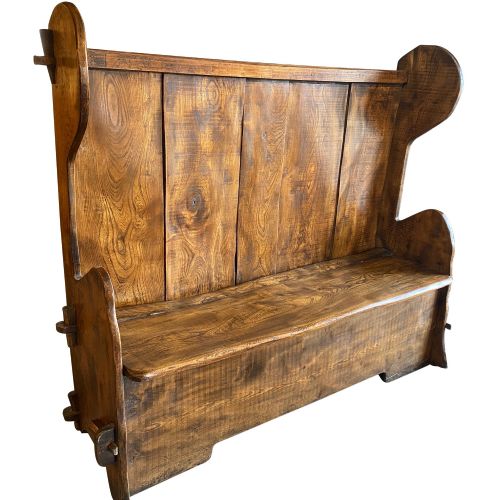
A wooden box settle combines a rigid panelled back with a hinged seat lid, forming a dual-purpose bench and chest. These items originated as functional furniture for draughty rooms, keeping heat away from the floor while storing household goods inside the base.
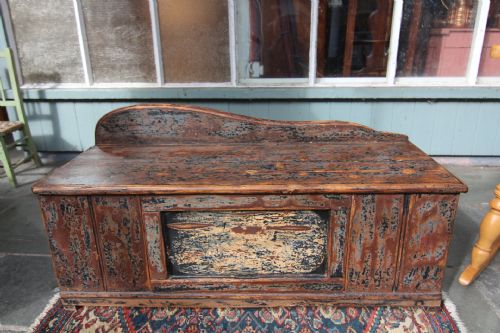
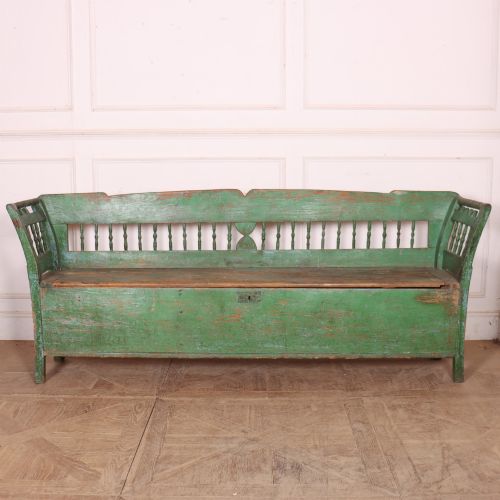
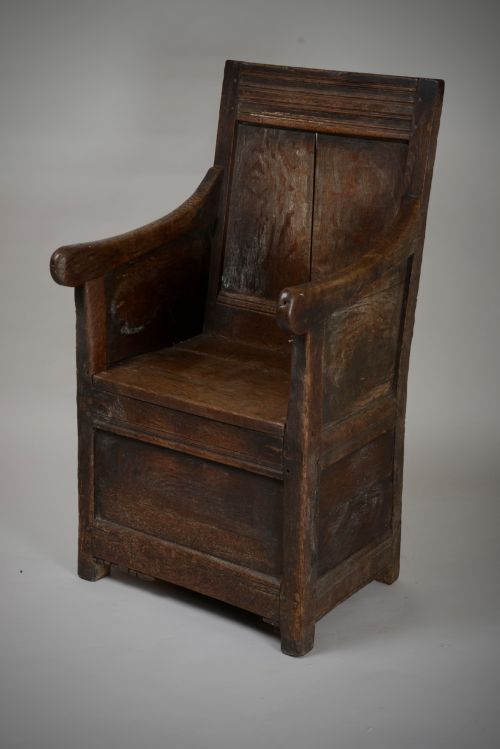
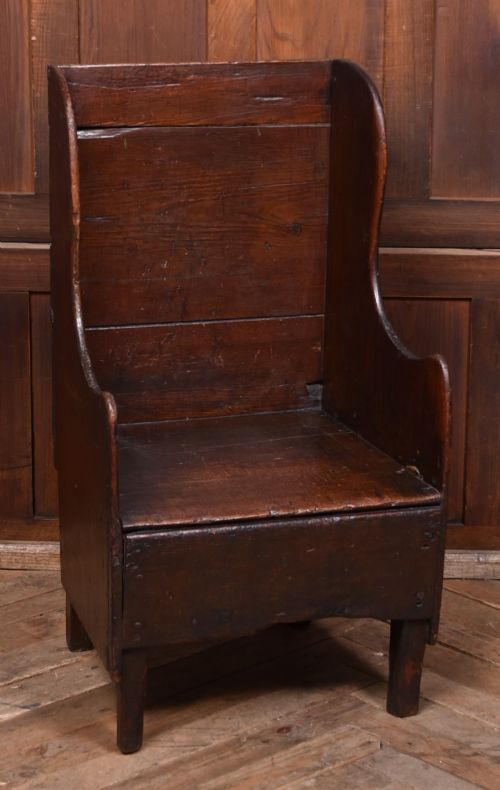
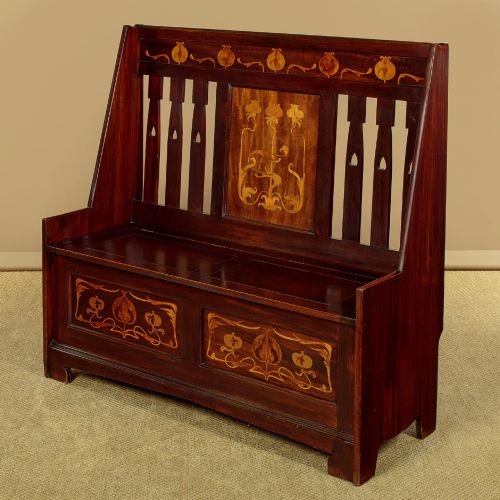
The pieces seen here span multiple centuries, ranging from early oak examples to later pine and mahogany variants. Country workshops produced most of these items, applying local vernacular styles that varied from Welsh and North Country designs to continental European forms.
What varies in quality
The integrity of the timber and the retention of original structural components dictate the standard of each wooden box settle. Pieces retaining their early hinges, unaltered base boards, and untouched surface patination stand apart from examples with replaced elements.
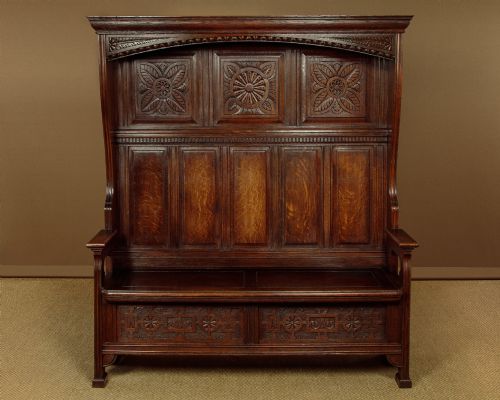
Carved decoration ranges from simple scratch-moulded panels to deep relief work on the backrests and canopies. The crispness of the joinery and the harmonious proportion of the high back to the storage box beneath define the success of the maker's design.
Some seats lift to reveal hidden storage once packed with wool and winter capes.
James Shoolbred and Co
The Wooden Box Settle Glossary
- Box settle
- A high-backed wooden bench featuring a lidded storage compartment directly beneath the seat. This form kept occupants warm by blocking cold draughts while holding textiles or household items.
- Panel-back
- A method of construction where vertical and horizontal wooden frames enclose thinner central panels. This technique accommodates seasonal wood movement without splitting the timber.
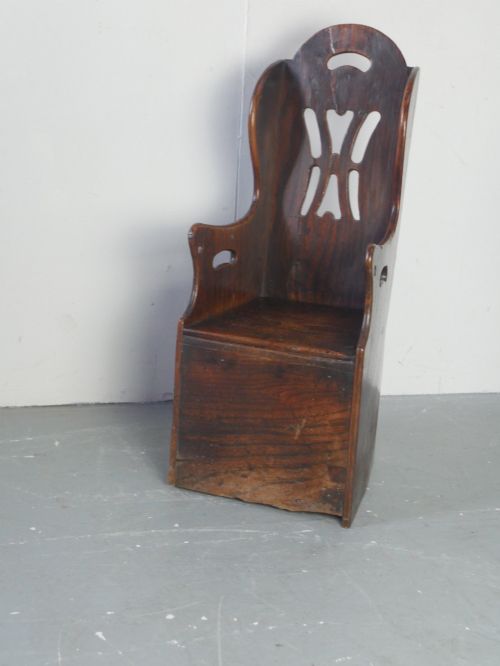
- Lambing chair
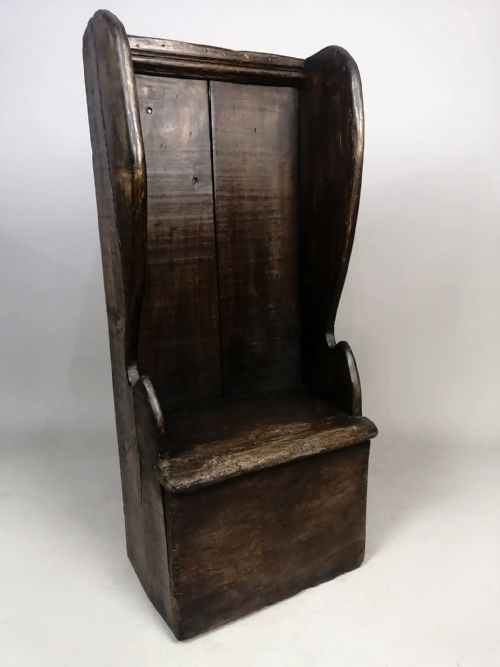
- An enclosed wooden armchair, frequently featuring solid wings and a storage compartment under the seat. These chairs provided extra shelter near hearths.
- Vernacular furniture
- Domestic pieces built by regional tradesmen using local materials and traditional methods rather than following metropolitan fashion. Such items reflect the specific requirements of rural households.
- Cassapanca
- An Italian wooden bench featuring a chest base and a backrest, often decorated with carved panels. These large furniture forms served functional storage and seating purposes in continental interiors.
Wooden Box Settle: Frequently Asked Questions
What is a wooden box settle?
A wooden box settle is a traditional high-backed bench with a hinged seat that opens to reveal a storage compartment underneath. These pieces served as dual-purpose furniture in early homes, providing seating while keeping household textiles or fuel inside the base.
The high back and solid arms were originally designed to block cold draughts from stone floors and open fires. They appear in various regional styles, ranging from plain country pine to heavily carved oak.
How do I use a box settle today?
A wooden box settle functions effectively in hallways, kitchens, or living rooms as primary seating with built-in storage. The interior compartment accommodates shoes, blankets, or bulky items while keeping floor spaces tidy.
Positioning the piece against a wall highlights the panelled back and creates a distinct seating area. Placing cushions on the wooden seat adds comfort for everyday use.
How do I tell different periods apart?
Early pieces from the seventeenth and eighteenth centuries typically employ solid oak, elm, or ash with pegged joinery and hand-carved panels. Later nineteenth-century examples often feature pine, mahogany, or applied decorative elements associated with revival styles.
Examining the construction methods inside the storage box and the wear patterns on the seat helps identify the era. Regional variations in timber choice also point towards specific manufacturing dates and origins.
Were these painted originally?
Many historical pine examples received coats of paint or pigmented washes to protect the softwood or match interior decoration. Over time, these painted surfaces developed distinct patinas through chipping and wear.
Unpainted pieces generally display waxed or polished hardwood surfaces such as oak or mahogany. Both finished and stripped variants appear across different country traditions.