





Three Seater Settle
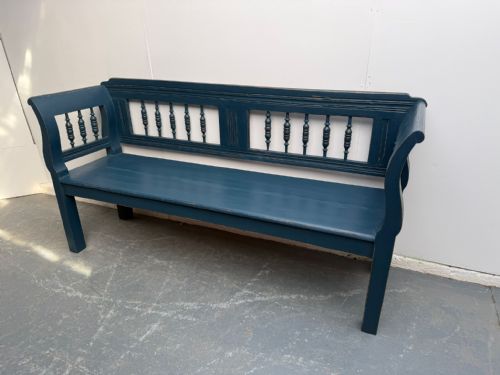
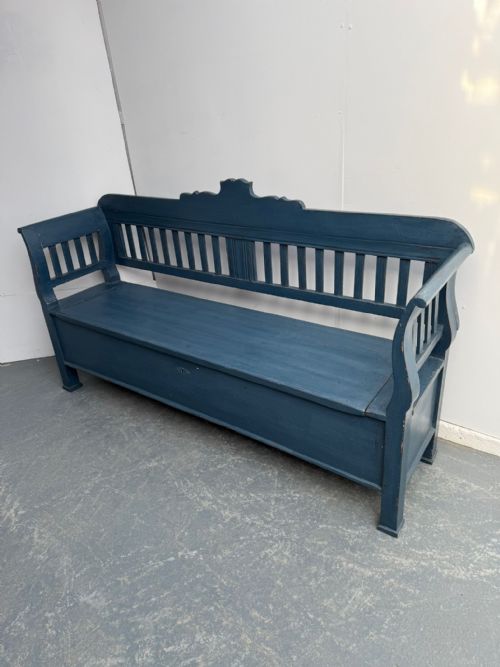
A three seater settle offers generous timber seating and hidden storage, bringing robust vernacular character and practical utility straight into a hallway or kitchen.
Three Seater Settle
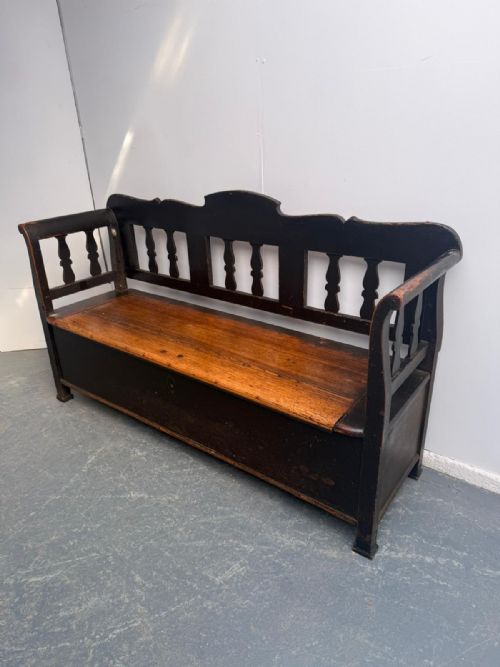
When you search for a three seater settle, you encounter substantial wooden benches designed to accommodate multiple people while often providing concealed storage beneath the seat. The selections available span several distinct traditions, ranging from British country workshops to continental folk art pieces.
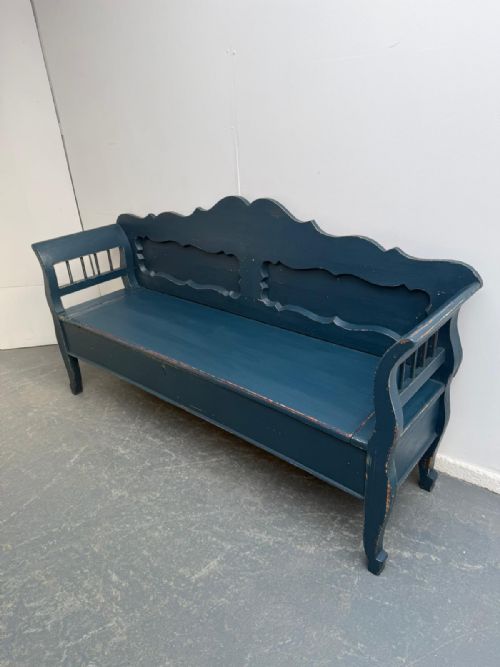
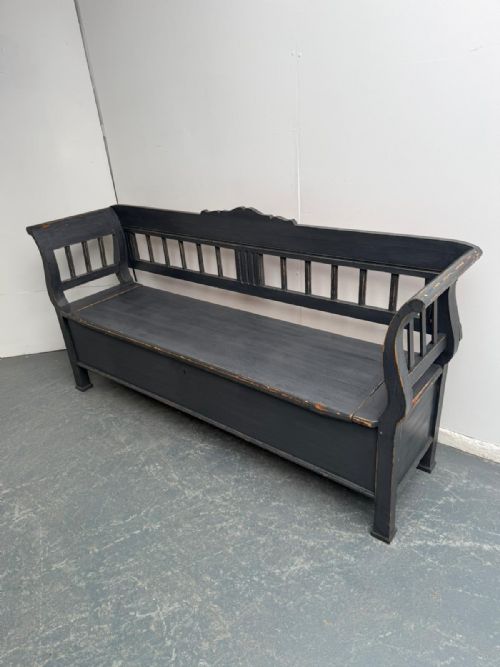
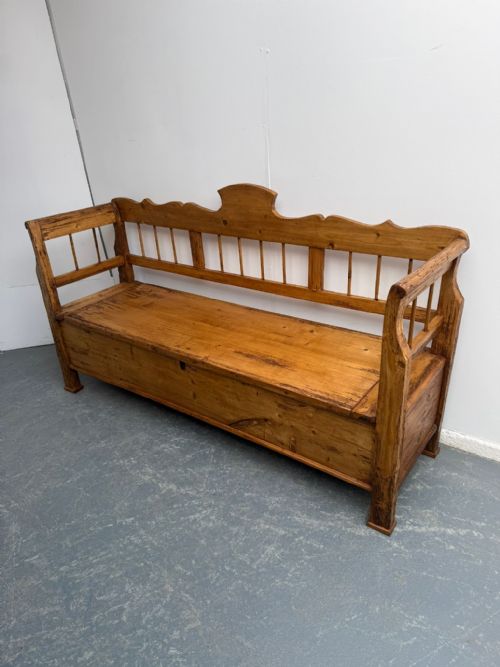
The versions most frequently met on this page include traditional pine box settles alongside painted Hungarian benches from the Georgian and Victorian eras. Alongside these vernacular wooden forms, occasional variations such as nineteenth-century mahogany chair-back sofas appear.
Originating primarily from rural domestic spaces, these items served practical seating needs before central heating and fitted furniture became common. Their high backs originally shielded inhabitants from draughts, making them functional architectural elements as well as places to sit.
How they were made
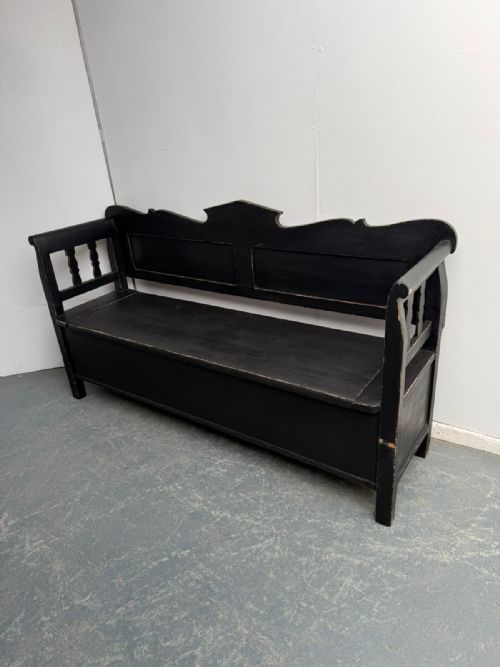
Construction relies heavily on solid pine planks, assembled with traditional joinery methods suited to robust domestic use. Many examples incorporate hinged seats that lift to reveal deep storage boxes beneath.
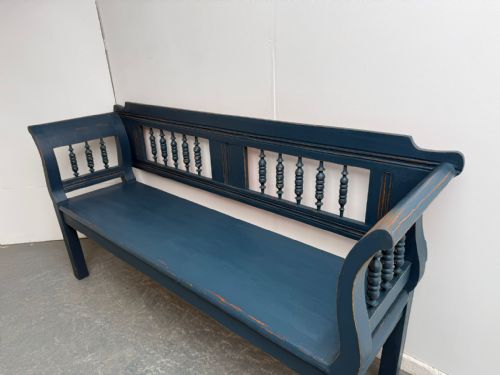
Surface treatments play a significant role in their appearance, utilising historical coats of paint in blue, black, grey, or finishes maintained with traditional wax. Some pieces also feature applied leatherette upholstery on the seating surfaces.
Three Seater Settle Retail Price Guide 2026
Typical asking prices for three seater settle among the pieces listed under this phrase on Sellingantiques today, from the lower quarter to the upper quarter. They describe what is for sale here now, not the wider market.
Several settles sport historic blue paint that stubbornly refuses to match any modern colour chart.
What varies in quality
The distinction between standard vernacular items and superior examples lies in the integrity of the original timber and the survival of early painted finishes. Pieces retaining their initial decorative layers command greater interest than those stripped down or heavily reworked.
Proportion and structural soundness also separate ordinary items from finer ones, particularly where box storage mechanisms and high back panels remain entirely intact. The quality of folk art ornamentation or regional decorative detailing further distinguishes the better examples.
The Three Seater Settle Glossary
- Settle
- A wooden bench with a high back, solid arms, and often a box base for storage. They were traditionally placed near hearths to block draughts.
- Box settle
- A specific variety featuring a hinged seat lid opening onto a storage compartment underneath. This design maximises domestic utility in smaller rooms.
- Folk art
- Decorative traditions and vernacular craft practices tied to specific regional cultures. Hungarian examples frequently display distinctive painted motifs and colours.
- Arts and crafts
- A design movement valuing handcraftsmanship and simple vernacular forms over mass production. Pieces from this tradition emphasise honest construction.
- Chair-back sofa
- A seating form incorporating multiple chair backrests joined together into a unified sofa structure. Mahogany versions reflect more formal nineteenth-century cabinetmaking.
Three Seater Settle: Frequently Asked Questions
What is a three seater settle?
A three seater settle is a long wooden bench featuring a high back and solid arms, often built with a concealed storage box beneath the seat. These pieces originated in rural domestic spaces to provide communal seating while blocking cold draughts.
Today, they function as practical hallway or kitchen seating that offers both historical character and useful storage capacity.
Where were these pieces made?
The pieces available originate from various European traditions, with a strong representation of Hungarian folk art workshops alongside British country makers. Each region utilised local timbers and distinct decorative styles.
Regional characteristics often reveal themselves through specific paint colours, such as blues and blacks, or through particular construction methods employed by local carpenters.
How do I care for a painted settle?
Caring for a painted or waxed wooden settle involves keeping the piece away from direct heat sources and sudden humidity changes to protect the historic timber. Gentle dusting with a dry cloth preserves the surface without damaging aged finishes.
Avoid using modern chemical polishes on painted or waxed surfaces, as these can soften historical coatings and alter the appearance of the patina.
How do I date a wooden settle?
Dating a settle requires examining the construction marks, nail types, hinge mechanisms, and the wear patterns on the timber surfaces. Georgian and Victorian examples display different structural conventions and tool marks left by period craftsmen.
The presence of original painted layers or early wax finishes also assists in placing the piece within its correct nineteenth or early twentieth-century context.