

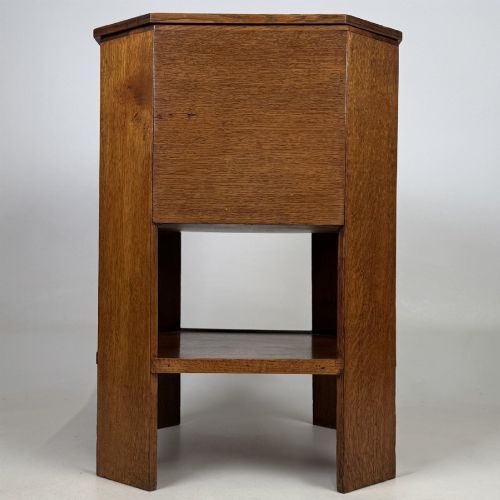
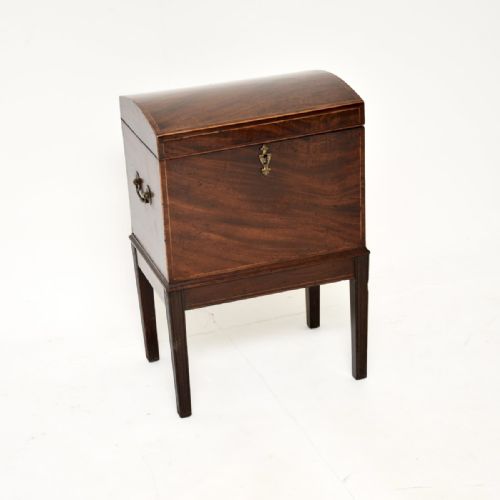
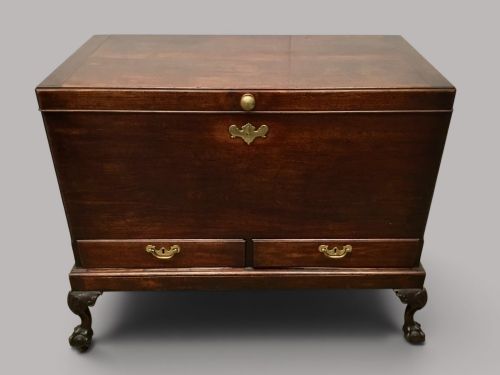
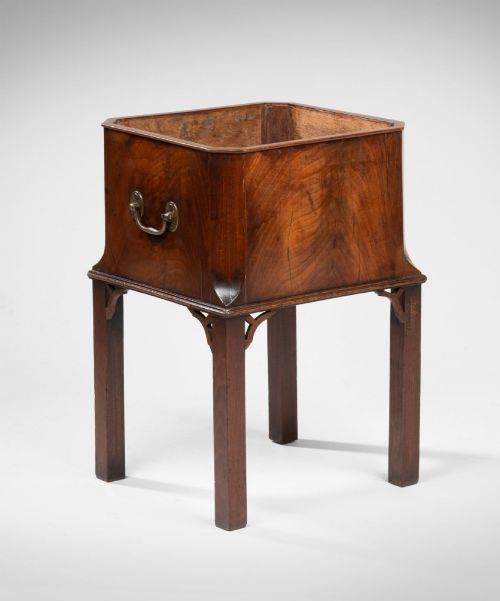
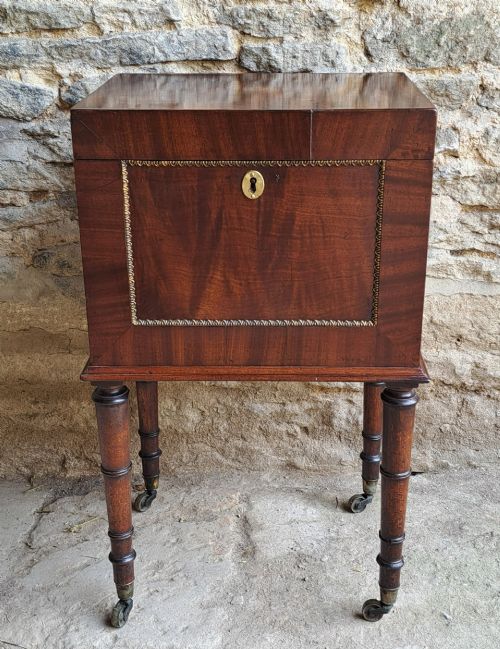
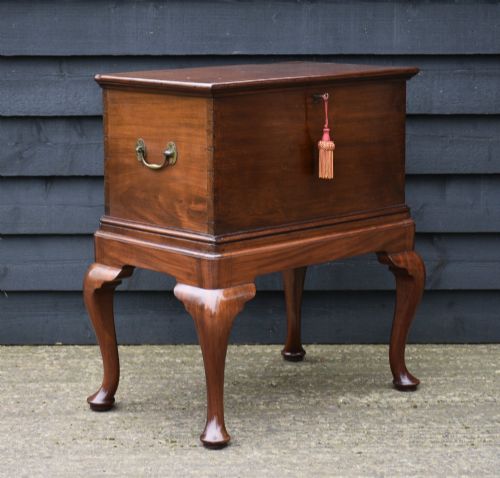
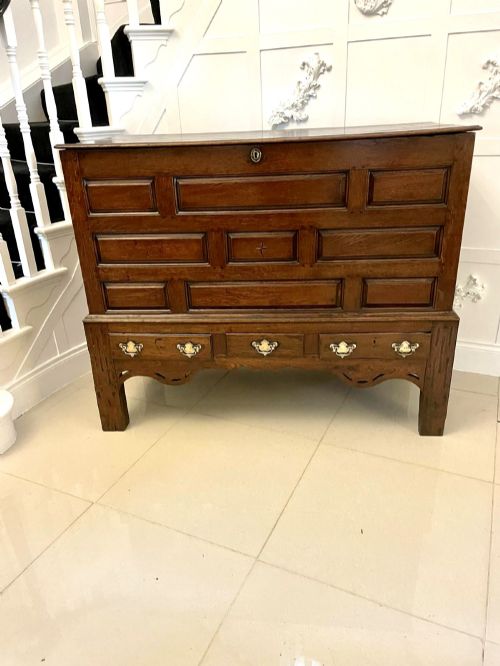
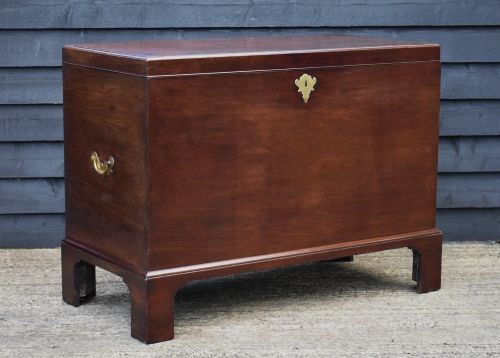
Wooden Box on Stand
A wooden box on stand elevates a simple container to a commanding piece of furniture, serving storage and display with understated authority.
Wooden Box on Stand
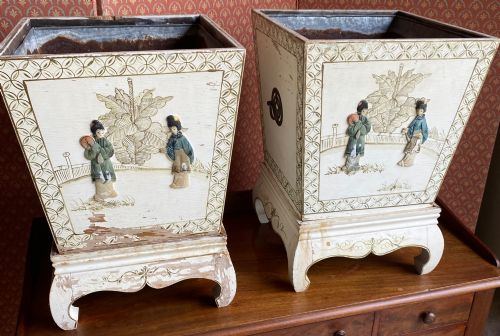
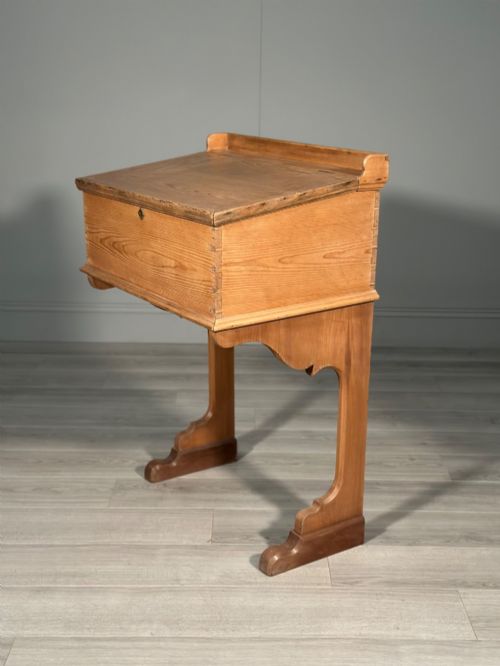
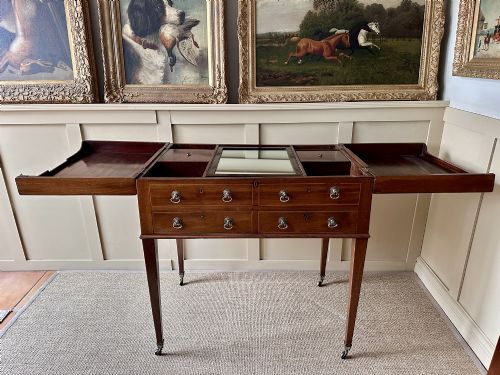
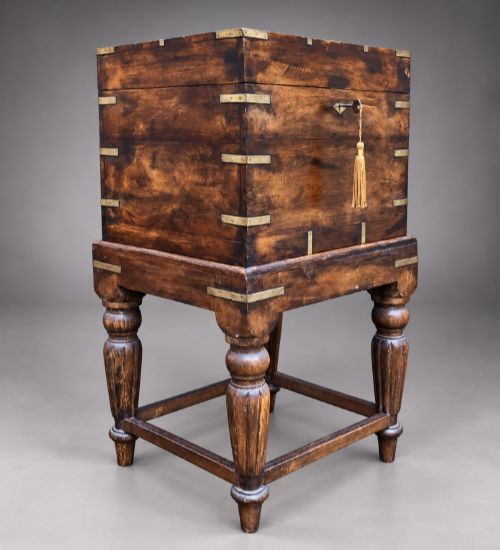
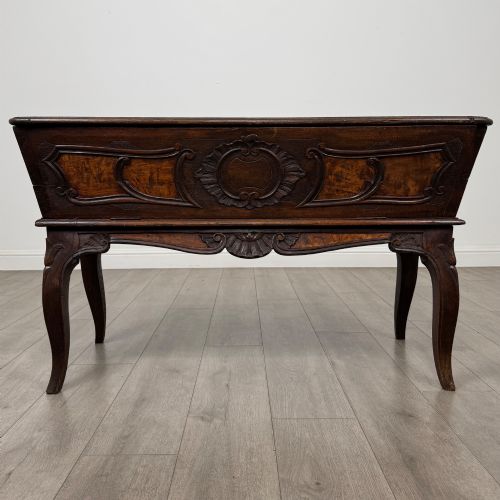
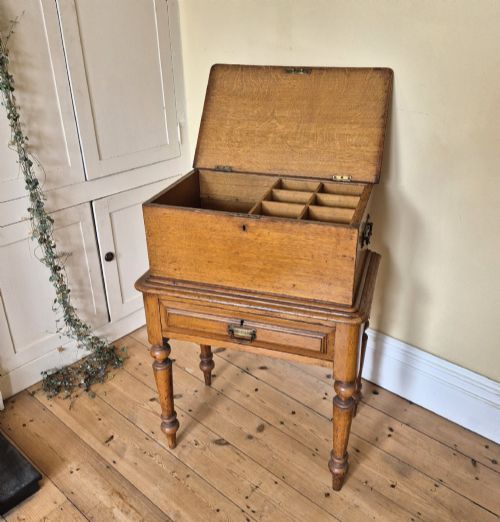
A wooden box on stand combines a lidded receptacle with a raised base or legs, fulfilling domestic needs from wine storage to correspondence. The listings show forms such as cellarettes, teapoys, silver chests, and desk stands.
Most examples encountered here date from the 18th century through the early 20th century, spanning the Georgian, Regency, and Victorian periods. These pieces range from utilitarian railway ticket dispensers to refined mahogany wine coolers.
Origins include English workshops alongside Anglo-Indian and French provincial examples, reflecting diverse regional furniture traditions. The pairing of a chest or box with a dedicated stand creates a distinct floor-standing or tabletop presence.
How they were made
Cabinetmakers utilised dense timbers such as mahogany, oak, walnut, and rosewood, often selecting figured veneers like flame mahogany or burr walnut for visual depth. Construction relied on traditional joinery to support the weight of lidded boxes and their contents.
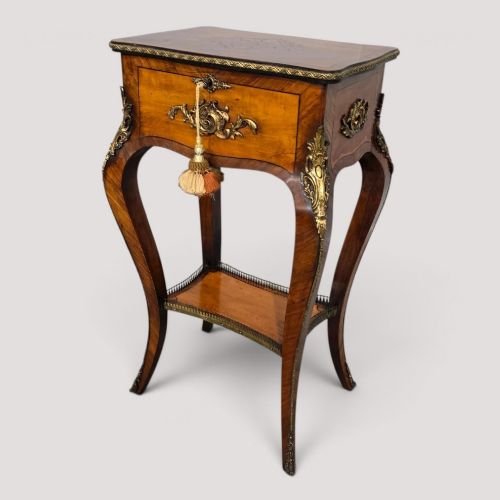
Metal mounts in brass and ormolu reinforced corners, framed panels, and secured hinged lids, while mother-of-pearl provided decorative inlay. Carving, marquetry, and lacquering added surface detail to panels, legs, and stands across various styles.
Wooden Box on Stand Retail Price Guide 2026
Typical asking prices for wooden box on stand among the pieces listed under this phrase on Sellingantiques today, from the lower quarter to the upper quarter. They describe what is for sale here now, not the wider market.
Listings feature woods including mahogany, oak, walnut, rosewood, and coromandel.
What varies in quality
The selection of timber grain and the precision of veneer matching dictate the visual hierarchy of these pieces, separating standard production from exceptional work. Dense hardwoods and well-figured veneers demonstrate greater cabinetmaking ambition.
The integration between box and stand reveals structural intent, where purpose-built frames outclass later adaptations. Finer examples exhibit disciplined carving, crisp brass or ormolu mounts, and intact interior fittings like inkwells or dividers.
The Wooden Box on Stand Glossary
- Cellarette
- A lockable container designed for holding bottles of wine or spirits, frequently fitted with a stand or legs. These vessels kept refreshments secure and accessible in dining rooms.
- Teapoy
- A small box on a stand used for storing and dispensing tea leaves, which were expensive commodities. They often contain internal caddies and mixing bowls.
- Tantalus
- A locking wooden frame holding decanters visible yet protected from unauthorised access. The mechanism typically secures the stoppers until the front bar is unlocked.
- Ormolu
- Gilded bronze mountings applied to furniture for decorative enrichment. This French technique adds metallic contrast to timber surfaces.
Wooden Box on Stand: Frequently Asked Questions
What is a wooden box on stand used for?
These pieces served specialised domestic storage roles, ranging from keeping wine and tea to organising correspondence and ticket dispensing. Their elevated designs kept contents off the floor and at a convenient height.
Over time, forms evolved from utilitarian railway or military chests to refined drawing-room cellarettes and desk stands. They remain practical for surface storage in modern interiors.
How do I identify Georgian periods?
Georgian pieces typically feature dense mahogany timbers, restrained classical proportions, and understated bracket feet or sturdy stands. Cabinetwork from this era prioritises structural harmony and select wood grains over heavy ornamentation.
Details like hand-cut dovetails and patinated brass hardware help distinguish 18th-century work from later Victorian revivals.
Are the stands original to the boxes?
In many traditional forms, such as cellarettes and teapoys, the box and stand form an integrated single structure conceived by the maker. Structural alignment and matching timber patination indicate whether the elements belong together.
Some desk accessories and utility boxes were paired with stands later, making timber consistency a key indicator of original manufacture.
How do I care for antique wood?
Maintain timber surfaces by avoiding direct sunlight and excessive temperature fluctuations that cause wood to split or warp. Regular dusting with a soft cloth preserves the historic polish.
Applying occasional appropriate wax feeds the grain without building up heavy chemical layers that obscure the patina.