




Wooden Bottle Chest
A wooden bottle chest is a robust storage container designed to hold wine bottles or spirits securely.
Wooden Bottle Chest
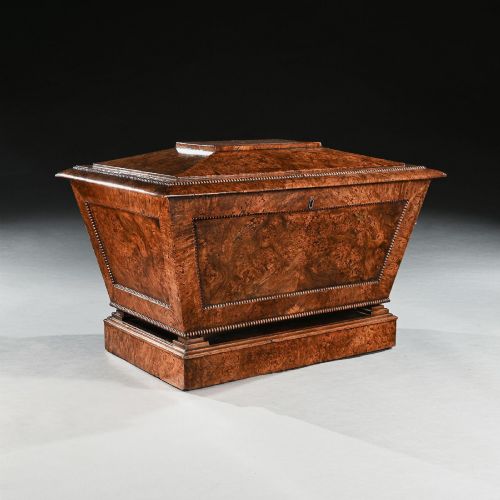
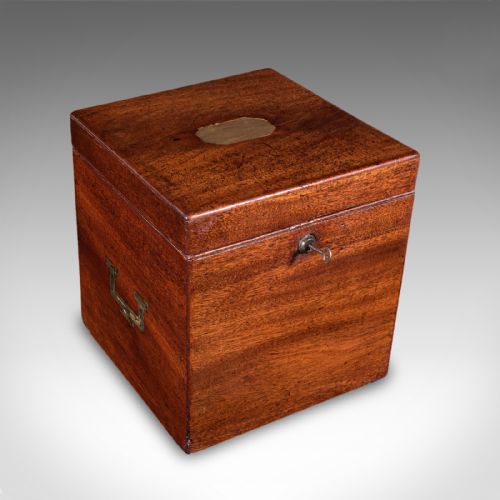
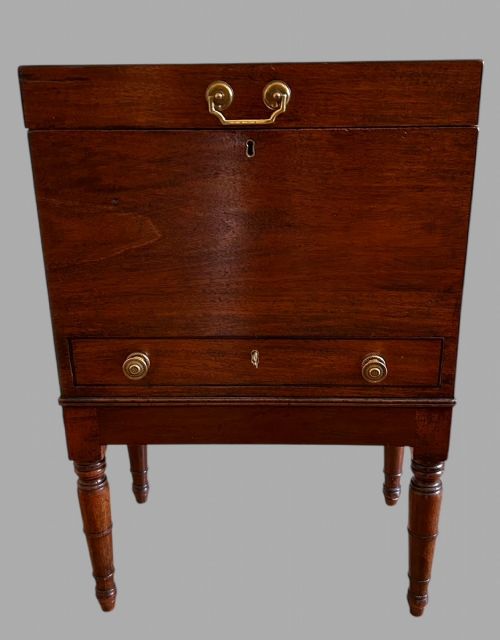
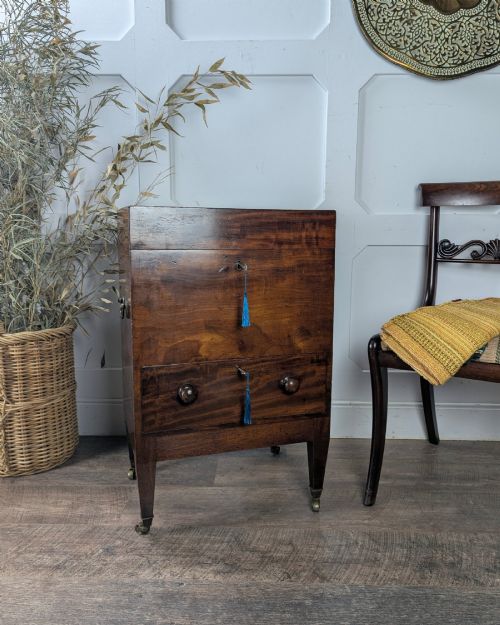
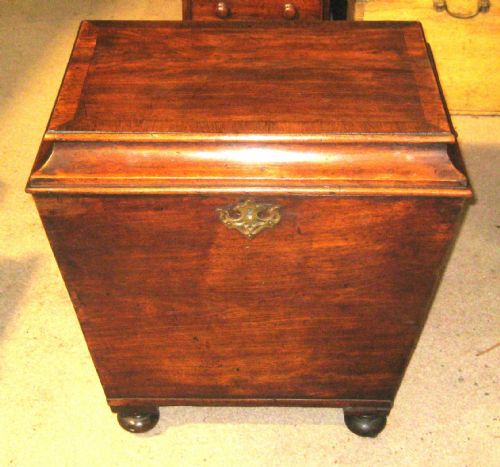
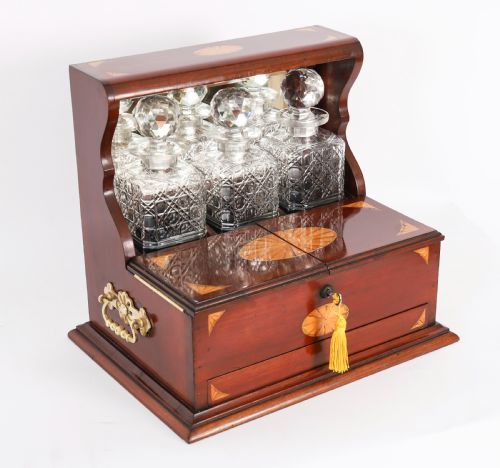
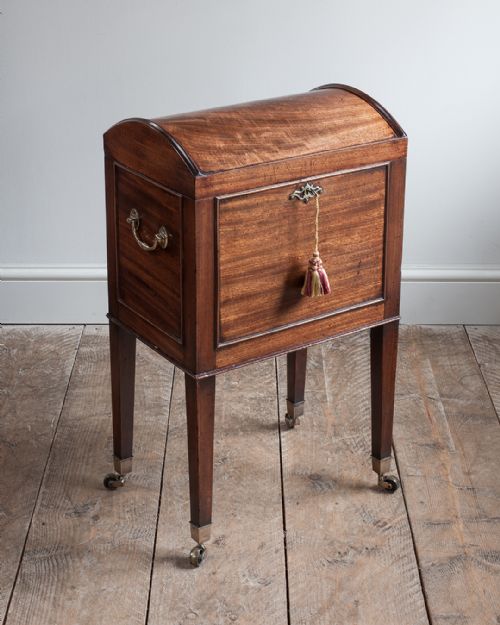
When you search for a wooden bottle chest, you encounter items designed specifically to hold bottles of wine, spirits or medicine. These pieces range from Georgian and Regency cellarettes to Victorian tantaluses and apothecary boxes.
Mahogany is the dominant timber across the inventory, appearing in forms from plain boxes to elaborate sarcophagus shapes. Oak, walnut and satinwood also recur in pieces spanning the eighteenth to the early twentieth century.
The objects serve primarily to keep bottles cool or secure, often featuring internal compartments, fitted glass decanters or metal linings. Their silhouettes follow the prevailing architectural tastes of their respective periods.
Materials and Construction
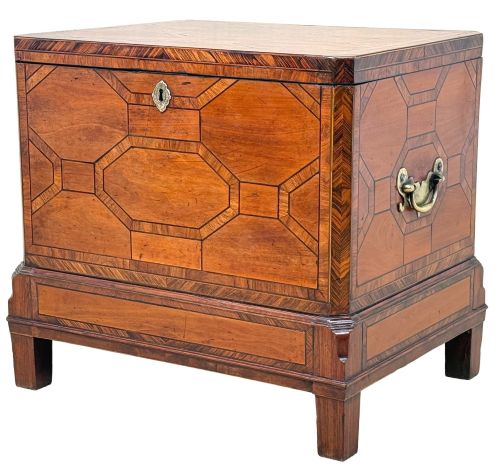
Cabinet makers relied heavily on solid mahogany and figured veneers, often enhanced with satinwood inlay, boxwood strings or brass banding. These timbers were selected for both structural stability and decorative grain patterns.
Interior fittings frequently include lead linings for ice and bottles in wine coolers, alongside fitted wooden dividers for glass decanters or apothecary bottles. Joinery methods reflect traditional cabinet making, employing dovetailed box construction and carved wooden mounts.
Wooden Bottle Chest Retail Price Guide 2026
Typical asking prices for wooden bottle chest among the pieces listed under this phrase on Sellingantiques today, from the lower quarter to the upper quarter. They describe what is for sale here now, not the wider market.
Listings span the eighteenth to early twentieth centuries, featuring timber varieties from standard mahogany to pollard oak and satinwood.
Distinguishing Quality
Quality rests on the selection of timber figures, such as flame mahogany or pollard oak, and the precision of decorative inlays. Superior examples display thoughtful proportions and careful matching of wood grain across visible surfaces.
The integrity of original interior fittings, including lead linings, dividers, glass bottles and brass hardware, determines the desirability of a piece. Finer items exhibit crisp carving and well executed details rather than purely utilitarian assembly.
Gillows of Lancaster and London·Maples and Co·Whytock and Reid
The Wooden Bottle Chest Glossary
- Cellarette
- A freestanding or box-form container used for holding and cooling bottles of wine near the dining table. They frequently appear in mahogany during the Georgian and Regency periods.
- Tantalus
- A locking wooden cabinet or stand that holds decanters visible but secure from unauthorized access. The mechanism typically prevents removal of the bottles until the top bar is unlocked with a key.
- Sarcophagus
- A monumental container shape featuring a sloping lid and pedestal base, popular for Regency wine coolers. This classical form draws inspiration from ancient stone coffins.
- Apothecary box
- A portable wooden chest fitted with internal compartments and small glass bottles for medicines and drugs. They often include secret drawers or brass carrying handles.
- Satinwood
- A lustrous, yellow-toned timber utilised for banding and inlay work on eighteenth and nineteenth-century furniture. It contrasts sharply with darker woods like mahogany.
Wooden Bottle Chest: Frequently Asked Questions
What is a wooden bottle chest used for?
These chests served primarily to store wine, spirits or medicinal bottles securely in dining rooms or drawing rooms. Many incorporated internal linings to hold ice alongside the bottles.
Others functioned as lockable storage for valuable cordials or travel use by medical practitioners.
How do I identify a Regency wine cooler?
Regency examples frequently display classical architectural motifs, bold wood grains such as flame mahogany, and distinctive sarcophagus or pedestal forms. Brass lion paw feet and ring handles are common decorative elements from this era.
They often sit lower to the ground on short legs or plinth bases compared to later Victorian iterations.
What is the difference between a cellarette and a tantalus?
A cellarette is a fully enclosed chest or box designed to store wine bottles, sometimes featuring a metal liner for ice. Items are concealed inside the wooden body.
A tantalus displays the decanters openly within a wooden frame secured by a locking metal bar across the stoppers.
Where were apothecary boxes kept?
Apothecary boxes were designed for portability, allowing doctors to carry remedies on house calls, or for use within the private quarters of large country houses. Their compact design kept fragile glass bottles secure during transport.
They usually feature brass carrying handles on top and fold-out compartments inside.