



Victorian Mahogany Wine Chest
A victorian mahogany wine chest is a robust and formal cellarette designed to store and protect vintage bottles with architectural dignity.
Victorian Mahogany Wine Chest
When you search for a victorian mahogany wine chest, you encounter sturdy timber containers built to hold bottles securely in dining rooms or parlours. The pieces on this page span the nineteenth century alongside select Georgian and Regency examples, presented primarily as cellarettes, wine coolers, and side cabinets.
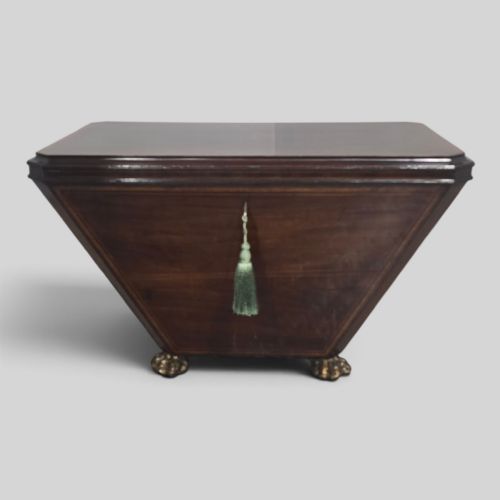
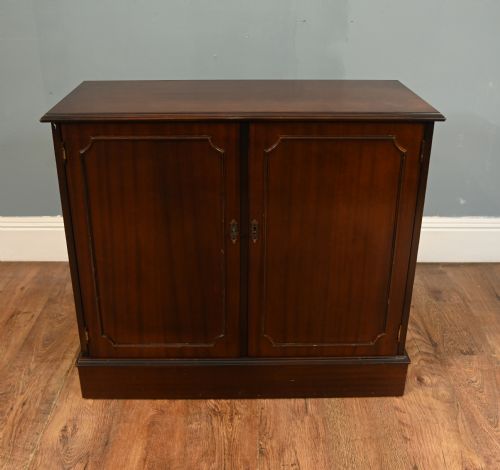
Most entries favour solid mahogany or flame mahogany veneer, often taking a traditional sarcophagus shape or an oval form. Certain examples incorporate cupboard space or delicate satinwood inlay to complement the darker wood body.
Makers and workshops across Britain and Ireland produced these items, ranging from large Dublin cabinet makers to London firms. The scale moves from compact side pieces to massive carved units intended for substantial country houses.
How They Were Made
Cabinet makers utilised dense timbers, shaping solid mahogany and applying rich flame mahogany veneer across structural carcases. Walnut also appears among heavier carved variations, providing a darker, distinct grain pattern.
Metalwork played a structural and decorative role, featuring heavy brass bindings, handles, and mounts fitted tightly to secure the heavy wooden bodies. Artisans incorporated satinwood inlay for fine decorative contrast on selected panels.
Victorian Mahogany Wine Chest Retail Price Guide 2026
Typical asking prices for victorian mahogany wine chest among the pieces listed under this phrase on Sellingantiques today, from the lower quarter to the upper quarter. They describe what is for sale here now, not the wider market.
Some nineteenth-century cellarettes are heavy enough to double as small horse-drawn carriages.
What Varies in Quality
The standard of timber selection and veneer matching defines the visual depth of the piece, particularly where flame mahogany exhibits rich, swirling grain figures. Finer workshops ensured seamless alignment across curved surfaces and applied meticulous satinwood detailing.
The weight and finish of the brass mounts separate standard items from superior examples. Robust, well-fitted hardware and crisp carving distinguish pieces produced by notable cabinet makers from routine workshop output.
Edwards and Roberts·Freemans of Norwich·Maples and Co·Robert Strahan and Co
The Victorian Mahogany Wine Chest Glossary
- Cellarette
- A lockable container or cabinet specifically built to hold wine bottles near the dining table. They frequently featured fitted interior partitions.
- Sarcophagus form
- A burial-vault shape with a rounded or stepped lid popular for large nineteenth century wine coolers. This heavy architectural silhouette lent visual weight to formal dining rooms.
- Flame mahogany
- A figured veneer cut from the fork of the mahogany tree to create a distinctive flickering flame pattern. Cabinet makers reserved this timber for prominent exterior panels.
- Satinwood inlay
- A pale exotic wood inserted into contrasting darker timber to form decorative borders or motifs. This technique brightened formal case furniture.
- Brass bound
- Fitted with brass bands and corners to reinforce heavy timber joints and protect edges. This treatment originated on military campaign chests before moving to domestic dining furniture.
Victorian Mahogany Wine Chest: Frequently Asked Questions
What is a wine chest?
A wine chest, often termed a cellarette, is a specialised wooden container designed to store wine bottles securely within a dining room.
These pieces protected expensive vintages from servants and light while keeping bottles close to the dining table during formal meals.
How do I date a cellarette?
Dating relies on examining the timber species, construction methods, hardware styles, and overall form such as sarcophagus shapes or brass bindings.
Nineteenth-century examples often display rich flame mahogany veneers, whilst earlier Georgian pieces tend toward simpler rectilinear cabinetry with subtle detailing.
Where were they placed?
These pieces traditionally stood against dining room walls, often directly beneath sideboards or within easy reach of the host.
Their heavy construction and secure locks meant they remained permanent fixtures of the formal entertaining spaces in grand houses.
Are interiors fitted for bottles?
Many examples retain internal wooden partitions, metal linings, or individual cradles designed to separate and cushion individual wine bottles.
These interior fittings vary from simple grid dividers to metal-lined compartments intended to hold ice for chilling.