




Wooden Book Supports
Wooden book supports keep shelves orderly while introducing carved animals, rich timbers and distinct period style to a room.
Wooden Book Supports
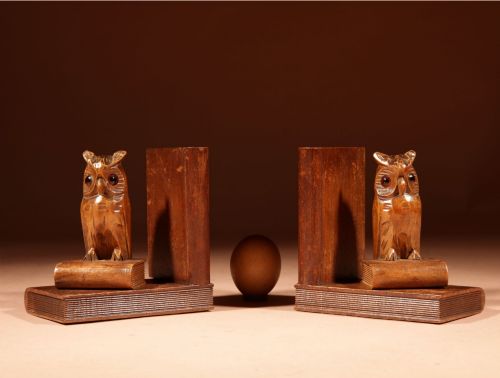
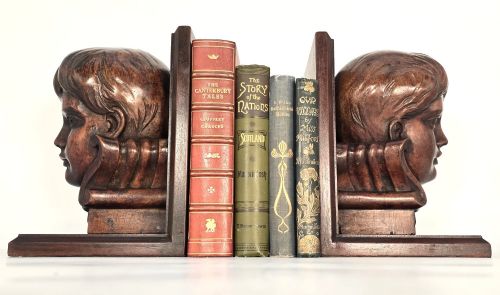
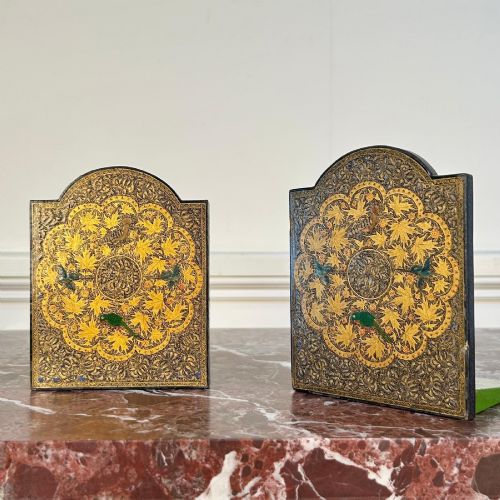
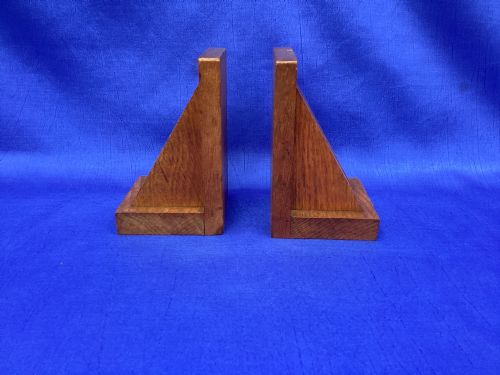
Wooden book supports, also known as bookends or book rests, arrive in styles ranging from Victorian Gothic Revival and Edwardian craftsmanship to Art Deco sculpture. Buyers seeking wooden book supports encounter diverse regional forms, including Black Forest animal carvings, Anglo-Indian woodwork, and Kashmiri decoration.
Judging quality in wooden book supports
The structural integrity of the base and the weight distribution determine how effectively the piece performs its function. Superior items maintain balanced proportions between the decorative upper sculpture and the supporting foot.
Wooden Book Supports Retail Price Guide 2026
Typical asking prices for wooden book supports among the pieces listed under this phrase on Sellingantiques today, from the lower quarter to the upper quarter. They describe what is for sale here now, not the wider market.
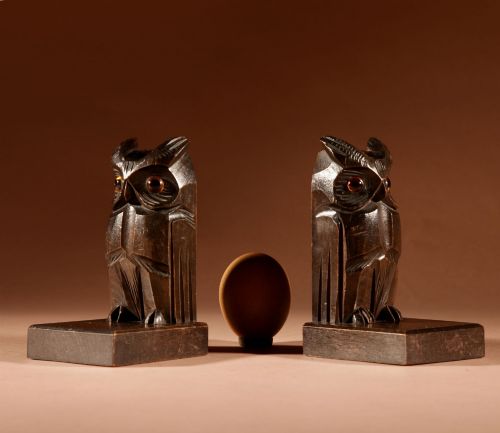
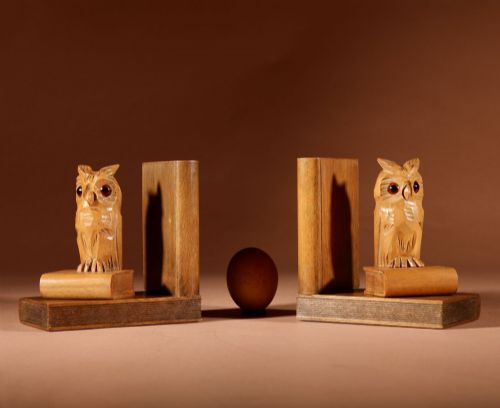
Several pairs depict wise owls keeping a stern watch over modest paperback novels.
Gordon Russell·Thornton Smith Co·V Ramirez
The Wooden Book Supports Glossary
- Black Forest
- A style of wood carving originating from the Brienz region of Switzerland, noted for realistic animal figures such as bears and owls. These pieces frequently date from the late nineteenth and early twentieth centuries.
- Anglo-Indian
- Furniture and decorative objects produced in India under British rule, often utilising dense exotic hardwoods like coromandel and ebony. The carving typically incorporates intricate foliage and regional motifs.
- Gothic Revival
- An architectural and decorative style drawing inspiration from medieval forms, featuring pointed arches and ecclesiastical details. In book supports, this appears in heavy mahogany carved with church-like tracery.
- Art Deco
- A design movement of the 1920s and 1930s characterised by stylised geometric forms and streamlined shapes. Pieces from this era often embrace modernist sculpture alongside traditional timber.
Wooden Book Supports: Frequently Asked Questions
How do I date my wooden book supports?
Dating relies on identifying the prevailing stylistic cues, such as Art Deco geometry or Victorian Gothic Revival architecture, matched against the timber species used.
Examining the tooling marks and the type of base construction also helps narrow down whether a piece originates from the nineteenth century or the interwar period.
Can wooden book supports hold heavy books?
Most solid timber pairs handle standard hardbacks easily, provided the base has sufficient depth and weight to counteract the pull of the volumes.
Lighter woods or hollow designs may require extra care or placement against heavier items to maintain stability on the shelf.
How should I clean carved wooden book supports?
Dusting gently with a soft, dry brush removes particles from intricate crevices without damaging the patina of the wood.
Avoiding harsh chemical sprays preserves the original wax or oil finish applied by the maker.
What is the difference between bookends and book rests?
Bookends generally operate as a vertical pair gripping volumes from either end, while book rests often incorporate a slanted support base for display.
Both terms appear interchangeably in older inventories to describe desk or shelf accessories.