

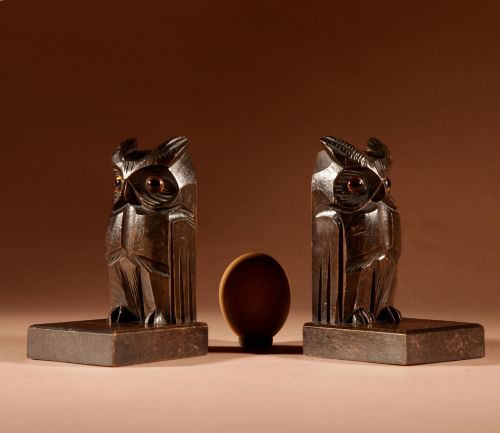


Brown Wood Bookends
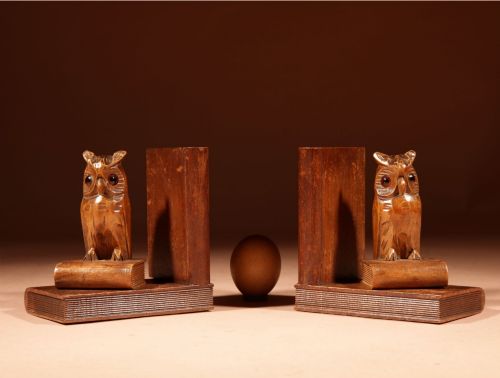
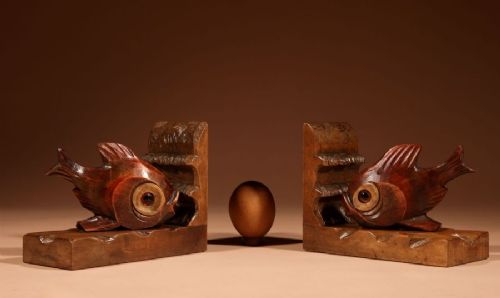
These brown wood bookends range from Black Forest animal carvings to Art Deco designs, holding up shelves with undeniable character.
Brown Wood Bookends
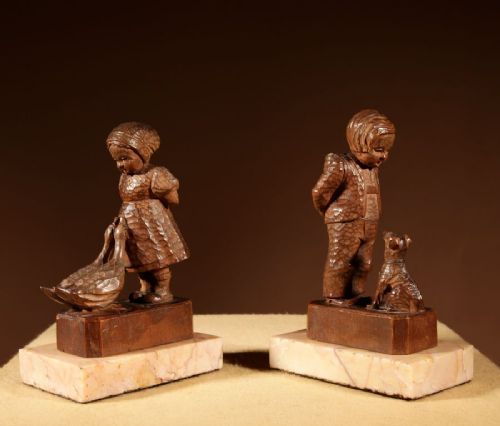
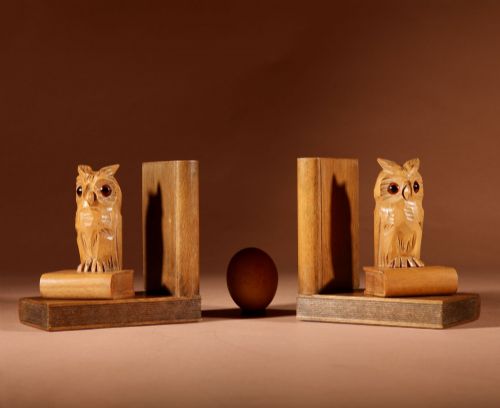
When you search for brown wood bookends, you find decorative shelf supports spanning the Victorian, Edwardian, and Art Deco periods, created across various international workshops. The selection here leans heavily towards carved animal figures and architectural supports rather than plain wooden blocks, often taking the form of pairs designed to keep libraries orderly.
The objects frequently double as small sculptures, featuring subjects ranging from owls and bears to lions and griffins. These pieces reflect the tastes of nineteenth and early twentieth-century domestic interiors, where useful household items also served as ornamental displays for the study or parlour.
How they were made
These items rely on traditional woodworking and hand-carving techniques applied to timbers such as linden wood, oak, pine, and exotic hardwoods. Artisans utilised chisels and gouges to shape realistic animal forms and classical motifs directly from the solid material, sometimes combining carved wood with other substances like glass and marble.
Surface finish is achieved through careful sanding, occasional penwork detailing, and the application of natural waxes or polishes that enhance the grain. The construction typically mounts the carved figures onto sturdy wooden plinths designed to bear the weight of heavy volumes.
Brown Wood Bookends Retail Price Guide 2026
Typical asking prices for brown wood bookends among the pieces listed under this phrase on Sellingantiques today, from the lower quarter to the upper quarter. They describe what is for sale here now, not the wider market.
The listings show a strong representation of linden wood and hardwood carvings, alongside bamboo and pine forms.
What varies in quality
Proportion and stability also separate the tiers of craftsmanship. High-grade items balance the sculptural weight securely on their bases, ensuring the support functions effectively while maintaining visual harmony from every angle.
The Brown Wood Bookends Glossary
- Black Forest
- A style of wood carving originating from the mountainous region of Central Europe, well known for realistic depictions of animals such as bears, owls, and dogs. These items often date from the late nineteenth and early twentieth centuries.
- Art Deco
- A design style emerging in the early twentieth century that emphasises stylised geometric forms, streamlined silhouettes, and modern materials. Pieces from this era often feature simplified lines alongside traditional woodwork.
- Book slide
- An adjustable desk accessory designed to hold a varying number of upright volumes between two sliding ends. This form allows the holder to expand or contract according to the quantity of books stored.
- Gothic Revival
- An architectural and decorative style drawing inspiration from medieval forms, featuring pointed arches, heavy moulding, and solemn motifs. Items in this style often incorporate fierce creatures like griffins and lions.
- Chinoiserie
- European interpretations of Chinese and East Asian artistic traditions, often applied through intricate surface decoration and penwork. This aesthetic introduces exotic motifs to standard nineteenth-century wooden objects.
Brown Wood Bookends: Frequently Asked Questions
What periods do these bookends date from?
The pieces span from the mid-nineteenth century through the Victorian and Edwardian eras, extending into the Art Deco period of the nineteen-twenties and thirties.
Most surviving examples cluster around the turn of the twentieth century, reflecting the peak of domestic carving traditions in Europe.
How were antique bookends used?
They sat on desks, tables, and library shelves to keep rows of books upright and organised.
Beyond their practical function, they acted as decorative ornaments that displayed the owner's taste in animals, classical motifs, or exotic styles.
Are these items sold as pairs?
The majority of the listings consist of matched pairs designed to support books from both ends.
Single items or convertible pieces, such as combined letter stands and book slides, also appear occasionally in the selection.
What woods are commonly found?
The selection includes linden wood, oak, pine, bamboo, and various unidentified hardwoods chosen for their carving properties.
Some pieces incorporate contrasting materials such as marble bases or glass elements to add weight and visual interest.