



Wooden Bistro Dining Chair
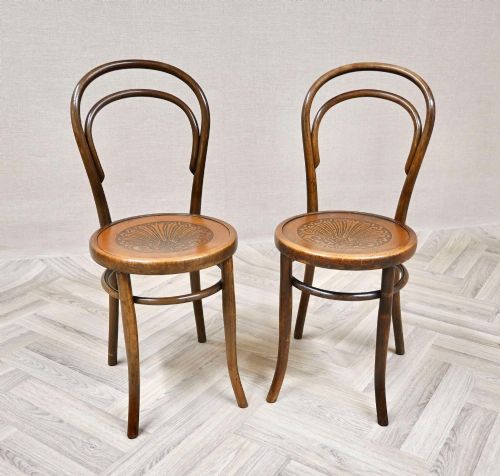
These wooden bistro dining chair pieces offer the classic café seating that brings immediate character to a room.
Wooden Bistro Dining Chair
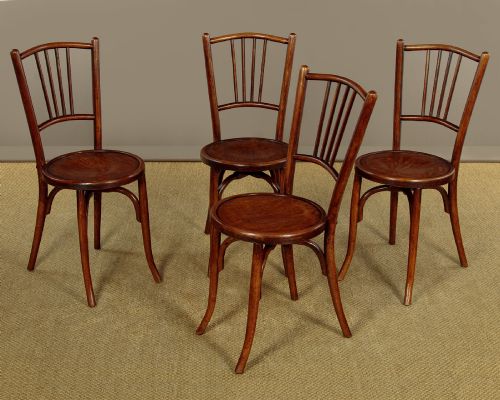
When you search for a wooden bistro dining chair, you encounter lightweight seating designed for commercial and domestic dining spaces alike. The pieces on this page span the nineteenth century through the mid-twentieth century, capturing the evolution of café culture.
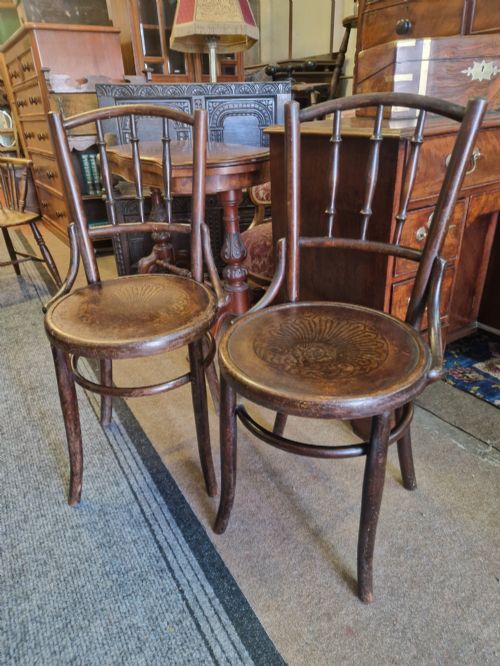
Most examples you meet here belong to the bentwood and French country traditions, appearing singly or in matched and unmatched sets. Makers such as Thonet and J & J Kohn dominate the selections, alongside pieces originating from specific establishments like the Cafe Royal in London.
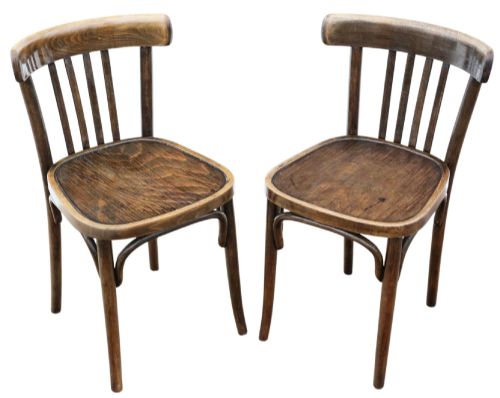
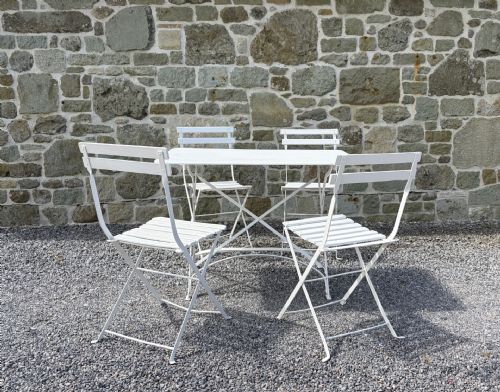
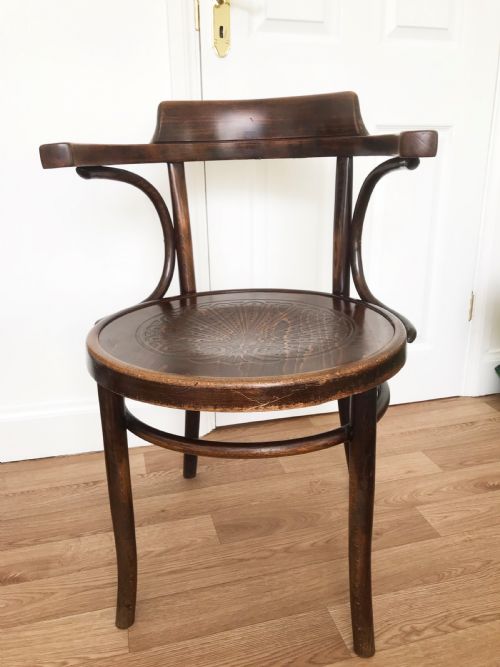
Forms range from simple dining chairs and carvers to garden dining sets combining iron and wood. You will find pieces reflecting Edwardian, Art Nouveau, and mid-century aesthetics, constructed primarily for practical daily use.
How they were made
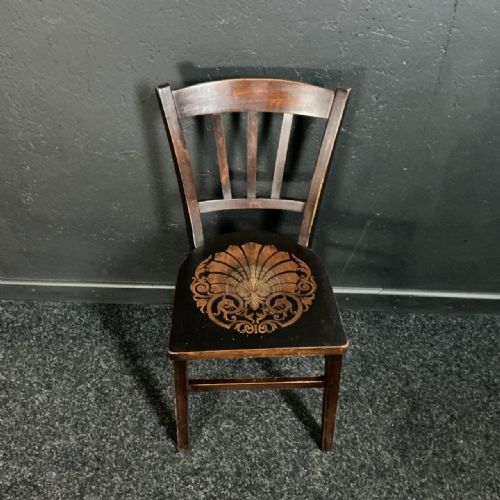
Makers utilised solid beech and beechwood, subjecting the timber to steam to achieve the characteristic curved frames of bentwood furniture. Plywood also appears in seat panels, often featuring pressed decorative patterns.
Iron components supplement the wood in certain garden and café pieces, providing additional structural support. Stained wood finishes protect the material while highlighting the natural grain of the beech.
Wooden Bistro Dining Chair Retail Price Guide 2026
Typical asking prices for wooden bistro dining chair among the pieces listed under this phrase on Sellingantiques today, from the lower quarter to the upper quarter. They describe what is for sale here now, not the wider market.
Listings feature beech, plywood, and stained wood across periods ranging from the nineteenth century to the 1960s.
What varies in quality
The distinction between standard commercial seating and higher grades lies in the crispness of the steam-bent curves and the integrity of the original joints. Pieces produced by prominent firms like Thonet or J & J Kohn display superior precision in their construction compared to unsigned workshop alternatives.
The survival of original surface finishes and authentic manufacturer stamps beneath the seat base elevates a piece. Sets that retain their uniformity across multiple chairs command greater interest than assembled groups of similar age.
Thonet·Codina·J & J Kohn
The Wooden Bistro Dining Chair Glossary
- Bentwood
- Wood that has been heated with steam and bent into curved structural forms. This technique defines the silhouette of classic nineteenth-century café seating.
- Carver
- An armchair with armrests, designed to sit at the head of a dining table. These pieces match the simpler side chairs in a dining set.
- Beech
- A hard, fine-grained timber favoured for its exceptional strength and flexibility when steamed. It serves as the primary material for bentwood furniture.
- Plywood
- Engineered wood made from thin layers of wood veneer glued together. It is frequently utilised for the flat or pressed seats of dining chairs.
Wooden Bistro Dining Chair: Frequently Asked Questions
How do I identify a Thonet chair?
Look for paper labels, branded stamps, or embossed marks underneath the wooden seat base. These signatures often indicate the maker and the period of production.
The characteristic steam-bent frame construction and specific screw patterns also help distinguish authentic pieces from later reproductions.
Are these chairs suitable for daily dining?
These pieces were originally built for bustling European cafés and domestic dining rooms, meaning they are inherently designed for regular use. Their lightweight structure makes them easy to move around a table.
It remains wise to check the stability of the joints and the condition of the steam-bent sections before committing them to heavy everyday service.
Can I mix different bentwood chair styles?
Combining various bentwood designs is a traditional way to furnish a dining space, as long as the heights and wood tones share a general harmony. Many period settings utilised mismatched chairs gathered from different establishments.
Matching sets of four, six, or more are also available for those who prefer a uniform appearance around the table.
How do I date an antique bentwood chair?
Dating relies on the complexity of the steam-bent forms, the presence of manufacturer stamps, and the type of screw fixings used in the assembly. Earlier nineteenth-century examples often feature simpler, hand-finished components.
Edwardian and later twentieth-century versions introduce subtle variations in plywood seat pressings and branding styles.