



Wooden Bird Wall Plaque
A wooden bird wall plaque brings the sculptural detail of nineteenth-century carving and lacquerwork straight onto an interior wall.
Wooden Bird Wall Plaque
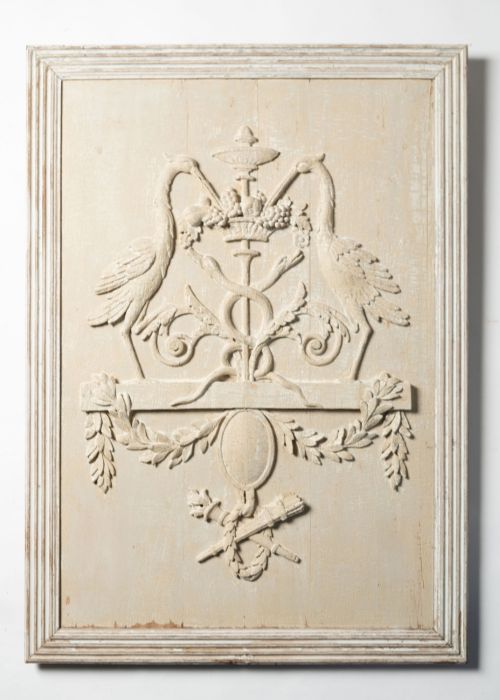
A wooden bird wall plaque encompasses carved panels, roundels, and mirrors originating from periods including the eighteenth and nineteenth centuries, as well as the Victorian era. These decorative wall pieces frequently depict birds among branches, foliage, or temple settings, rendered in styles such as Black Forest, Chinese Qing, and Victorian Gothic Revival.
Buyers exploring this selection encounter diverse regional forms, from Japanese lacquered roundels and Chinese gilt wood temple panels to European carved oak and tiger oak hunting sculptures. The makers utilised traditional woodworking methods to transform timber into detailed avian art for interior display.
How they were made
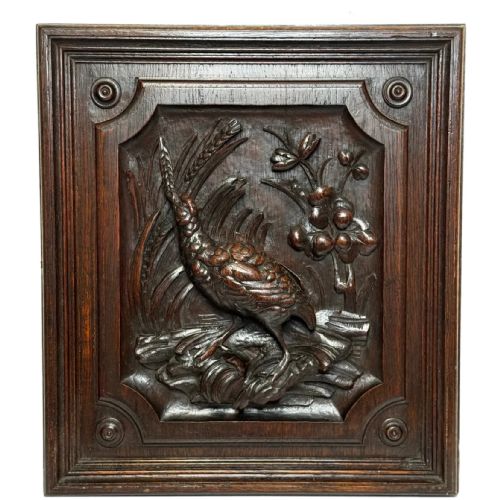
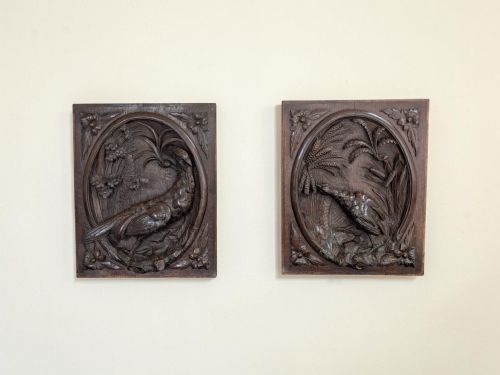
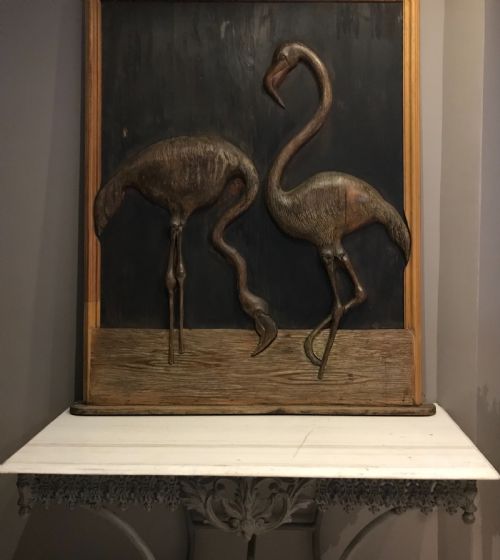
The construction of these pieces relies on carved wood, oak, and timber, shaped into panels, roundels, and mirrors using hand tools. Artisans employed deep relief carving to give birds of prey, flamingos, and grouse a three-dimensional presence against the wooden background.
Surface finishes include paint, lacquer, and intricate inlay work utilising mother of pearl and abalone. Some examples incorporate gilt wood highlights or foilage details to enhance the visual depth of the avian scenes.
Even fierce birds of prey carved in nineteenth-century workshops must endure sharing wall space with inlaid abalone foliage.
What varies in quality
Quality rests upon the depth and precision of the carving, where masterwork panels display intricate feather texturing and realistic anatomical proportions in the birds. Lesser examples rely on shallower incision and simpler geometric framing.
The refinement of the surface materials also dictates the standard of the piece, distinguishing finely polished lacquer and secure mother of pearl inlay from basic painted wooden surfaces.
The Wooden Bird Wall Plaque Glossary
- Black Forest
- A regional style of wood carving originating from the mountainous areas of central Europe, known for realistic depictions of animals and birds of prey. These carvings frequently utilise dark woods and deep relief.
- Roundel
- A circular decorative panel or plaque intended for wall mounting. This format was utilised across various nineteenth-century Asian and European workshops.
- Qing Dynasty
- An imperial Chinese historical period associated with elaborate gilt wood temple panels and lacquerwork. Pieces from this tradition often feature birds set amongst detailed branches and foliage.
- Tiger Oak
- A quarter-sawn oak timber characterised by prominent medullary rays that create distinct tiger-stripe patterns. Victorian craftsmen utilised this wood for heavy sculptural wall panels.
- Mother of Pearl
- An iridescent inner layer of shell used for inlay work in lacquer panels. Craftsmen shaped these shimmering pieces to depict birds and natural scenery.
Wooden Bird Wall Plaque: Frequently Asked Questions
What periods do these wooden bird wall plaques come from?
The available pieces span the eighteenth century, the nineteenth century, the Victorian era, and into the early twentieth century around nineteen thirty. Styles range from Black Forest and Chinese Qing to Victorian Gothic Revival and Art Nouveau.
Craftsmen across these different eras utilised local timbers, lacquer, and inlay to capture avian subjects in wood. Each period brought distinct regional carving techniques to the wall art.
How were these wooden bird plaques displayed originally?
These items functioned as interior wall decoration, appearing as standalone carved panels, architectural fragments from temples, or framed roundels. Owners mounted them in reception rooms and hallways to showcase craftsmanship.
Some pieces doubled as functional items, such as mirrors featuring carved birds of prey or sculptural panels depicting hunting scenes with grouse.
What materials are used in these wall plaques?
Makers relied primarily on wood, oak, and timber as the structural base for these carvings. Surfaces were frequently enhanced with paint, dark lacquer, or gilt highlights.
Inlay materials include mother of pearl and abalone, which artisans embedded into lacquer to render birds and foliage with iridescent contrast.
How do I identify a Black Forest bird carving?
Black Forest carvings are typically distinguished by naturalistic European subjects, such as eagles and other birds of prey rendered in dark, deeply carved wood. These pieces often incorporate realistic foliage and rugged textures.
They contrast with Asian lacquer panels and Victorian architectural reliefs by focusing heavily on aggressive or majestic wildlife in high relief.