

Wooden Bedroom Chest
A wooden bedroom chest provides essential bedside storage, spanning periods from the eighteenth century to the twentieth.
Wooden Bedroom Chest
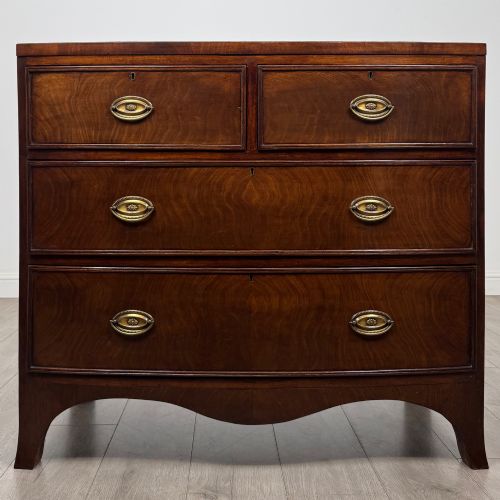
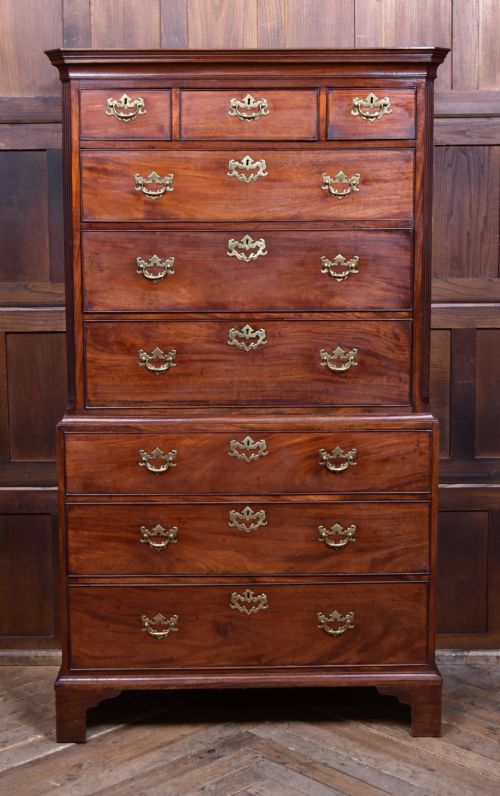
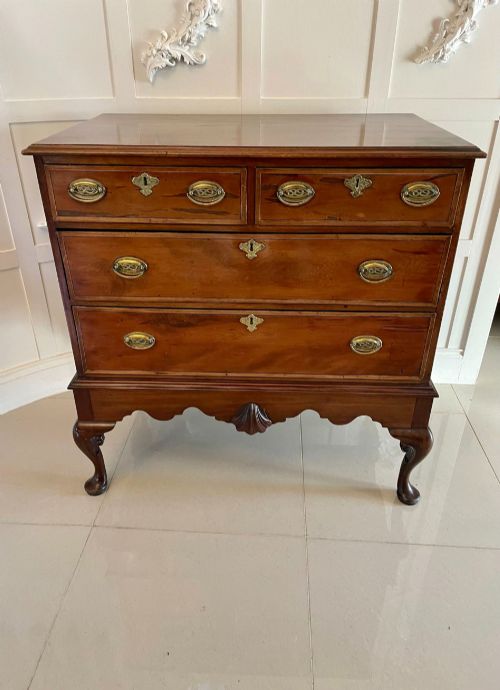
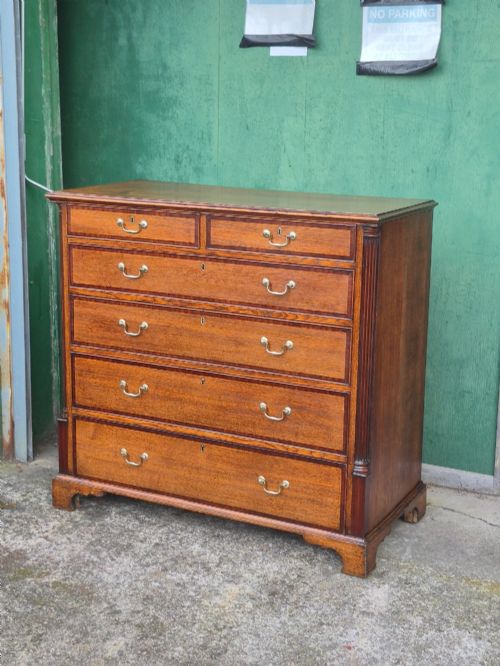
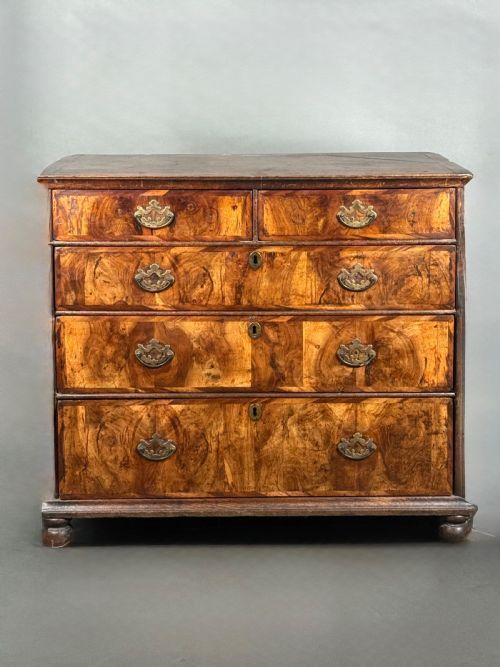
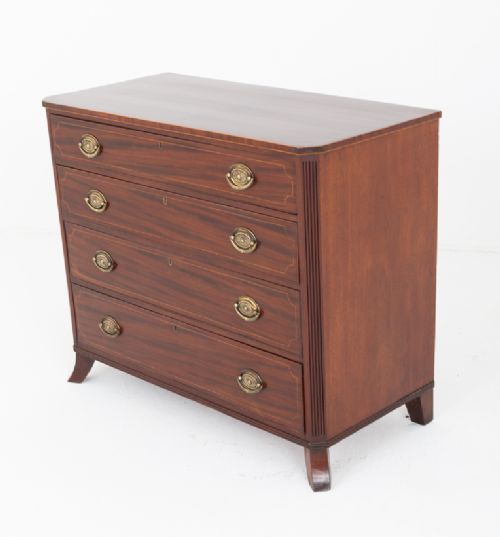
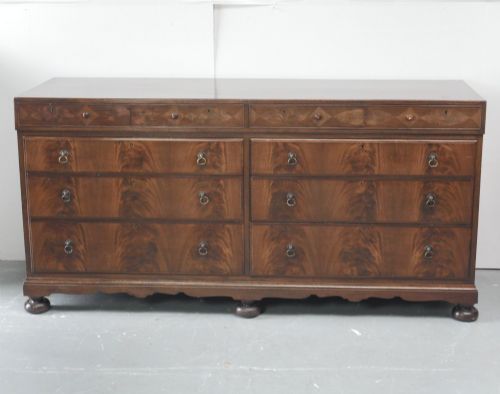
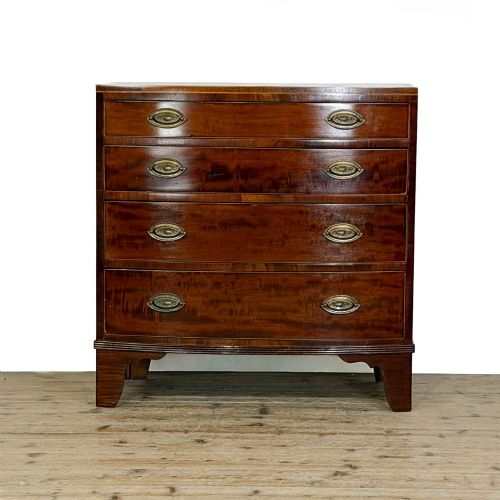
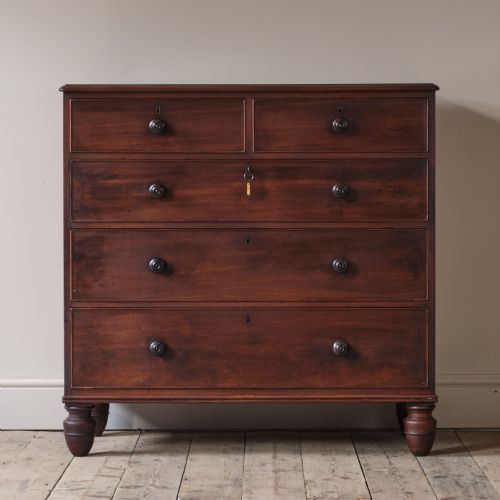
A wooden bedroom chest delivers practical storage through stacked drawers, often taking the form of a chest of drawers, tallboy, linen press, or commode. These pieces serve domestic spaces with surfaces for lamps or dressing items alongside deep compartments for clothing.
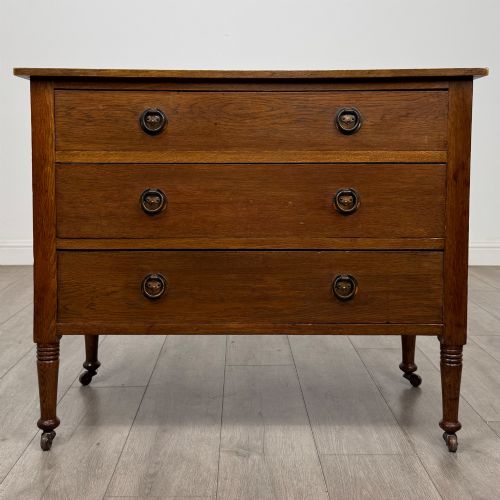
The selection here draws from periods including Georgian, Regency, Victorian, and Edwardian eras. Mahogany, oak, walnut, and pine dominate the structural forms, complemented by specialised variants like Wellington chests and bow fronts.
Georgian and Regency examples appear frequently alongside Victorian pine and Edwardian mahogany iterations. Buyers encounter both austere utilitarian designs and refined veneered surfaces across these historical styles.
Materials and Construction
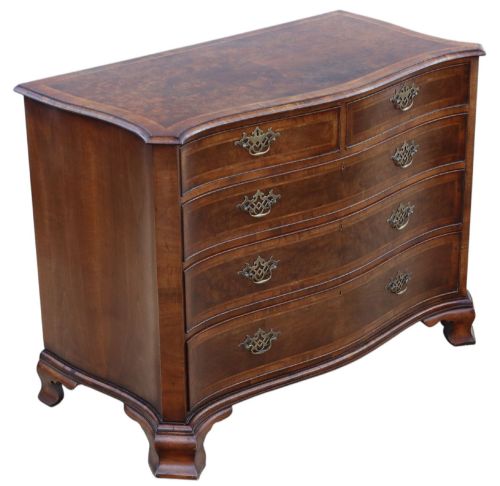
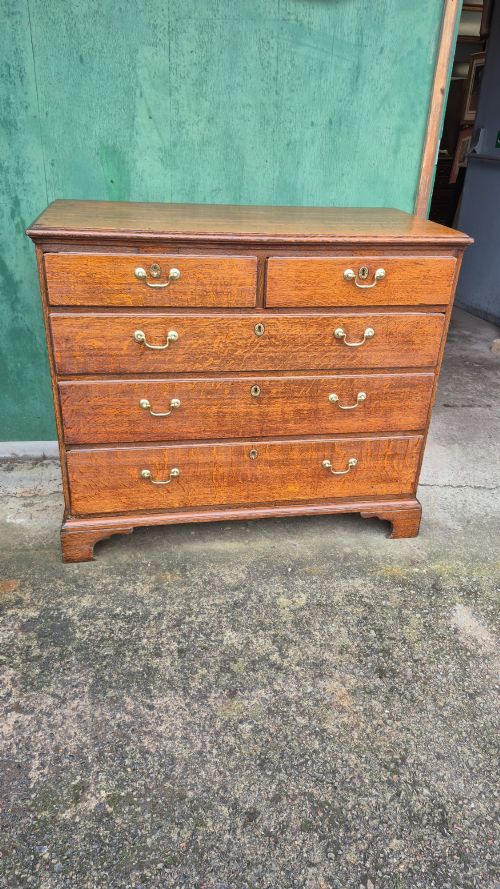
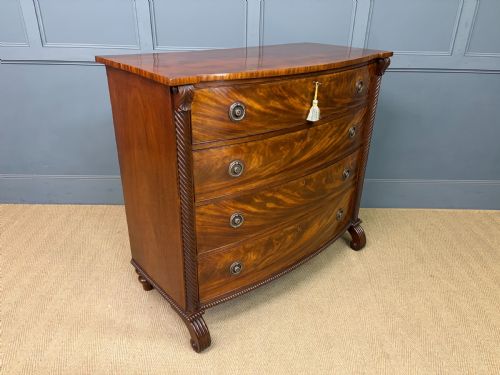
Cabinetmakers utilised dense hardwoods like mahogany, oak, and walnut alongside softer pine for internal carcases and drawer linings. Surface decoration frequently relied on figured veneers, flame mahogany veneer, and burr walnut to create patterned grain effects.
Brass hardware such as drop handles, escutcheons, and knobs secured the drawer fronts, while crossbanding added geometric borders to tops and drawer edges. Dovetail joints constructed the drawer boxes to withstand daily domestic use.
Materials span solid oak and mahogany alongside flame mahogany veneer, burr walnut, and painted pine surfaces.
Design and Execution
The refinement of timber selection distinguishes standard utility furniture from exceptional cabinet work. Matched veneers, intricate crossbanding, and serpentine drawer fronts demonstrate high workshop capability.
Whytock and Reid·T and G Seddon·Sir Clough Williams Ellis
The Wooden Bedroom Chest Glossary
- Wellington chest
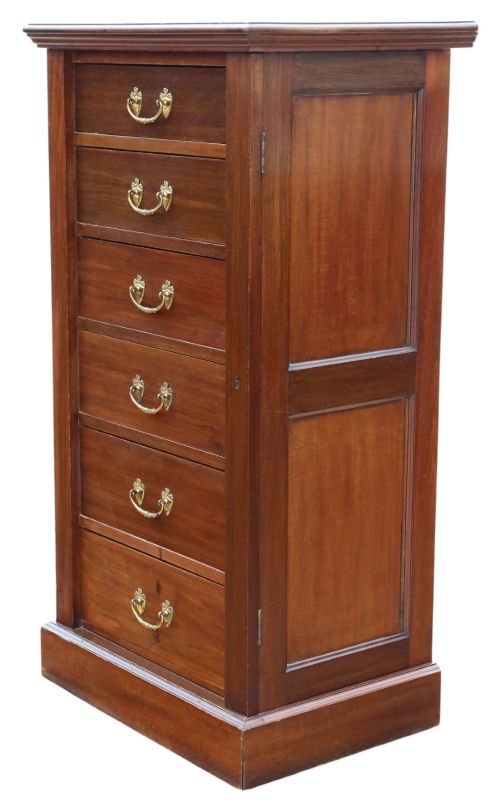
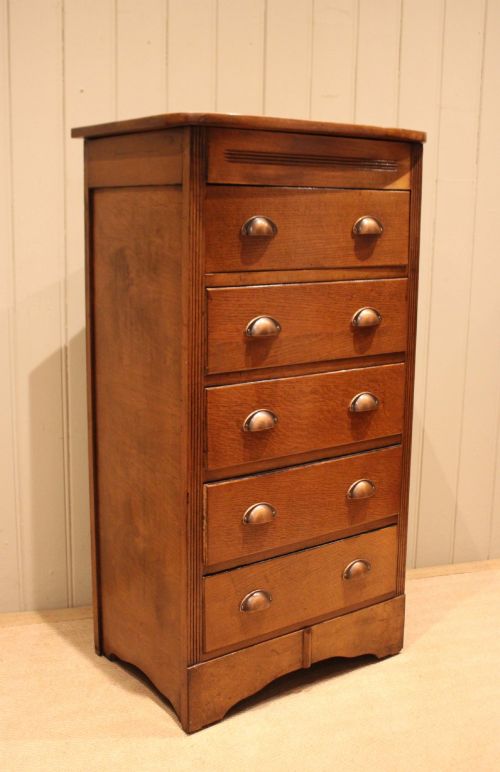
- A tall, narrow chest of drawers secured by a hinged vertical locking bar down one side. This form originated in the nineteenth century for efficient document and linen storage.
- Bow front
- A convex curved cabinet front that projects outward in an arc. This treatment softens the profile of standard rectangular storage furniture.
- Serpentine
- A front profile shaped with a central convex curve flanked by two concave curves. This contour requires advanced woodworking skill to execute cleanly on drawer fronts.
- Brushing slide
- A pull-out shelf integrated above the top drawers of a chest. It provided a temporary surface for folding clothes or brushing garments.
- Tallboy
- A tall storage unit comprising one chest of drawers stacked atop another or built as a single elevated vertical carcase. This configuration maximises vertical capacity in modest floor spaces.
Wooden Bedroom Chest: Frequently Asked Questions
How do I identify a Georgian chest?
Georgian chests typically display solid proportions constructed from dense timbers such as mahogany or oak. Details often include hand-cut dovetail joints, bracket feet, and brass drop handles.
Later Victorian and Edwardian examples shifted toward pine carcases, painted surfaces, or lighter Edwardian mahogany frames with satinwood stringing.
Where were these chests used?
These chests functioned primarily in private bedchambers and dressing rooms for storing daily garments, undergarments, and bed linens. Their top surfaces also held dressing mirrors, candlesticks, or personal effects.
Larger forms like tallboys and linen presses accommodated the extensive wardrobes of eighteenth and nineteenth-century households.
How do I maintain wood furniture?
Maintaining wooden storage furniture involves keeping pieces away from direct heat sources and fluctuating humidity levels to prevent timber splitting. Regular dusting with a dry cloth protects polished surfaces.
Applied wax polish nourishes historic mahogany, oak, and walnut finishes without building up heavy residue over time.