

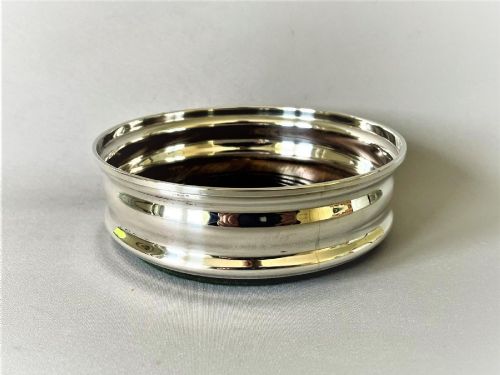


Wooden Base Silver Coaster
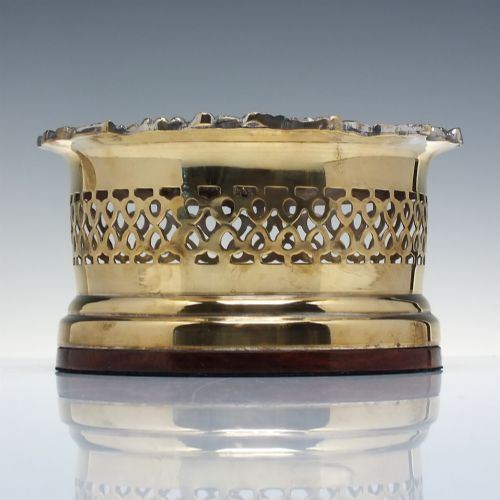
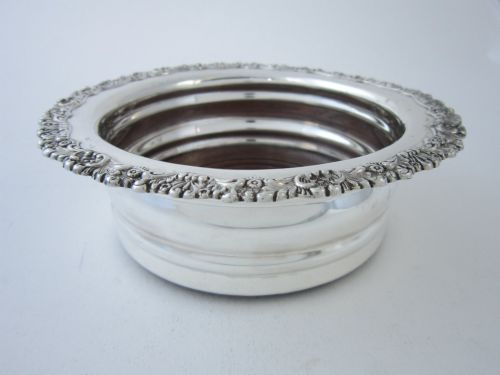
A wooden base silver coaster protects the dining table while holding a wine or champagne bottle in proper style.
Wooden Base Silver Coaster
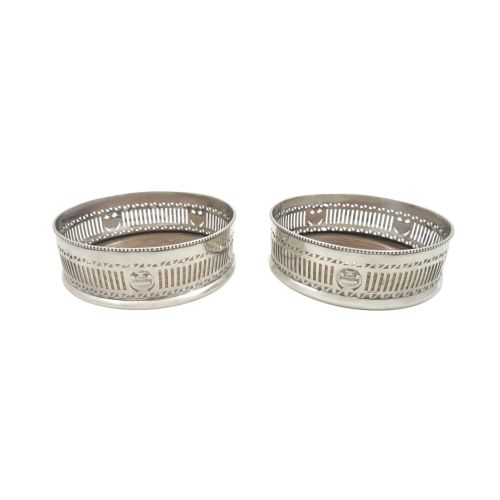
When you search for a wooden base silver coaster, you are looking at table accessories designed to hold wine bottles, decanters and champagne bottles securely. These items combine a sturdy wooden base with silver or silver-plated mounts, serving both a protective and a decorative purpose on the dining table.
The versions you are most likely to meet on this page span several periods, including Victorian, Edwardian and George V eras, alongside pieces in Georgian style and Old Sheffield plating. They appear in forms ranging from single bottle rests to larger magnum sizes and multi-bottle holders.
Originating primarily from traditional British workshops, these table pieces reflect centuries of dining customs. The combination of turned wood and polished metal provides a stable weight that keeps bottles steady during service.
How they were made
Silver and silver plate form the outer gallery walls, joined to the wood by precise fitting and silver soldering. Techniques such as Old Sheffield plating or standard electroplating apply the metal layer over a base metal, while sterling silver examples use solid metal sheets shaped into pierced or pierced and embossed patterns.
Wooden Base Silver Coaster Retail Price Guide 2026
Typical asking prices for wooden base silver coaster among the pieces listed under this phrase on Sellingantiques today, from the lower quarter to the upper quarter. They describe what is for sale here now, not the wider market.
What varies in quality
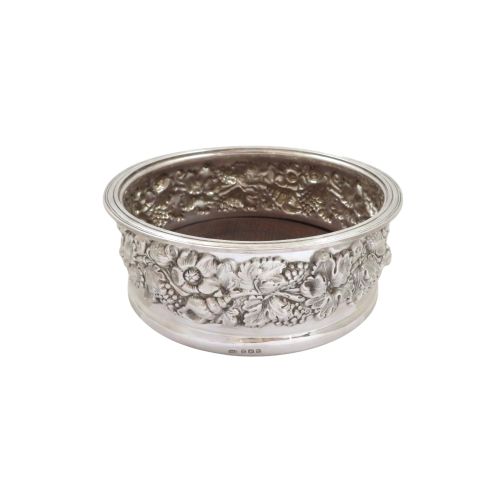
The distinction between standard examples and the finest pieces lies in the crispness of the metalwork and the weight of the timber. Superior items display sharp detailing in decorative borders, grape and vine motifs or armorial engravings.
Quality also rests in the structural integrity of the join between the silver gallery and the wooden base. Well-preserved turned timber and securely seated linings indicate superior original construction and careful subsequent ownership.
John and Thomas Settle
The Wooden Base Silver Coaster Glossary
- Old Sheffield Plated
- A method of fusing a thin sheet of silver to a thicker copper ingot before rolling them into sheets. This technique predates modern electroplating and produces a warm, characteristic sheen.
- Sterling Silver
- An alloy consisting of pure silver and other metals, usually copper, to add strength. Items bearing this standard meet strict legal purity requirements.
- Armorial
- A design featuring a coat of arms or heraldic crest. These engravings often indicate the original aristocratic or landed family who commissioned the piece.
- Magnum
- An oversized bottle format requiring a wider coaster. These larger vessels need sturdier wooden bases to support the additional weight.
Wooden Base Silver Coaster: Frequently Asked Questions
What is a wooden base silver coaster used for?
These items serve to protect polished dining tables from moisture rings and condensation dripping from chilled wine or champagne bottles. The combination of wood and metal provides a stable, decorative platform during meals.
Beyond simple protection, they allow hosts to slide bottles smoothly across the mahogany or oak surface between guests. The raised metal gallery keeps the bottle securely upright during transit.
How do I clean the silver and wood?
Clean the silver elements using a gentle, non-abrasive polish applied with a soft cloth, taking care to avoid getting polish on the wooden base. A soft brush helps remove residue from pierced galleries and decorative borders.
Maintain the wooden base by wiping it clean with a dry or barely damp cloth. Avoid submerging the piece in water, as moisture can damage the wood and weaken the join with the metal rim.
How can I tell Georgian style from Victorian pieces?
Georgian style pieces generally display restrained neoclassical elegance, featuring clean lines, simple pierced galleries and balanced proportions. They reflect the aesthetic priorities of the late eighteenth and early nineteenth centuries.
Victorian and later Edwardian examples often introduce heavier ornamentation, such as prominent grape and vine motifs or robust cast borders. These later designs embrace more elaborate surface decoration and varied manufacturing techniques.
Why do some coasters have green felt underneath?
The baize or felt applied to the underside protects both the wooden base of the coaster and the surface of the dining table from scratches. It provides a soft, friction-free interface for sliding the bottle.
Original felt linings add to the integrity of an antique piece, though replacement fabric is common due to natural wear over time. The material helps deaden sound when the heavy piece is set down.