



Sterling Silver Bottle Coaster
These sterling silver bottle coaster examples protect the dining table whilst passing wine with effortless grace.
Sterling Silver Bottle Coaster
Buyers encounter examples spanning the Georgian, Edwardian, and George V periods, alongside pieces simply attributed to the nineteenth century. Traditional British forms dominate the current selection, encompassing both single items and matched pairs.
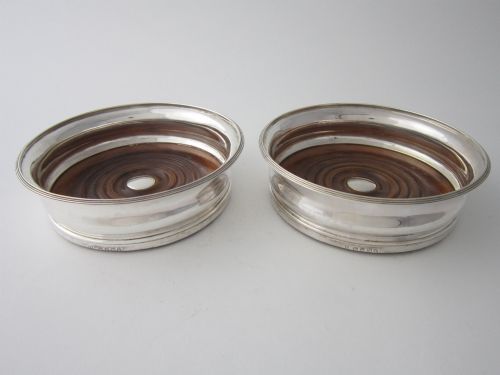
Many specimens feature turned wooden bases, often utilising rich mahogany to provide a stable foundation for heavy glass bottles. Others present solid silver construction designed to cradle standard wine or magnum bottles safely.
How they were made
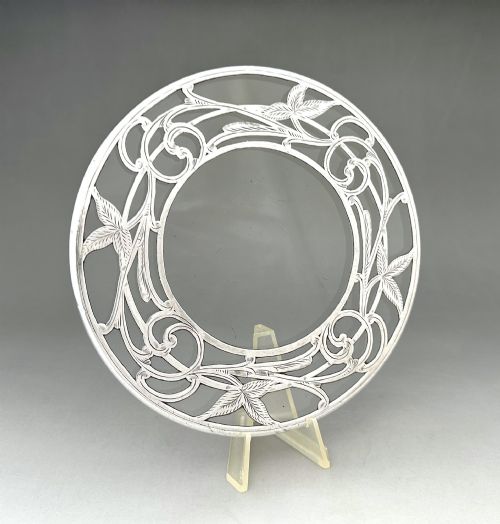
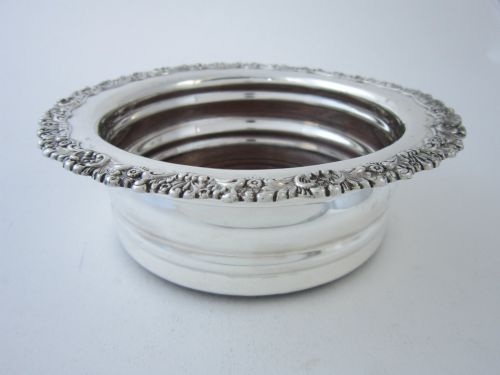
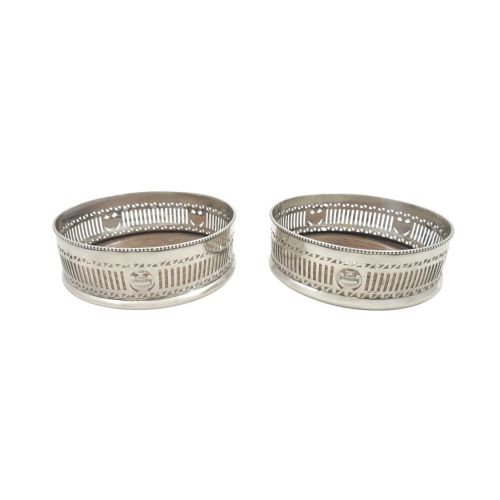
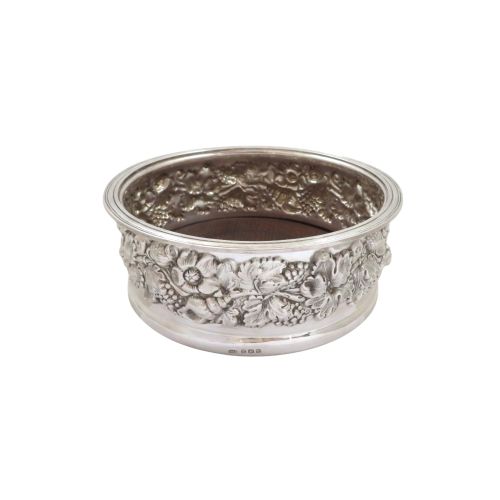
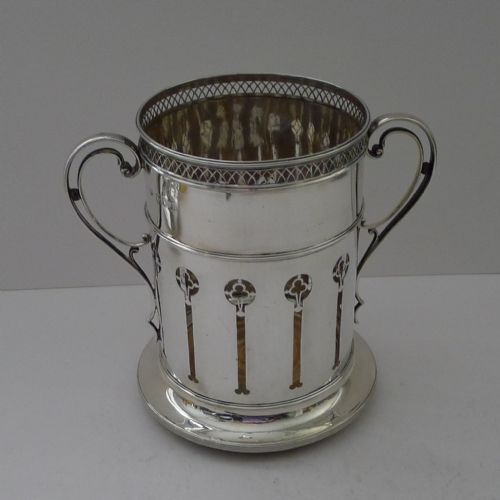
Silversmiths shaped sheet metal into cylindrical walls, employing techniques such as piercing, embossing, or casting to decorate the borders. Grape and vine motifs frequently appear along the rims, rendered through careful hand chasing or applied cast ornament.
Makers integrated wooden inserts into the base, screwing the central silver button or escutcheon through the timber to secure the assembly. Assay office marks stamped directly into the silver record the city of manufacture and the year of testing.
Sterling Silver Bottle Coaster Retail Price Guide 2026
Typical asking prices for sterling silver bottle coaster among the pieces listed under this phrase on Sellingantiques today, from the lower quarter to the upper quarter. They describe what is for sale here now, not the wider market.
Grape and vine motifs climb many rims, ensuring the silver stays close to the fruit that filled the bottle.
What varies in quality
The distinction between standard production and superior craftsmanship rests upon the crispness of the chased decoration and the weight of the metal. Fine examples display deeply articulated vine leaves and robust gauge silver that resists flexing under pressure.
The integration of the wooden base also distinguishes finer pieces, where the turned mahogany fits flush against the silver gallery without gaps. Armorial engravings and crests executed by skilled heraldic hands elevate individual specimens above plain commercial stock.
John and Thomas Settle·Asprey
The Sterling Silver Bottle Coaster Glossary
- Sterling silver
- An alloy containing a high proportion of pure silver, universally marked to guarantee its metal standard. This material forms the primary body of every piece catalogued here.
- Mahogany
- A dense, dark timber frequently turned to form the base insert of these vessels. It offers both stability and a pleasing contrast to the bright metal wall.
- Armorial
- A heraldic design or coat of arms engraved upon the silver or mounted as a crest. These markings often denote the original owning family.
- Magnum
- An oversized bottle format requiring a wider container. Holders made for this size accommodate larger champagne or wine bottles.
- Assay office
- An official body responsible for testing precious metals and stamping them with hallmarks. Marks from locations such as Sheffield appear on these items.
Sterling Silver Bottle Coaster: Frequently Asked Questions
What is a sterling silver bottle coaster?
A sterling silver bottle coaster is a small, low-walled vessel designed to hold wine bottles and protect dining tables from condensation rings.
These pieces use a combination of silver and wood to create a stable base that glides smoothly across polished mahogany.
How do you use a bottle coaster?
The coaster sits on the dining table, holding the wine or champagne bottle securely during meals. Diners slide the vessel across the surface to pass the bottle to their guests.
The wooden base absorbs minor knocks and prevents the heavy glass base from scratching the table.
How do I date an antique coaster?
Dating relies upon the hallmarks stamped into the silver, which reveal the assay office and the exact year of testing. Stylistic clues such as George III or Edwardian forms also indicate the manufacturing era.
Georgian pieces often display simpler, heavier proportions, whilst later twentieth-century items incorporate different decorative motifs.