



Wooden Barrel Bucket
These wooden barrel bucket pieces bring robust coopered craftsmanship and practical utility into domestic spaces.
Wooden Barrel Bucket
A wooden barrel bucket represents a sturdy vessel form adapted for various household roles, ranging from umbrella stands to wine coolers and coal hods. Buyers searching for a wooden barrel bucket encounter pieces shaped by traditional cooperage methods across the Victorian and Edwardian periods.
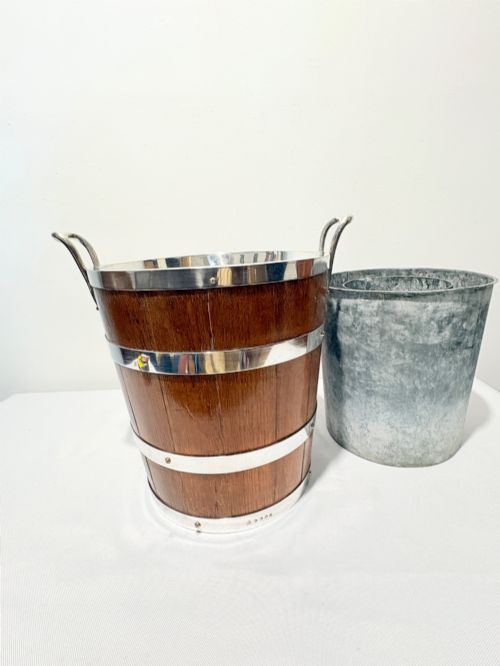
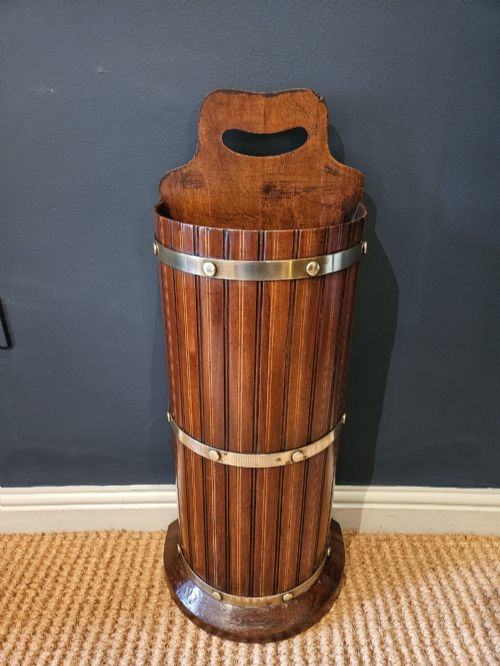
The most common examples on this page are oak stick stands and wine coolers, often bound with brass, copper, or silver plate. These domestic items harness stave construction to deliver durable utility with distinct regional styles like Scandinavian, Dutch, and English country.
Forms extend beyond cooling wine and holding sticks to include jardiniere planters, biscuit boxes, and butter barrels. Each piece reflects the functional requirements of nineteenth and early twentieth century homes through solid timber construction.
How they were made
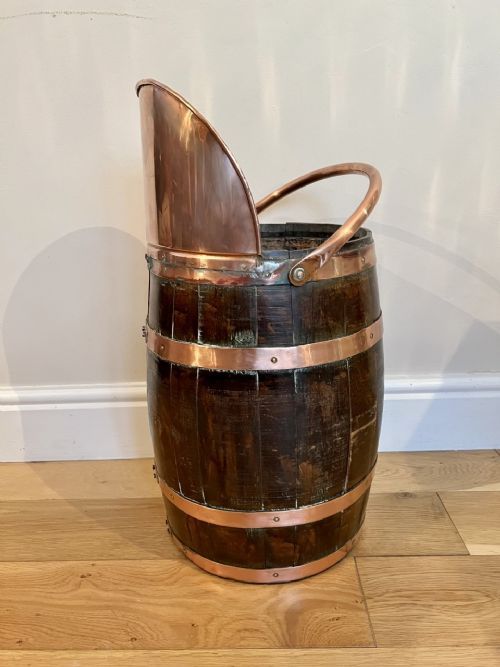
Construction relies heavily on solid oak, mahogany, pine, and hardwood shaped into individual staves and joined together by a cooper. Metal bands in brass, copper, iron, or silver plate are then fitted tightly around the wooden body to secure the vessel.
Handles, liners, and umbrella loops incorporate metals and sometimes creamware ceramics to handle liquids or damp items. The surfaces show the natural grain of timber paired with polished metal hoops that reinforce the coopered structure.
Wooden Barrel Bucket Retail Price Guide 2026
Typical asking prices for wooden barrel bucket among the pieces listed under this phrase on Sellingantiques today, from the lower quarter to the upper quarter. They describe what is for sale here now, not the wider market.
A sailor's rum barrel proves that even grog tubs required proper cooperage.
What varies in quality
Quality rests in the precision of the cooperage, where tightly fitted staves and uniform thickness determine the structural integrity of the barrel. Superior examples feature well-matched timber grains and substantial metal bands that align evenly across the body.
The choice of materials and integrated hardware also dictates the distinction between standard utilitarian vessels and finer domestic furnishings. Original metal liners, such as creamware inserts or fitted silver plating, elevate the standard of the piece.
The Wooden Barrel Bucket Glossary
- Coopered
- Constructed from wooden staves bound together with hoops, typically used for barrels and buckets. This technique ensures strong vessel walls without requiring modern adhesives.
- Stave
- A narrow strip of wood with bevelled edges that forms the sides of a barrel or bucket. Multiple staves lock together under tension from metal hoops.
- Silver Plate
- A thin layer of silver applied to a base metal to give the appearance of solid silver. This finish appears frequently on rims, handles, and mounts of wine coolers.
- Jardiniere
- An ornamental pot or stand for holding plants or flowers. These items often utilise coopered wooden bodies with metal liners to protect the wood from moisture.
- Coal Hod
- A bucket or container specifically designed for holding household coal near a fireplace. They frequently feature robust metal bindings and drop handles for carrying.
Wooden Barrel Bucket: Frequently Asked Questions
What were wooden barrel buckets originally used for?
These vessels served diverse practical functions in historic households, acting as wine coolers, stick stands, coal hods, and storage barrels. Their robust construction handled heavy loads like coal, ice, or wet umbrellas.
Over time, many of these utilitarian items transitioned into decorative interior furnishings while retaining their original structural forms.
How do I care for a coopered wooden bucket?
Keep the timber away from direct heat sources and sudden temperature shifts to prevent the wood from drying out and shrinking against the metal bands. Regular dusting and occasional wax application help maintain the finish of the oak or mahogany.
If the piece includes a removable metal or ceramic liner, use that insert to hold moisture rather than exposing the historic wood directly to water.
How can I tell Victorian pieces from Edwardian ones?
Victorian examples often display heavier, darker timber and robust brass bindings suited to formal or rustic nineteenth century interiors. Edwardian pieces frequently lean towards lighter oak treatments and refined metal mounts reflecting shifting domestic tastes.
Construction details and recorded dates provide the clearest confirmation of a piece's specific period origin.
What woods are commonly found in these buckets?
Oak is the predominant timber used in these coopered vessels, valued for its strength and durability in stave construction. Mahogany, pine, and assorted hardwoods also appear across various regional styles.
These timbers were selected for their ability to withstand tension from metal hoops and regular daily handling.