
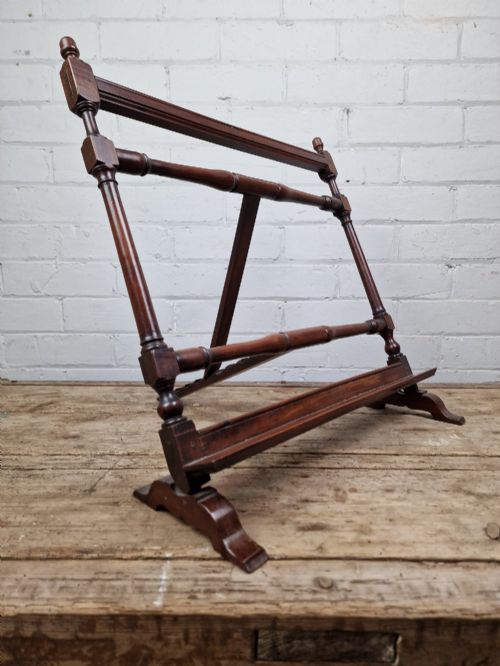


Wooden Art Easel
A wooden art easel holds your canvases while you paint or displays your framed pictures with proper character.
Wooden Art Easel
A wooden art easel is a utilitarian studio stand or display support built to hold paintings, photographs, and books securely at a working angle. When you search for a wooden art easel, you find pieces ranging from small tabletop stands to large floor-standing studio frames.
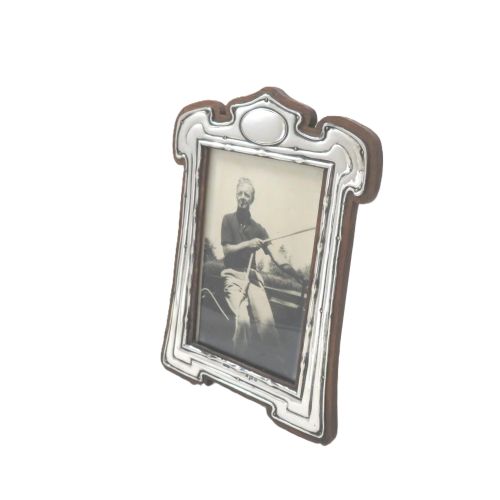
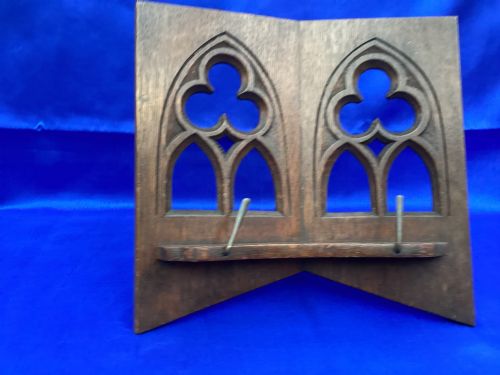
The versions you meet most often on this page date from the nineteenth century up to the nineteen-thirties, constructed in oak, mahogany, and ebonised wood. These items cross over into domestic display, serving as book stands and decorative picture frames as often as working artist supports.
Materials and construction
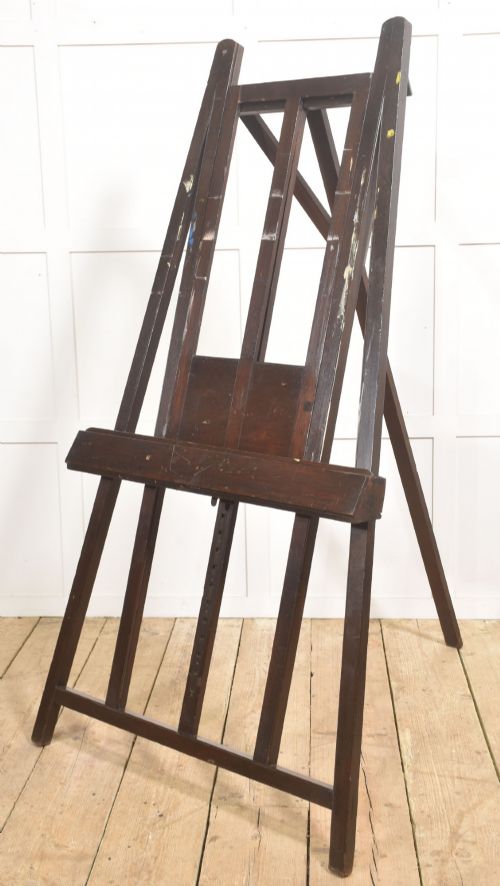
Joinery on these pieces relies on solid timbers like oak, mahogany, and pitch pine, chosen for their weight and stability under a heavy canvas. Metal fittings and brass adjustments appear alongside carved wooden elements to alter the height and rake of the display ledge.
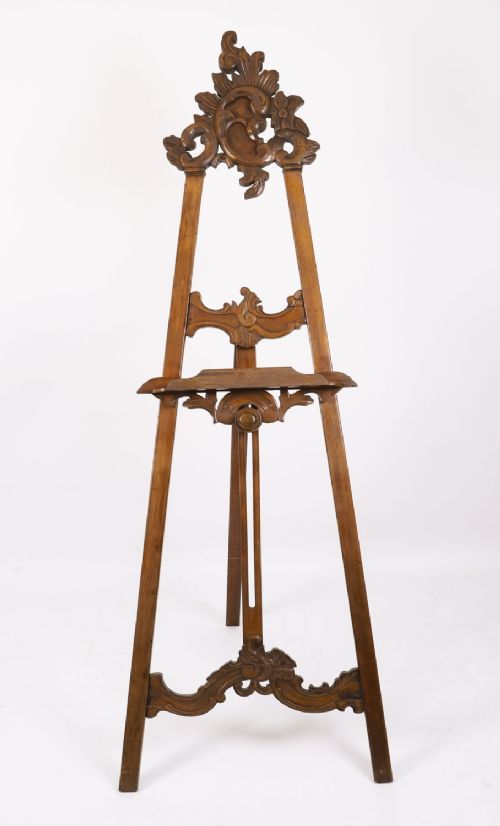
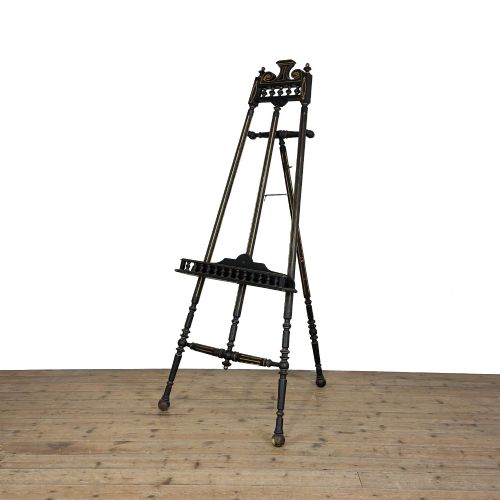
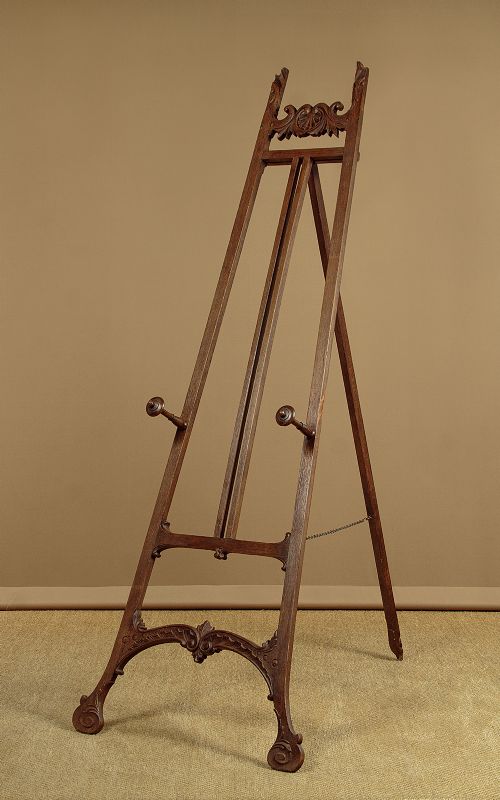
Surface treatments range from simple polished wood and ebonised finishes to gilded gold leaf accents and decorative carvings in styles spanning the Victorian era to Art Nouveau.
One recorded piece includes a carved swan design, proving that even a functional studio tool occasionally gets a touch of unexpected wildlife.
Judging quality in wooden art easels
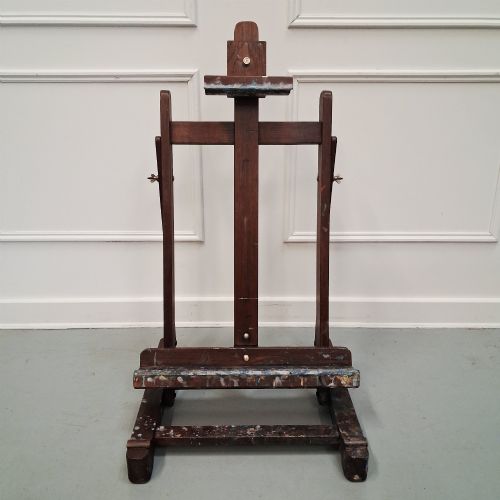
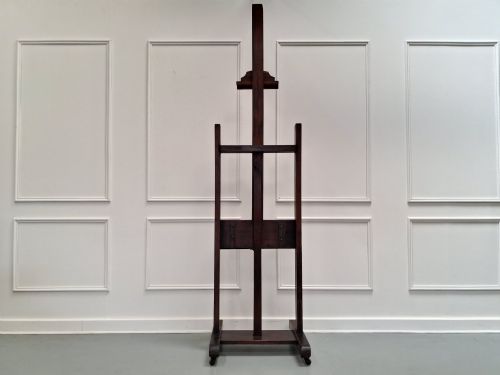
Quality rests in the robustness of the adjusting mechanisms and the integrity of the timber joints rather than surface polish alone. A studio easel with heavy-duty brass winding gear and double-sided gallery framing sits comfortably above a basic pine tabletop stand.
The refinement of the carving distinguishes standard utility stands from pieces with Aesthetic Movement or Gothic Revival detailing, where makers applied considered design to functional objects.
Roberson & Co, London
The Wooden Art Easel Glossary
- Gallery easel
- A heavy-duty floor-standing support designed to display finished paintings in a gallery or large studio space. These often feature double-sided boards or adjustable winding mechanisms.
- Ebonised wood
- Timber treated with a chemical stain or black finish to imitate ebony. This technique was popular in Victorian and Aesthetic Movement pieces.
- Tabletop easel
- A miniature version built to sit on a desk or table while supporting smaller canvases, books, or photographs. They provide the adjustability of larger studio models in a compact footprint.
- Aesthetic Movement
- A late nineteenth-century design style focusing on visual beauty over narrative subject matter. Pieces in this style often incorporate ebonised surfaces and stylised motifs.
Wooden Art Easel: Frequently Asked Questions
What is a studio easel?
A studio easel is a large floor-standing wooden frame built to support substantial canvases during the painting process. These pieces incorporate heavy bases and adjustable ledges to manage working heights.
They offer greater stability than portable alternatives and often feature wheels or winding mechanisms to handle heavy artist frames.
How do I use a tabletop easel?
A tabletop easel sits on a flat surface to hold smaller paintings, photographs, or books at a readable angle. They suit smaller working spaces or domestic display.
Adjustment pegs or screws let you alter the tilt of the backing board to suit your line of sight.
What woods were used for antique easels?
Cabinetmakers utilised durable hardwoods like oak and mahogany alongside pitch pine and ebonised timber. These materials provided the necessary weight to prevent tipping.
Brass fittings and metal mechanisms were frequently added to strengthen moving joints and supports.
Can an easel hold a heavy picture frame?
Floor-standing gallery easels and large studio stands handle heavy frames securely due to their substantial timber construction and wide bases. Tabletop models suit lighter photographs and books.
Checking the width of the display ledge ensures your particular frame rests safely without slipping.