
Wooden Architectural Salvage
Wooden architectural salvage brings history indoors through salvaged timbers, carved panels and structural fragments rescued from older buildings.
Wooden Architectural Salvage
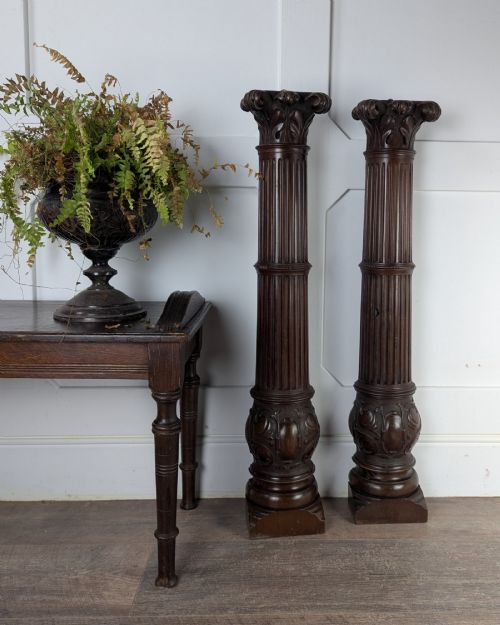
Wooden architectural salvage encompasses functional and decorative elements recovered from period buildings, ranging from domestic interiors to ecclesiastical spaces. When searching for wooden architectural salvage, buyers encounter everything from structural columns and fire surrounds to decorative wall panels and pelmets. The selection relies heavily on pieces originating from the seventeenth, eighteenth and nineteenth centuries, alongside Victorian and Edwardian examples.
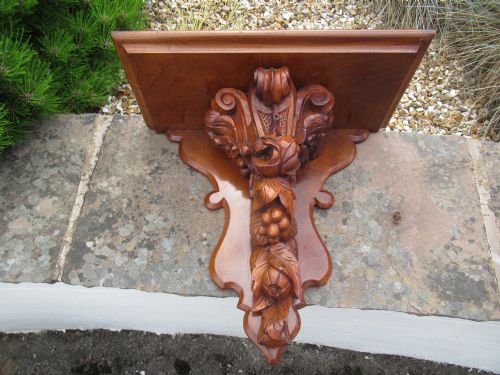
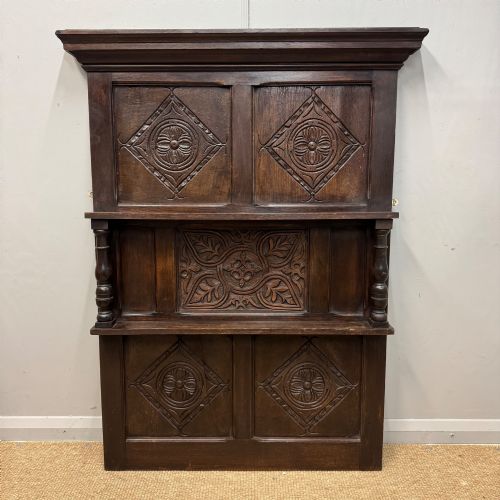
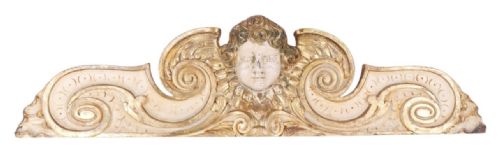
The items found here reflect the diverse decorative ambitions of past eras, captured in carved oak, walnut, mahogany and pine. Typical survivals include overmantels, ceiling bosses, wall brackets and carved panels that once adorned grand rooms or institutional buildings. These components retain the hand of the maker and the patina of long service in their original settings.
Materials and construction
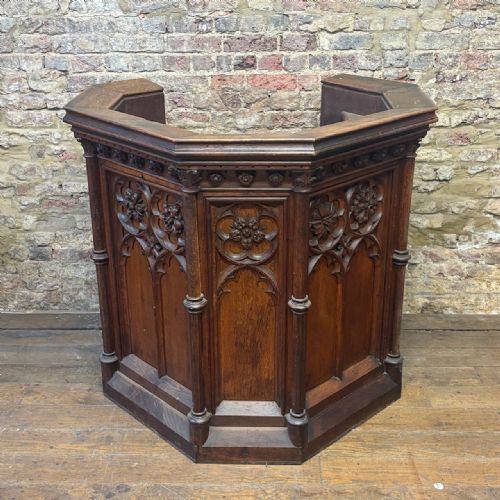
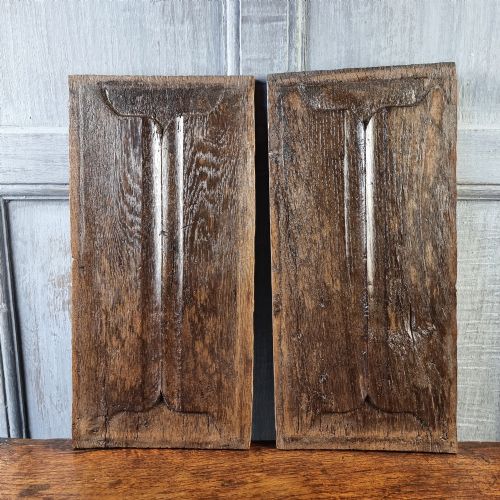
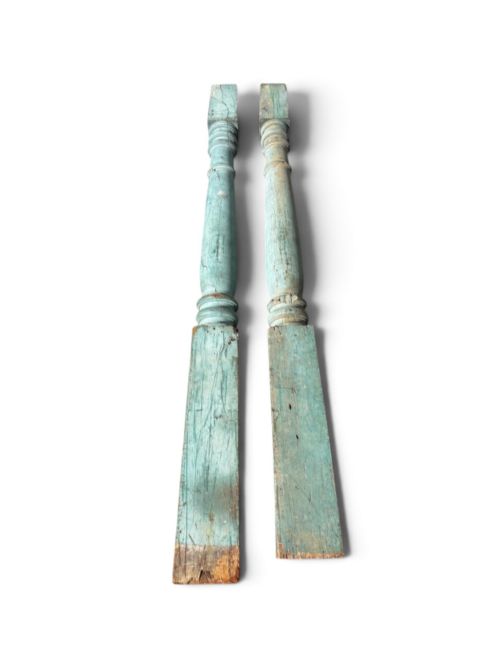
Makers relied on native hardwoods such as oak, walnut and mahogany, alongside softer timbers like pine and limewood, selected for their grain and workability. Joinery and carving techniques varied from deep relief hand-carving on linenfold panels to the lathe-turning of structural columns and pillars. Surface treatments often involved layers of paint, gesso, or gold leaf applied to enhance the timber details.
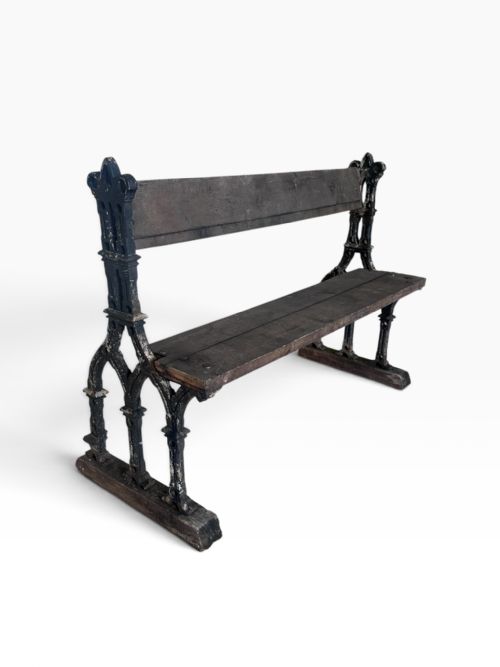
Many items incorporate structural ironwork or hardware alongside the primary wood to secure their placement in original settings. The combination of dense timber and traditional hand-tooling accounts for the survival of these elements across centuries of use and relocation.
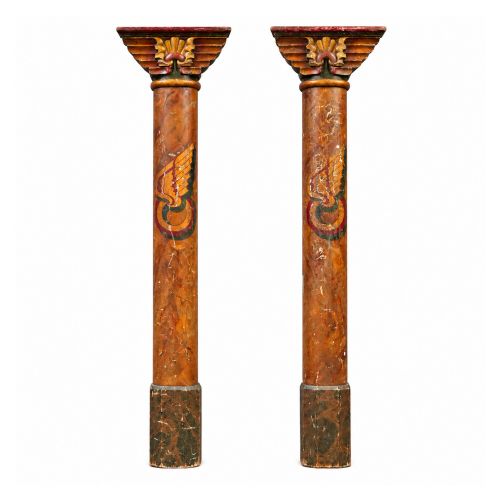
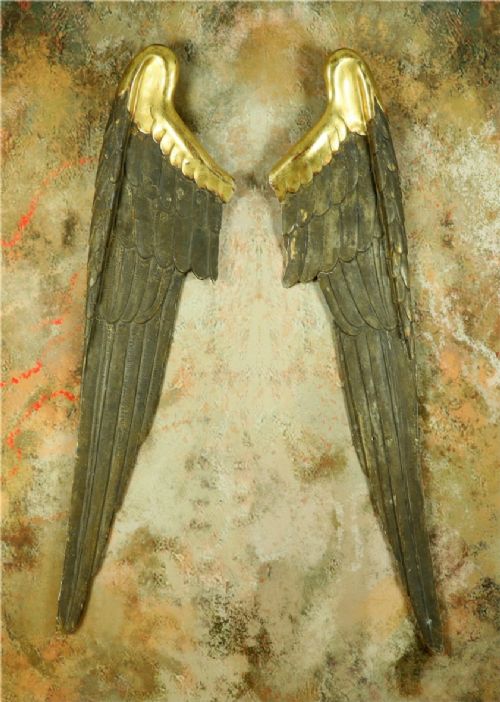
Among the salvaged timbers wait a pair of carved wooden angel wings, ready to lift off.
Evaluating quality and execution
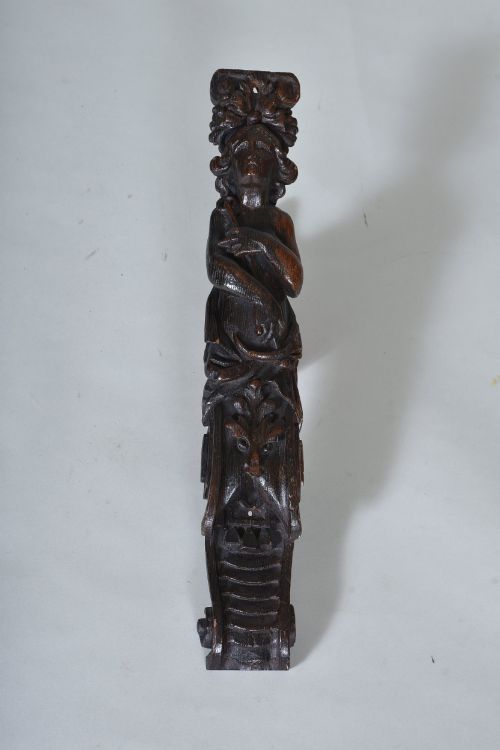
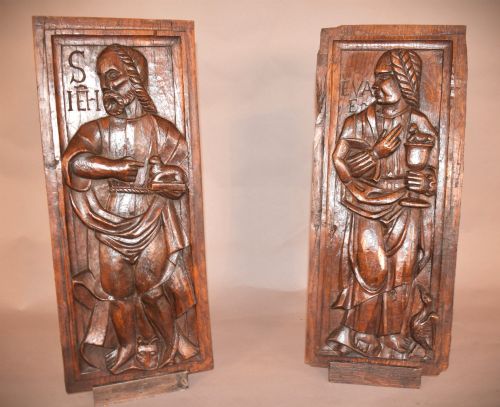
Quality in these pieces is dictated by the depth, crispness and ambition of the hand-carving rather than mere age alone. Superior examples display confident chisel work and anatomical accuracy in figures or foliage, whereas lesser pieces show rushed or repetitive cutting.
The integrity of the timber and the preservation of original surfaces also govern value. Pieces retaining their early paint, gesso or untouched patination offer greater historical interest than those stripped down and heavily refinished.
The Wooden Architectural Salvage Glossary
- Overmantel
- A decorative panel, mirror or framework positioned directly above a fireplace mantelpiece. These often feature elaborate carvings or architectural mouldings.
- Linenfold
- A style of relief carving used on wooden panels that imitates folded linen cloth. It was particularly popular during the Tudor and medieval periods.
- Ceiling Boss
- A decorative projecting block of wood placed at the intersection of ribs in a ceiling or vault. They are frequently carved with foliage, cherubs or heraldic motifs.
- Pelmet
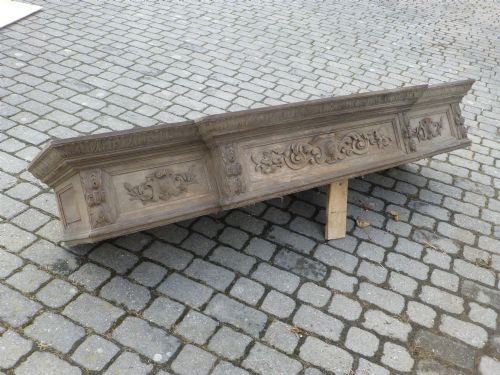
- A narrow wooden board or frame mounted above a window to conceal curtain fixtures. Salvaged examples often present substantial carved decoration and deep proportions.
- Newel Post Finial
- The decorative terminal ornament topping the main vertical post at the head or foot of a staircase. These sculptural elements often take the form of carved animals or floral motifs.
Wooden Architectural Salvage: Frequently Asked Questions
How do I install heavy wooden architectural salvage?
Most heavy elements require secure fixing into masonry or structural wall studs using appropriate metal brackets and heavy-duty fixings. Professional consultation is recommended for items of substantial weight, such as fire surrounds or monumental pillars.
Weight distribution must be carefully calculated to ensure the wall or floor can bear the load safely without damaging the fabric of the building.
Can I clean painted wooden architectural salvage?
Cleaning depends entirely on whether the paint surface is original, historic, or a later modern addition. Gentle dusting with a dry microfibre cloth is generally safe for delicate gesso and painted finishes.
Harsh chemical strippers should be avoided unless you intend to remove the finish completely and expose the raw timber underneath.
Where were these salvage pieces originally placed?
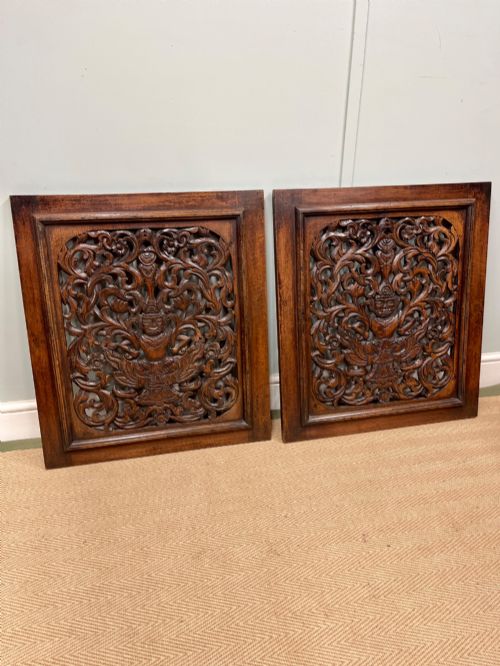
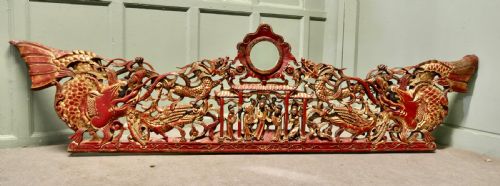
These fragments originated in diverse settings, including country houses, churches, civic buildings, and overseas structures like French chateaux or oriental temples. Items like columns, overdoors and panels formed the permanent interior architecture of these grand spaces.
Rescuing them preserves the craftsmanship of interiors that were later remodelled or demolished.