




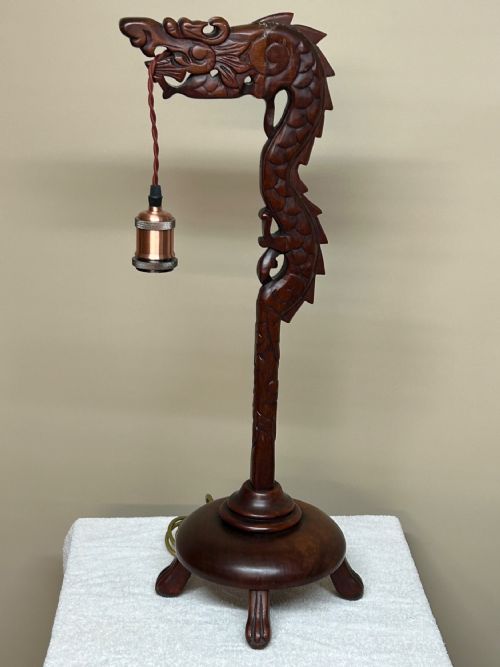


Wooden Accent Light
A wooden accent light brings warmth and character to a room, drawing the eye with natural grain and period craftsmanship.
Wooden Accent Light
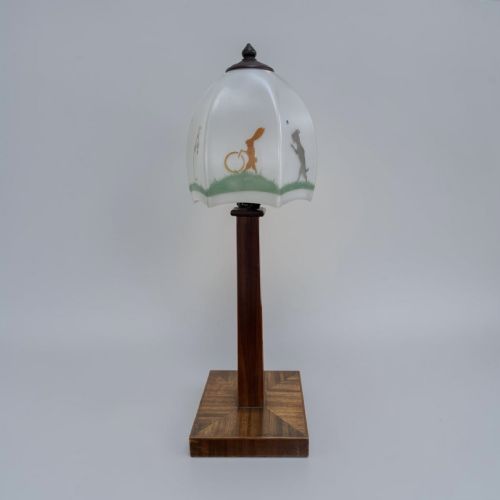
A wooden accent light takes many forms across different decades, ranging from carved oak columns to sleek Art Deco designs and turned root wood. Pieces appear in various timbers including oak, walnut, birch, and elm, often incorporating brass or metal details.
The selection spans table lamps and tall lamps created across the nineteenth and early twentieth centuries. These fittings combine functional illumination with distinct period styles, from Edwardian simplicity to ornate carved forms.
Materials and construction methods
Craftsmen utilised solid hardwoods like oak, walnut, and elm, selecting timber for its natural grain and durability. Turning, carving, and joining techniques shaped the wood into stable bases and slender columns.
Metal and brass components often complement the wooden bodies, providing structural support or decorative contrast. Glass shades or fittings frequently complete the construction, pairing translucent elements with dense timber.
Wooden Accent Light Retail Price Guide 2026
Typical asking prices for wooden accent light among the pieces listed under this phrase on Sellingantiques today, from the lower quarter to the upper quarter. They describe what is for sale here now, not the wider market.
Turned root wood finds a second life holding a bulb.
Judging the quality of a lamp
Quality rests in the selection of the timber and the depth of the carving or turning. Dense hardwoods with rich grain patterns display greater substance than softer or plainer woods.
The integration of metal hardware and the precision of joinery separate standard production pieces from finer studio work. Well-balanced proportions and harmonious material combinations indicate superior design and execution.
Heal’s
The Wooden Accent Light Glossary
- Art Deco
- A design style from the early twentieth century characterised by sleek geometric shapes and streamlined forms. It appears frequently in pieces from the nineteen-thirties.
- Edwardian
- A period spanning the early nineteen-hundreds known for lighter, refined furniture styles. Pieces from this era often feature simplified proportions.
- Turned wood
- Timber shaped on a lathe to create symmetrical, rounded profiles. This method frequently forms the central stem of a lamp.
- Root wood
- Timber sourced from the root system of a tree, displaying irregular and highly figured grain patterns. Carvers utilise these organic shapes for sculptural bases.
Wooden Accent Light: Frequently Asked Questions
What periods do these lamps come from?
The selection includes pieces from the nineteenth century through to the nineteen-thirties. Makers utilised styles such as Art Deco, Edwardian, and regional carving traditions.
Dates span from the eighteen-hundreds up to nineteen-thirty, reflecting changing interior tastes across several decades.
Which woods are most common?
Oak, walnut, birch, and elm appear frequently across the collection. Craftsmen selected these timbers for their strength and decorative grain.
Selected items also incorporate exotic root wood or contrasting brass and metal elements to enhance the visual impact.
How do I style a wooden accent light?
These lamps suit side tables, occasional tables, and consoles, adding localized illumination to dark corners. Their organic materials complement both traditional and modern interiors.
Pairing a timber lamp with complementary wooden furniture creates a cohesive look within a room scheme.
Are these lamps standard table size?
Sizes vary considerably, ranging from compact table lamps to tall floor or sideboard models. Some examples feature slender profiles while others present heavy, carved forms.
Proportions depend on the specific era and the intended function within a period interior.