

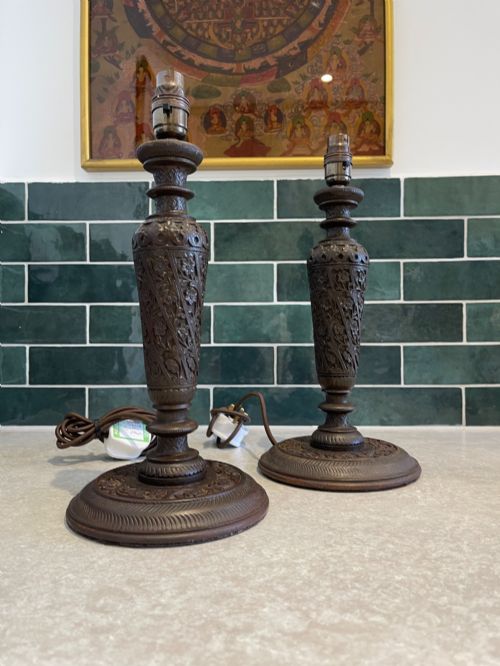
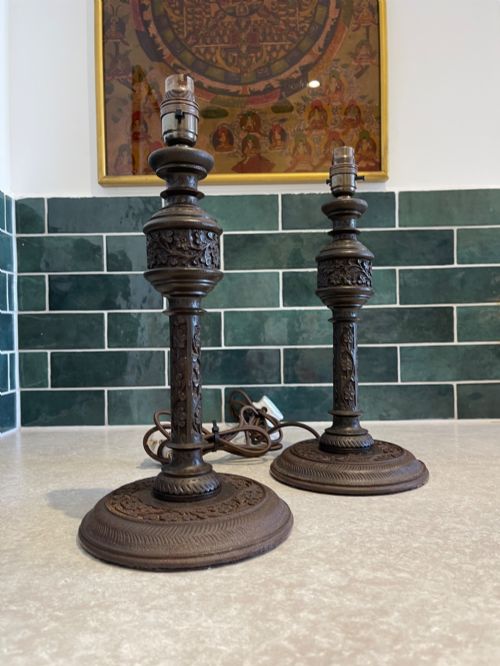
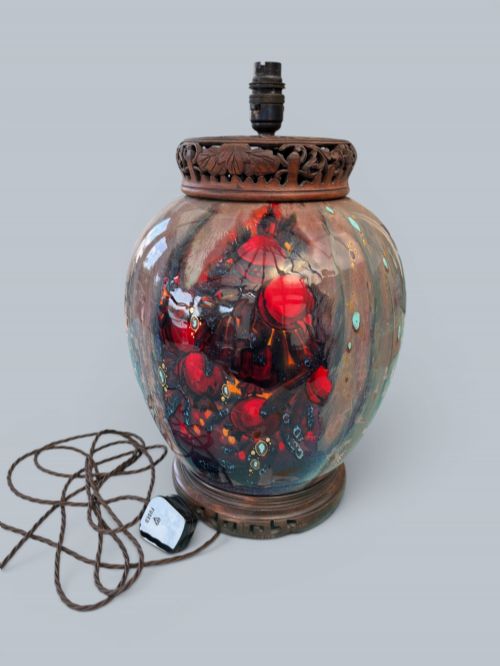
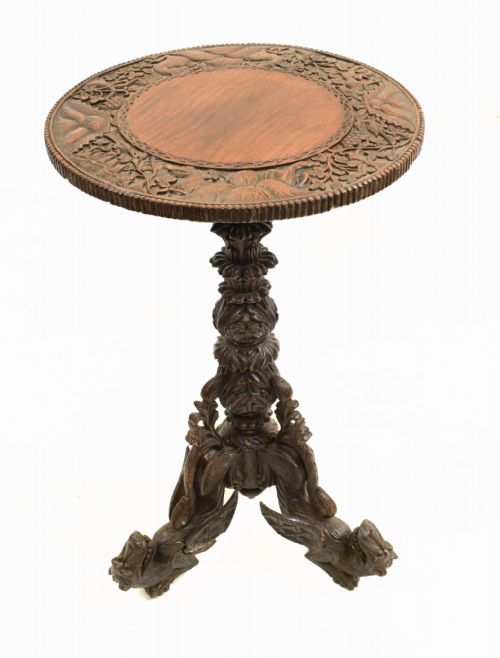



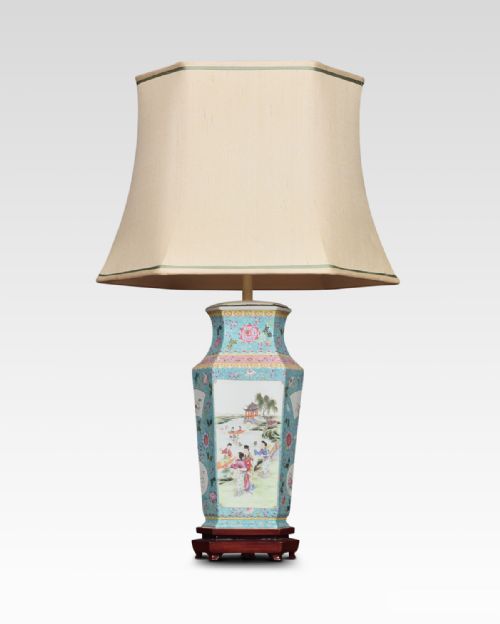
Hand Carved Lamp
A hand carved lamp brings tactile warmth to a room through intricate wooden and brass forms shaped by traditional artisans.
Hand Carved Lamp
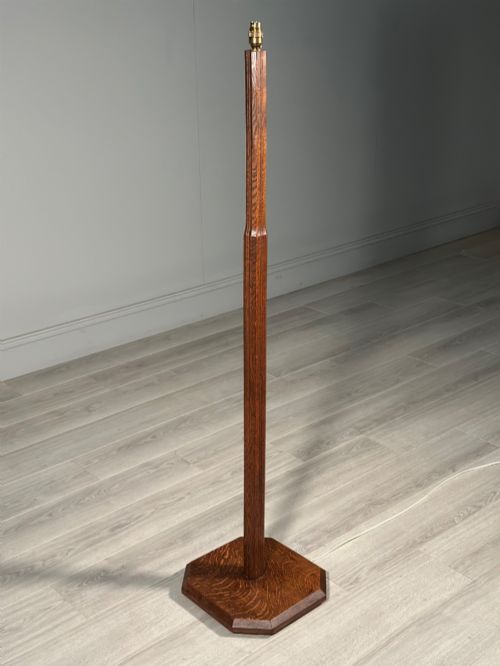
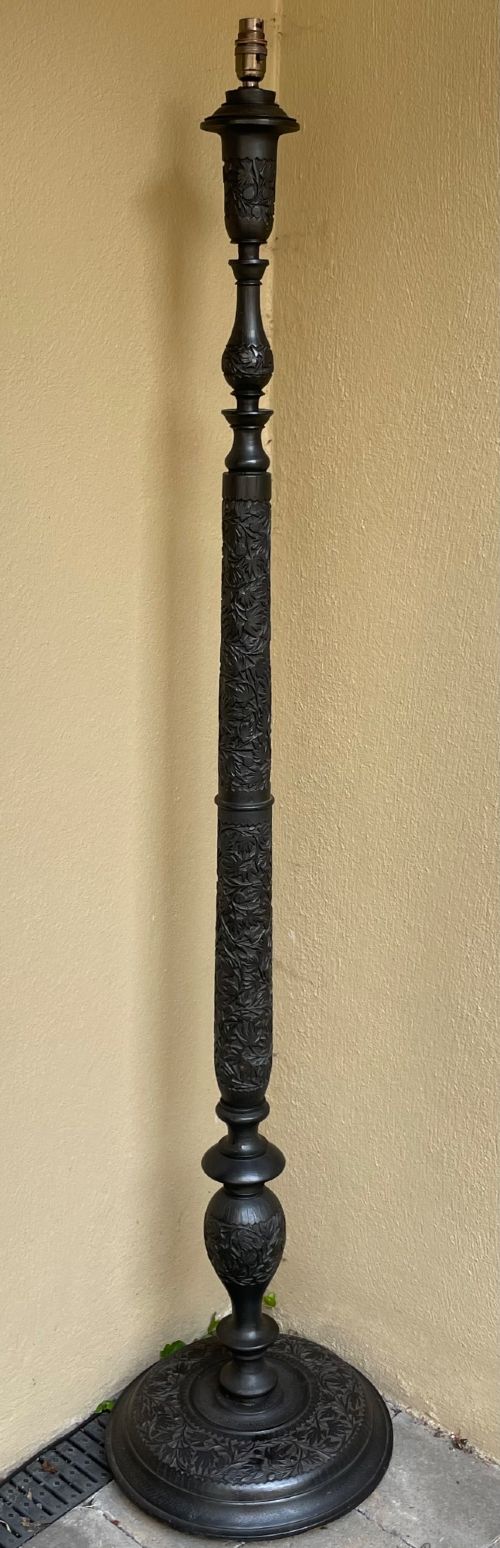
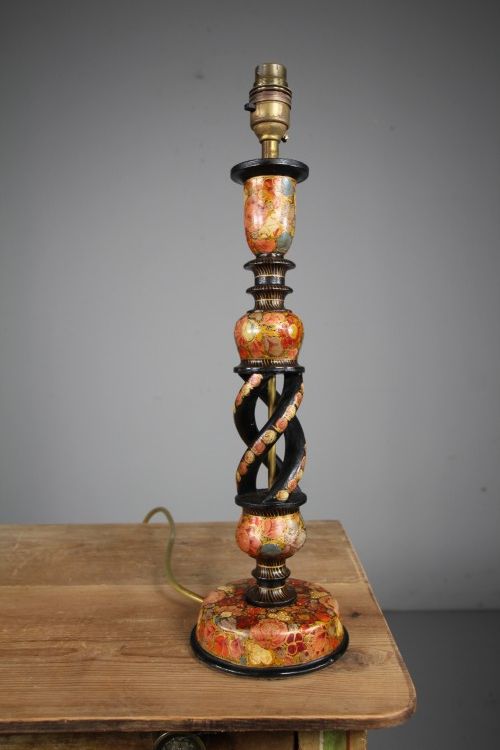
A hand carved lamp encompasses table lamps, standard lamps, and torchiere lighting alongside occasional tables repurposed or built for illumination, frequently emerging from regional woodworking traditions across India, China, Japan, and Europe. Buyers seeking a hand carved lamp will commonly encounter standard floor lamps and smaller table variants fashioned during the nineteenth and early twentieth centuries.
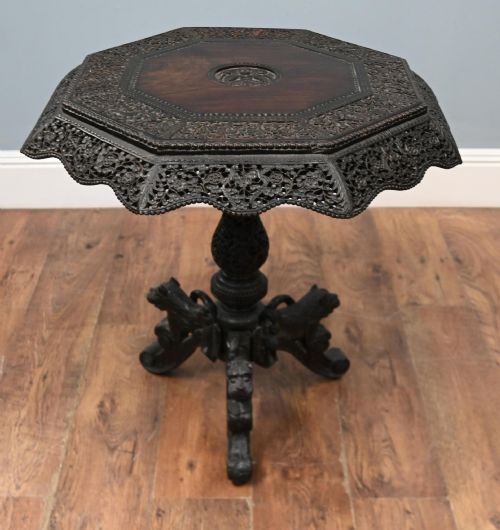
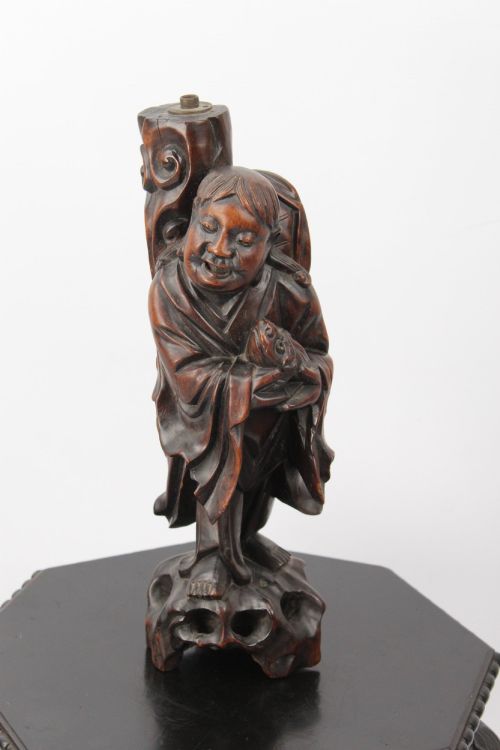
The regional origins dictate the sculptural vocabulary of these pieces, ranging from the dense foliate motifs of Anglo-Indian and Kashmiri workshops to the naturalistic root wood formations of Chinese and Japanese makers. European examples also appear, notably represented by Black Forest bear carvings in linden wood alongside Gothic Revival details.
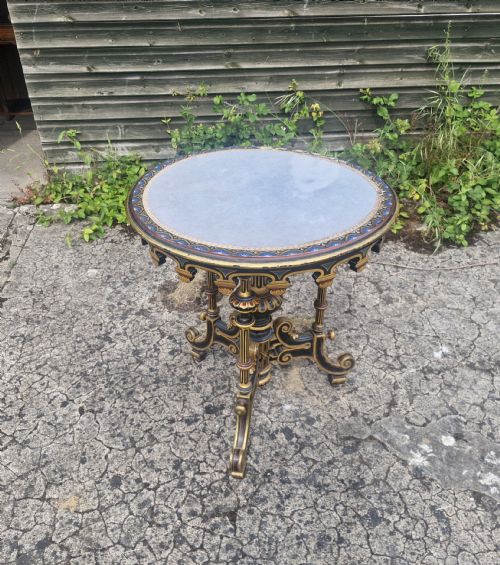
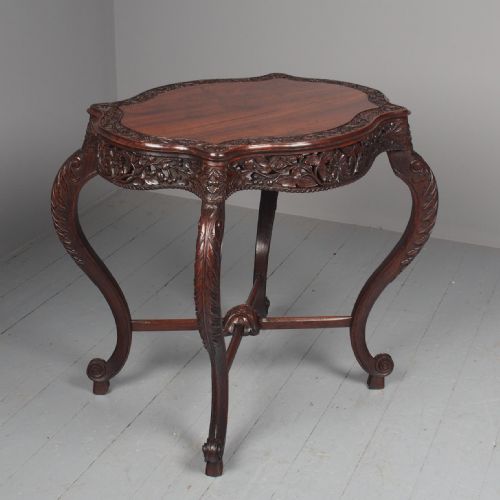
Many items functioning as a hand carved lamp originate from distinct cultural furniture types, such as side tables and pedestals, which bridge the gap between utilitarian support structures and ornamental woodcarving.
Materials and Construction
Makers utilised dense timbers such as teak, padauk, walnut, and hardwood to achieve crisp relief carving that resists splitting over decades of use. Brass and metal components provide structural integrity, while occasional pieces incorporate painted finishes, lacquer, or silver leaf to accentuate the carved details.
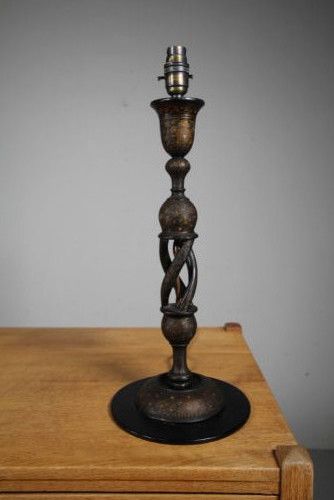
Artisans employed hand tools to chisel, pierce, and turn the timber, creating deep undercut foliage, figurative elements, and twisted columns. Root wood specimens rely on the natural contours of the timber growth, shaped minimally to highlight organic forms.
Listings feature periods spanning the Victorian era through the 1930s, constructed in teak, brass, hardwood, and fabric.
Assessing Quality
The depth and crispness of the carving separate superior examples from simpler production, as skilled carvers achieve three-dimensional relief with undercut layers and clean edges. Wood selection also dictates quality, with tightly grained teak and figured walnut holding intricate details far better than softer commercial woods.
Proportion and structural balance govern the desirability of floor and table standards, ensuring the vertical shaft integrates harmoniously with the carved base and upper fittings without appearing awkward.
The Hand Carved Lamp Glossary
- Anglo-Indian
- Furniture and lighting produced in India during the British colonial period, combining European forms with local carving styles.
- Torchiere
- A tall stand or floor lamp designed to direct light upwards towards the ceiling.
- Linden wood
- A pale timber commonly utilised by European carvers, particularly in Black Forest workshops, due to its fine, even grain.
- Root wood
- Timber sourced from the root system of a tree, prized by Chinese and Japanese artisans for its gnarled, organic shapes.
- Foliate
- Ornamentation modelled upon leaves, flowers, and foliage, frequently seen on Victorian and Indian carved surfaces.
Hand Carved Lamp: Frequently Asked Questions
How do I date an antique lamp?
Dating relies upon examining the timber species, tool marks left by the carver, and stylistic traits associated with specific periods like the Victorian era or the 1920s.
Rewired modern components are standard for safety, but original switches or older wiring remnants help confirm the age of the wooden base.
Are these lamps safe to use daily?
Most antique lighting requires professional rewiring to meet contemporary electrical standards before regular domestic use.
Qualified electricians can easily update old fittings while preserving the original carved wooden body.
What styles are available?
The selection spans Anglo-Indian colonial designs, Chinese root wood sculptures, Japanese root carvings, and European Black Forest animal motifs.
Each regional style utilises distinct carving techniques and native timbers characteristic of its origin.
How should I clean carved wood?
Dusting gently with a soft, dry brush prevents dirt from accumulating within the deep recesses of the carved relief work.
Avoid liquid polishes and harsh cleaning agents that can damage the antique finish and accumulate in the grain.