



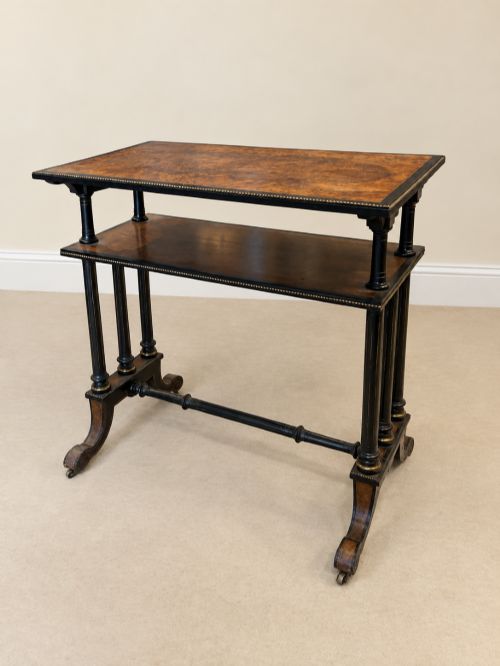
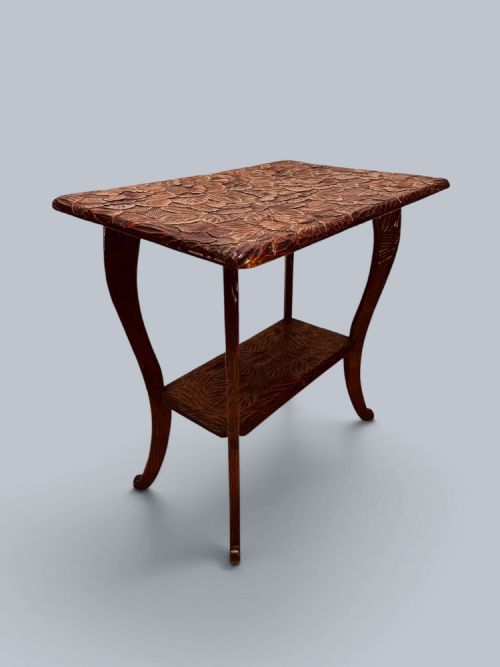
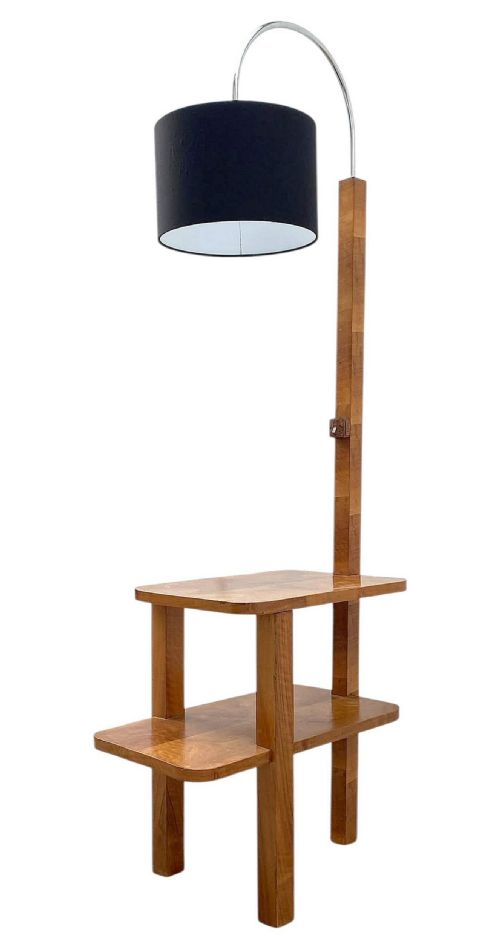
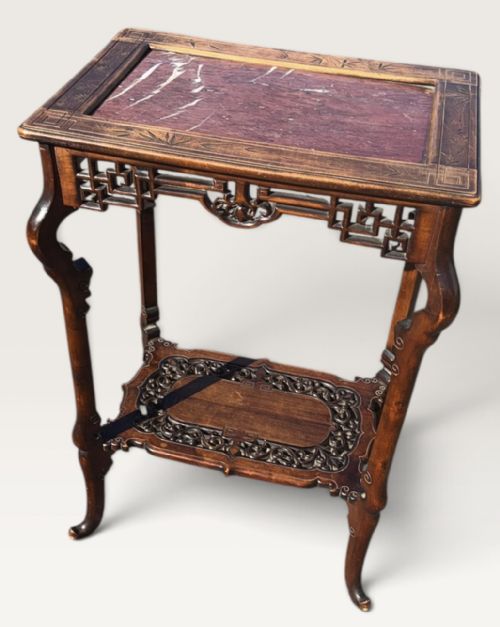
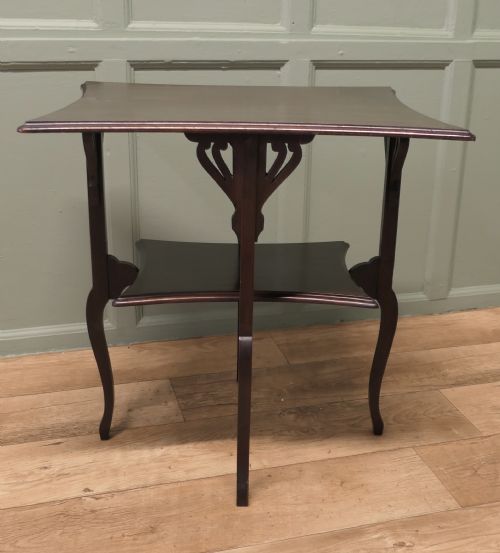
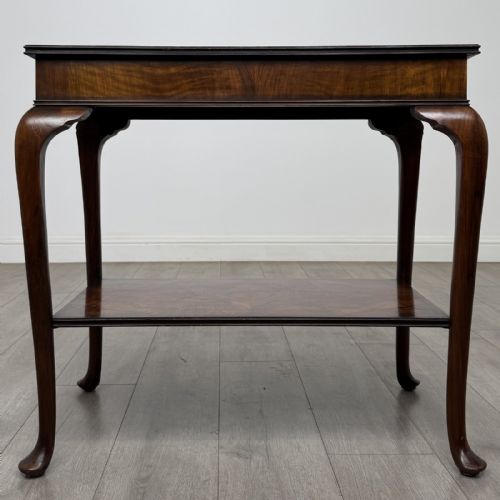
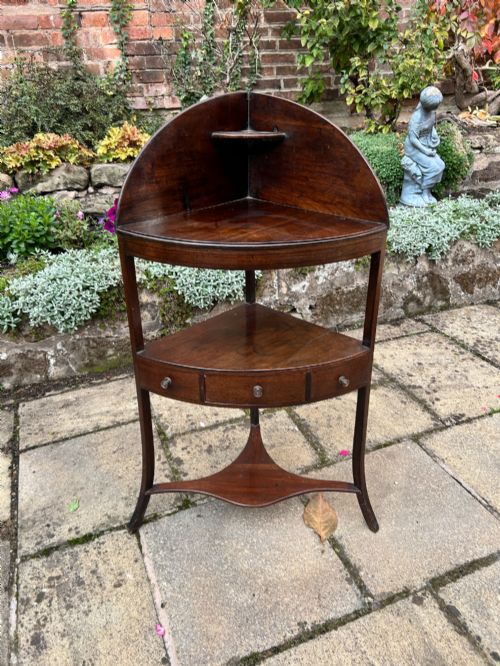
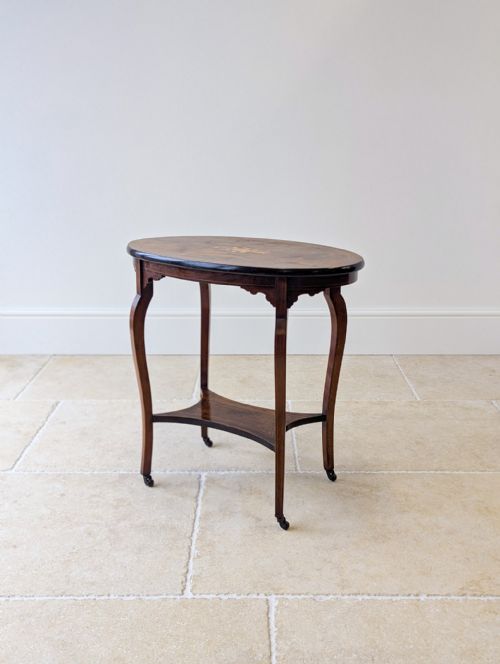
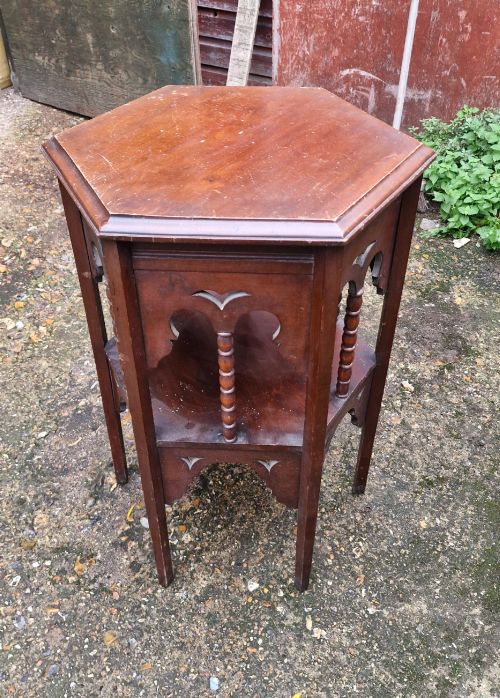
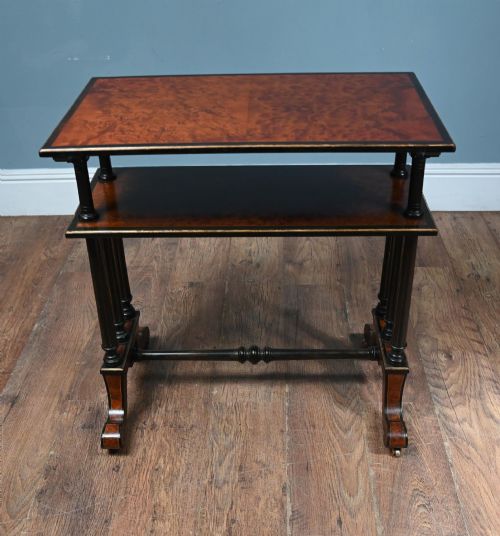
Wood Tiered Table
A wood tiered table brings practical surface space and layered display to a room, drawing the eye upwards through graduated levels.
Wood Tiered Table
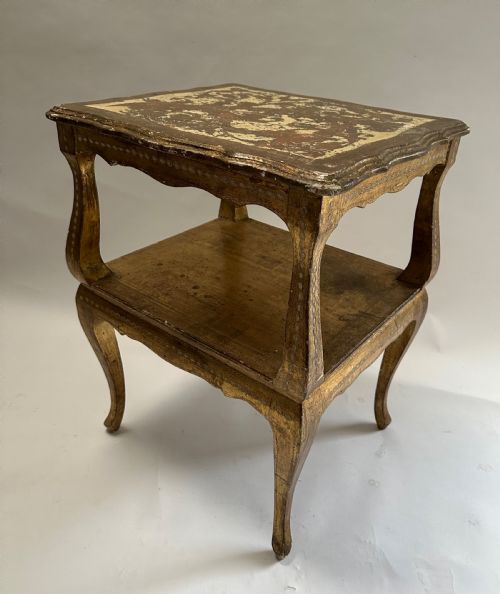
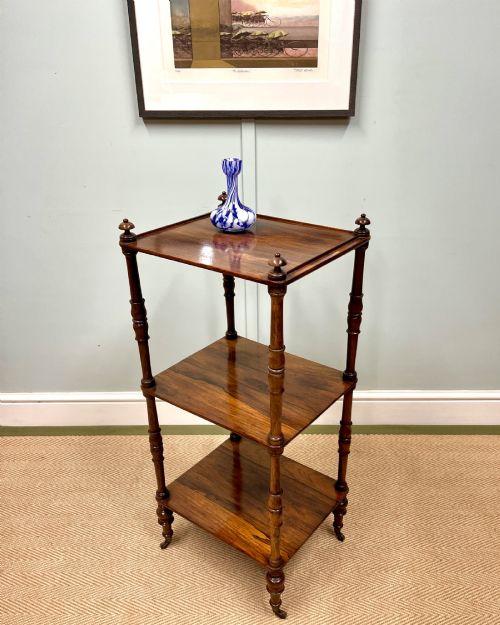
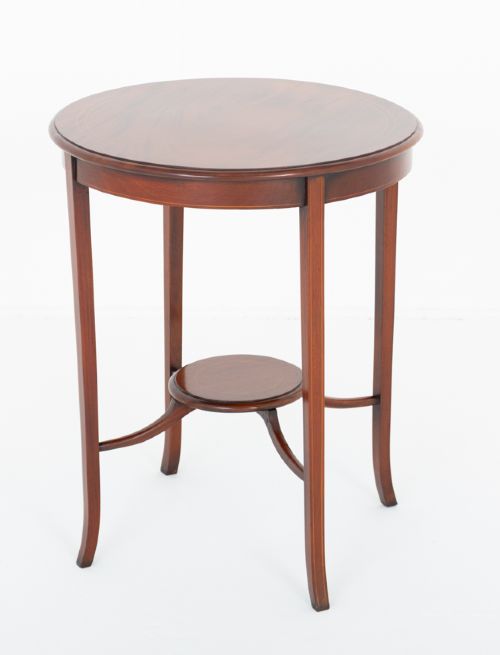
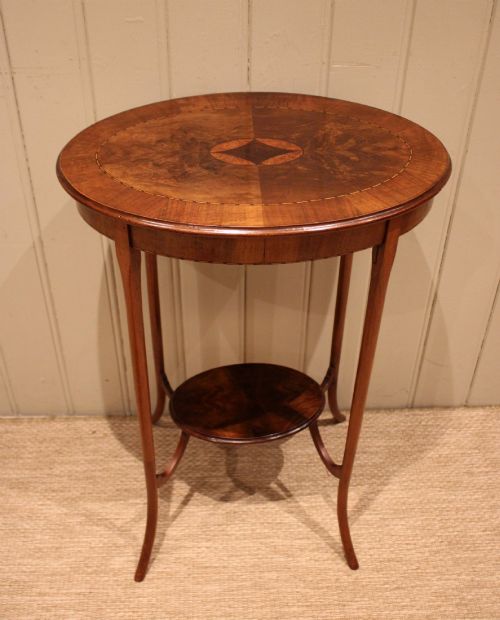
A wood tiered table provides multiple horizontal surfaces arranged vertically, offering compact utility for rooms requiring extra display or storage. These pieces appear across various forms including side tables, occasional tables, etageres, and dumb waiters, serving diverse domestic functions from holding lamps to displaying plants.
The versions most commonly met on this page date from the Edwardian period and the nineteenth century, executed in rich timbers like mahogany, walnut, and rosewood. They range from simple two-tier occasional pieces with lower shelves to elaborate three-tier étagères and revolving bookcases designed for frequent daily use.
Makers drew on styles spanning Georgian restraint, Victorian elaboration, Edwardian inlay, and Art Deco geometry, incorporating brass galleries, fretwork, and caning. This variety means a buyer can find an understated oak lamp table or a striking lacquered chinoiserie stand depending on the interior scheme.
Materials and Construction Methods
Cabinetmakers built these pieces primarily from solid hardwoods and select veneers, relying heavily on mahogany, walnut, rosewood, and oak. These timbers provided the structural strength required to support multiple shelves while offering attractive grain patterns that were often polished to a high lustre.
Construction involved traditional joinery techniques to secure the upper tiers and lower galleries firmly to upright supports, sometimes reinforced with brass rods or turned pillars. Decorative elements such as satinwood inlay, ebonised detailing, paintwork, and brass galleries were integrated directly into the framework during assembly.
Wood Tiered Table Retail Price Guide 2026
Typical asking prices for wood tiered table among the pieces listed under this phrase on Sellingantiques today, from the lower quarter to the upper quarter. They describe what is for sale here now, not the wider market.
One versatile item bridges the gap between household chores and quiet reading by functioning as both a metamorphic fire screen and an occasional butler's table.
Distinctions in Craftsmanship
Quality in a wood tiered table rests upon the selection of timber and the precision of the joinery connecting the levels. Finer examples display carefully matched veneer grains, subtle inlay work, and robust structural integrity that keeps each tier rigid.
The refinement of decorative hardware, such as pierced brass galleries or cast feet, separates standard production items from superior pieces. Attention to detail in turned legs, carved edges, and the finish of secondary woods marks the work of skilled workshops.
LIBERTY & CO·Gabriel Viardot·EW Godwin
The Wood Tiered Table Glossary
- Dumb waiter
- A tiered piece of furniture, often revolving or stationary, traditionally used for holding food and tableware without servant assistance. They appear in mahogany and other dense hardwoods.
- Galleried shelf
- A shelf enclosed by a low rail or pierced metal gallery designed to prevent items from sliding off the edge. This feature is common on upper and lower tiers of lamp tables.
- Chinoiserie
- European decorative art imitating Chinese artistic styles, frequently characterised by lacquered finishes and painted motifs. Red and black lacquer grounds are typical of this aesthetic.
- Inlay
- A technique where pieces of contrasting timber, such as satinwood or ebony, are inserted into depressions in the base wood to form decorative patterns.
Wood Tiered Table: Frequently Asked Questions
What rooms suit a wood tiered table?
These tables fit easily beside armchairs, in narrow hallways, or as central lamp stands where extra surface area is required without occupying excessive floor space. Their vertical arrangement makes efficient use of compact spaces.
Living rooms and studies benefit particularly from tiers that hold books, reading lamps, or decorative objects within easy reach.
How do I identify an Edwardian tiered table?
Edwardian examples frequently feature lighter mahogany timbers, delicate satinwood stringing, and inlaid motifs reflecting Sheraton Revival tastes. Cabriole legs and lower tier shelves are also characteristic.
They often display a refined lightness of form compared to heavier Victorian pieces while maintaining robust everyday utility.
What is the difference between an etagere and a side table?
An etagere is defined primarily by its multiple open display shelves designed specifically for ornaments and decorative objects. They often incorporate more decorative framing.
A side table serves a more general utilitarian purpose, typically with one primary surface and occasionally a single lower shelf for storage.
How should I care for polished wood tiers?
Maintain polished surfaces by dusting regularly with a soft, dry cloth and avoiding placement near direct heat sources or strong sunlight. Consistent indoor humidity prevents timber warping.
Applying appropriate wax polishes periodically preserves the finish of mahogany, walnut, and rosewood without building up heavy residues.