



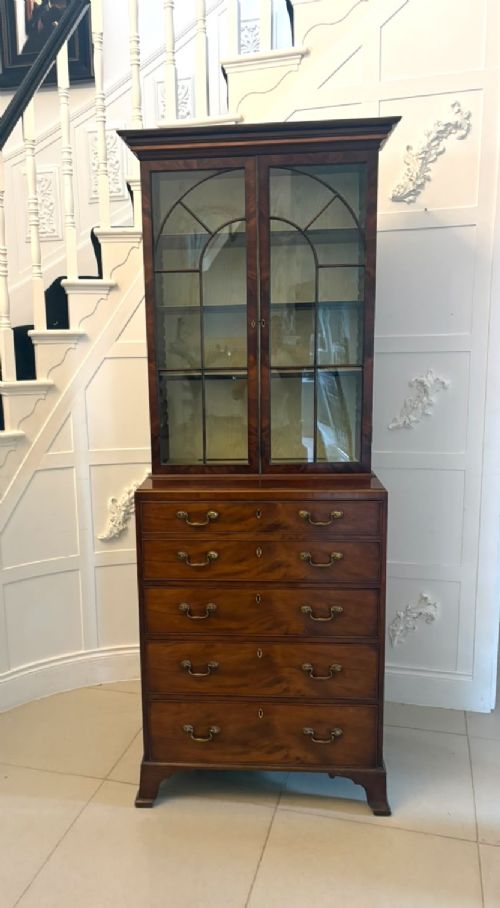
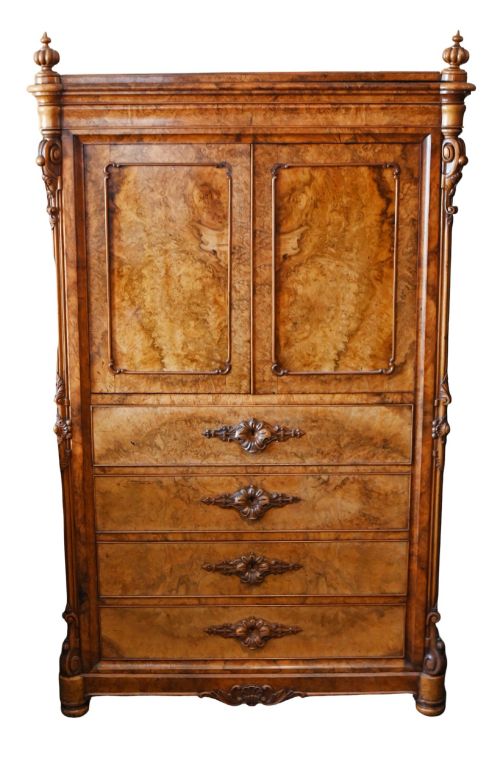
Wood Secretaire
A wood secretaire combines cabinetry and a hidden writing desk, offering fitted drawers behind a drop-front panel for practical daily work.
Wood Secretaire
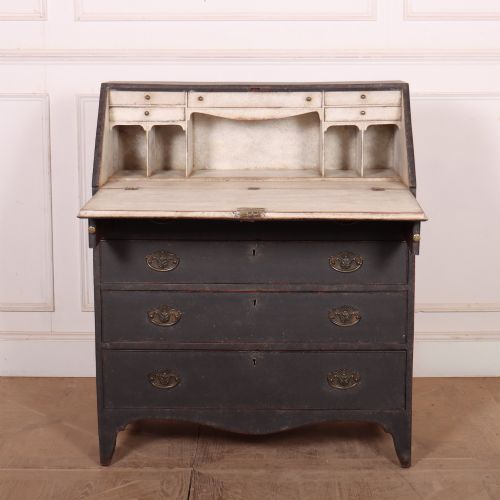
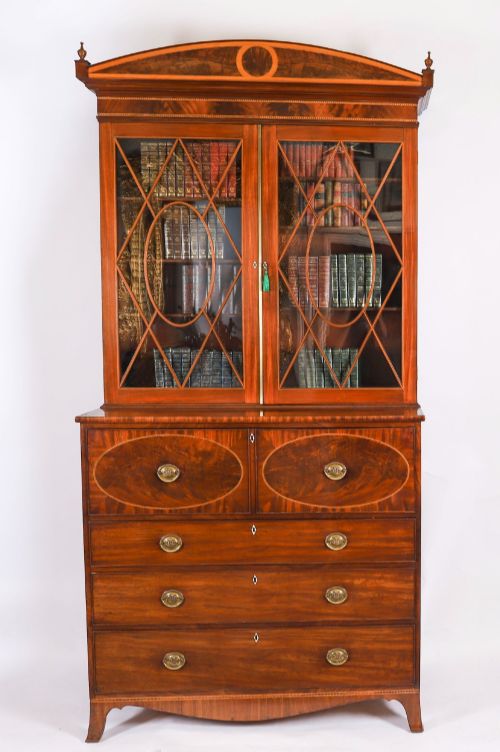
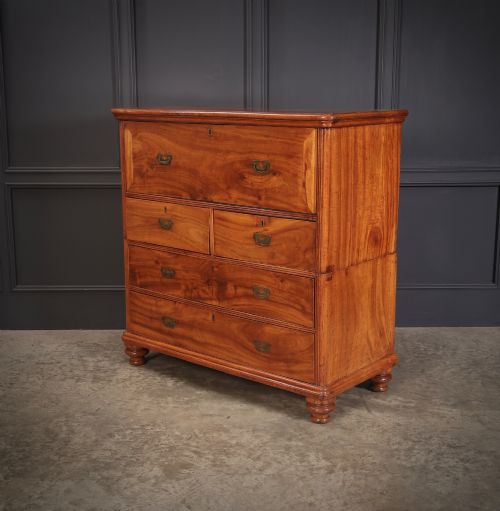
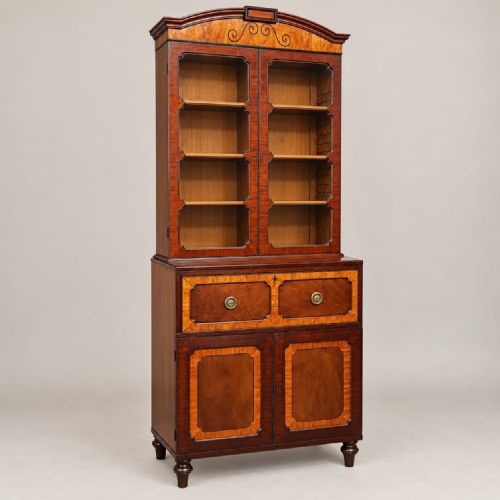
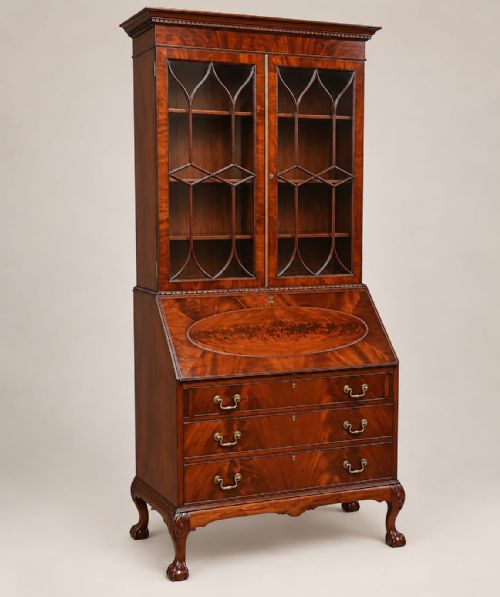
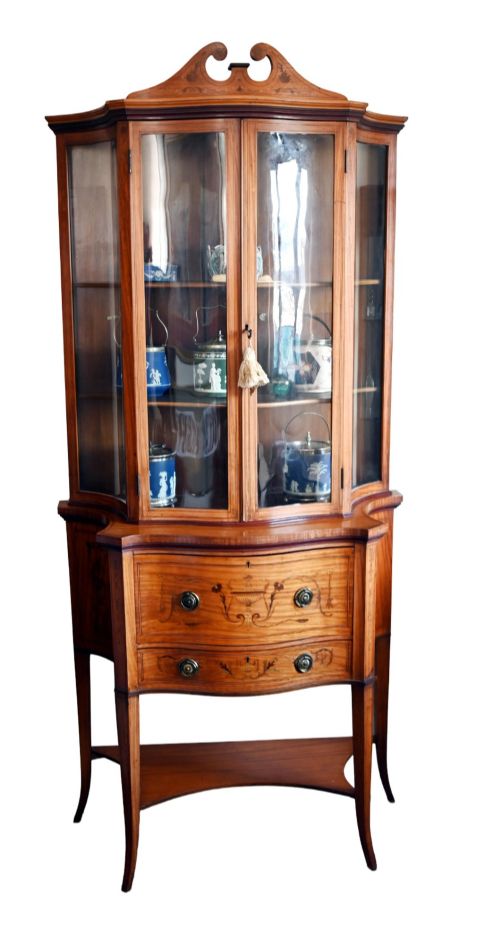
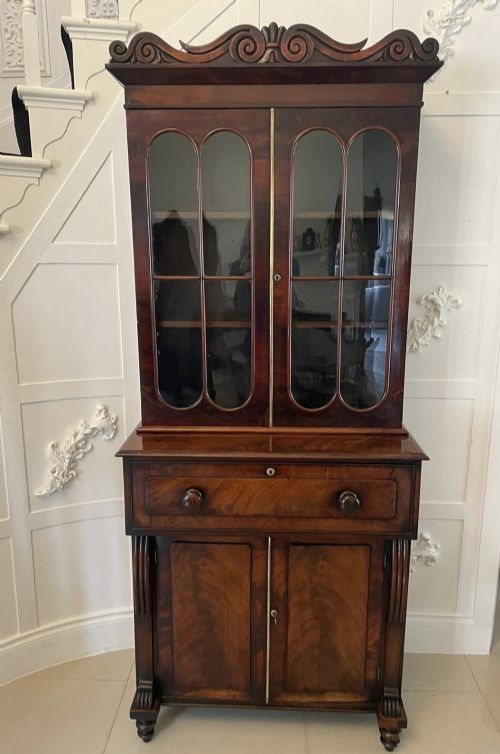
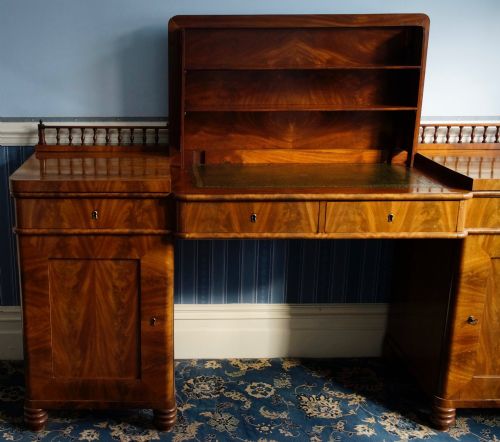
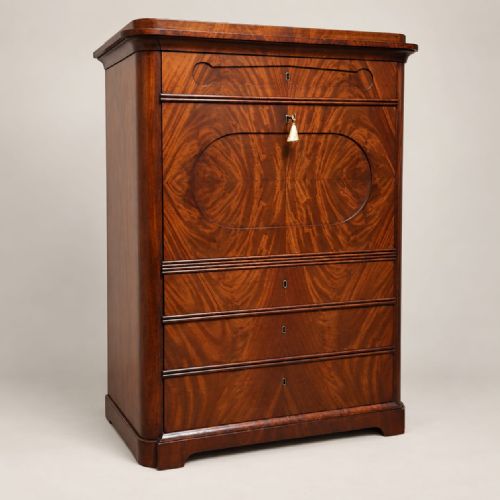
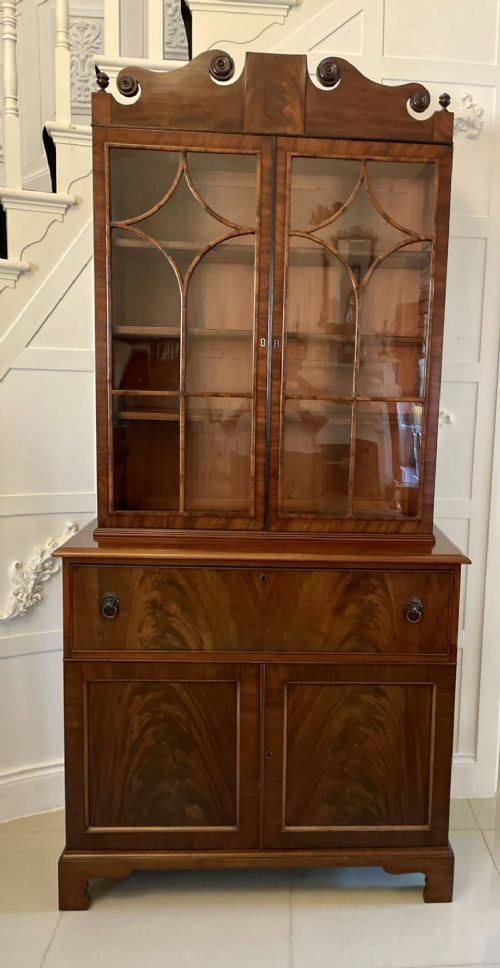
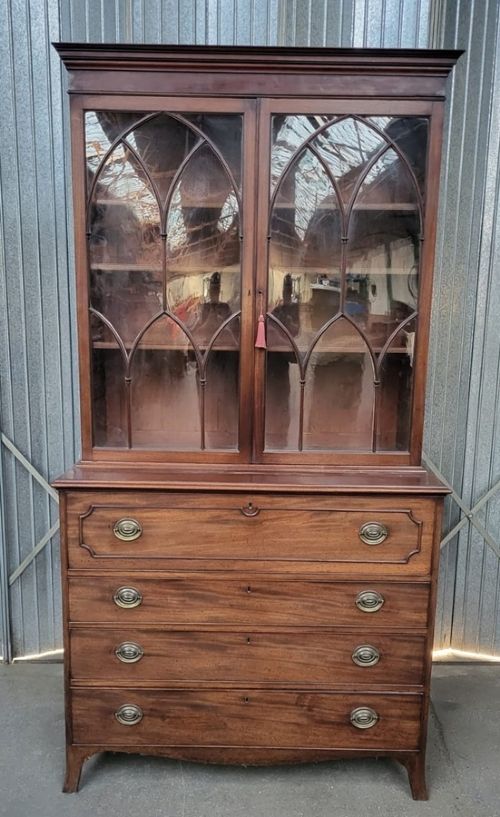
A wood secretaire appears in several distinct forms across the Georgian, Regency, and Victorian periods, most commonly as a secretaire bookcase, a tallboy chest on chest, or a military campaign chest. The user searching for a wood secretaire encounters tall library cabinets with glazed upper doors alongside compact campaign chests split into brass-bound sections.
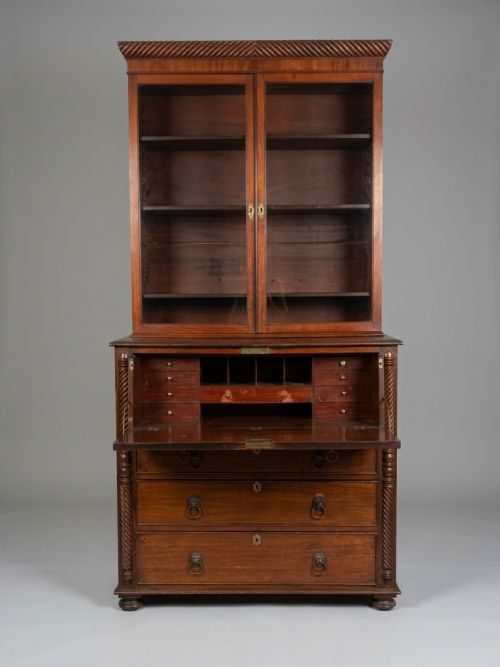
The writing surface drops down to reveal pigeonholes, small drawers, and compartments designed for correspondence and ledgers. These pieces originate from workshops across Britain and continental Europe, spanning styles from Biedermeier and French Empire to Chippendale revival and George III cabinet-making.
Materials and construction
Cabinet-makers relied heavily on mahogany, augmented by secondary timbers and fine veneers including satinwood, burr birch, walnut, and birds-eye maple. Solid brass hardware secures campaign versions, while glass panels front the upper bookcase sections.
Interior drawers utilise hand-cut dovetails and secondary woods like oak or pine. Fall-front writing surfaces require sturdy hinges and internal support brackets or lopers to bear the weight of daily writing.
Wood Secretaire Retail Price Guide 2026
Typical asking prices for wood secretaire among the pieces listed under this phrase on Sellingantiques today, from the lower quarter to the upper quarter. They describe what is for sale here now, not the wider market.
Listings feature mahogany, camphor wood, walnut, rosewood, satinwood, and glass across Georgian, Regency, and Victorian periods.
Evaluating craftsmanship
Quality reveals itself in the selection of figured timber veneers and the precision of the interior pigeonholes and secret compartments. Superior examples maintain smooth operation of the drop-front mechanism and tightly fitted internal drawers without sagging.
The integrity of the original brass handles, locks, and glass panes distinguishes top-tier examples from later alterations. Secondary woods and internal drawer construction show the level of care taken by the original maker.
Gillows·George Oakley
The Wood Secretaire Glossary
- Secretaire
- A piece of furniture incorporating a built-in writing drawer or a drop-front desk compartment. This feature allows a cabinet or chest to double as a work surface.
- Secretaire Bookcase
- A tall cabinet combining upper shelving enclosed by doors with a lower desk section. The middle drawer pulls out and drops open to reveal writing compartments.
- Campaign Chest
- A chest of drawers built in two or more sections with recessed brass handles and corner brackets. Designed for easy transport by military officers, these often contain a central secretaire drawer.
- Loper
- A wooden slide pulled out from the cabinet frame to support the weight of a drop-front writing surface. These prevent strain on the hinges when the desk is open.
- Astragal Glazed
- Glass doors divided into smaller panes by narrow wooden moulding strips. This method protects library books while allowing visibility of the contents.
Wood Secretaire: Frequently Asked Questions
How do I use a secretaire desk?
The drop-front panel or pull-out drawer lowers to form a horizontal writing surface. Inside, small compartments and drawers store paper, ink, and letters.
When work finishes, the panel lifts or slides back into the upright position and locks shut, concealing the contents from view.
Where should I place a wood secretaire?
These pieces suit studies, living rooms, or bedrooms where floor space allows for the drop-front door to open fully. Keep them away from direct sunlight and heat sources to protect the polished wood finishes and veneers.
Allow enough clearance in front of the cabinet to pull out chairs and operate the writing drawer.
How do I tell Georgian from Victorian pieces?
Georgian examples often display restrained classical proportions, flame mahogany veneers, and astragal glazed bookcase doors. Victorian versions frequently introduce heavier mouldings, camphor wood construction with brass hardware for campaign use, or revival styles.
Examining the interior secondary woods and construction methods helps confirm the manufacturing period.
What is a campaign secretaire?
A campaign secretaire is built in separate modular sections bound in brass to withstand transport during military travel. Recessed brass handles prevent snagging during transit.
The top section typically houses the fitted writing compartment.