



Wood Library Ladder
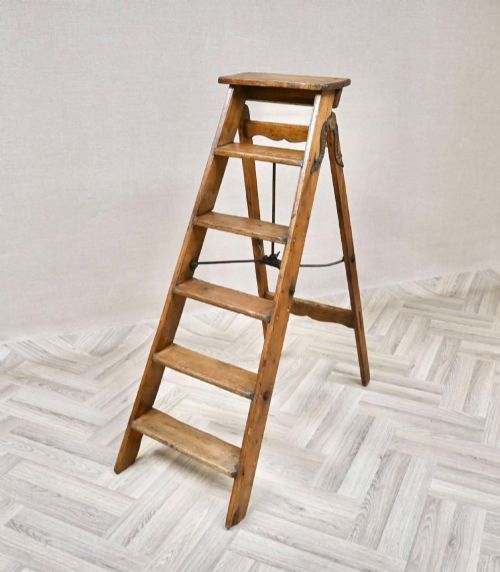
These wood library ladder pieces are practical climbing furniture designed for high shelves, combining sturdy timber construction with clever folding or metamorphic engineering.
Wood Library Ladder
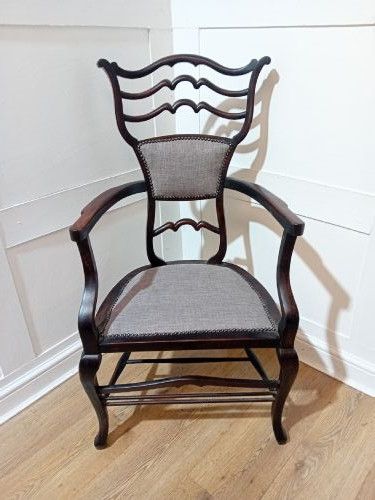
When you search for wood library ladder selections, you encounter functional climbing pieces spanning the Georgian, Victorian, and Edwardian eras. These domestic and institutional implements range from simple folding steps to complex convertible chair designs used in private collections.
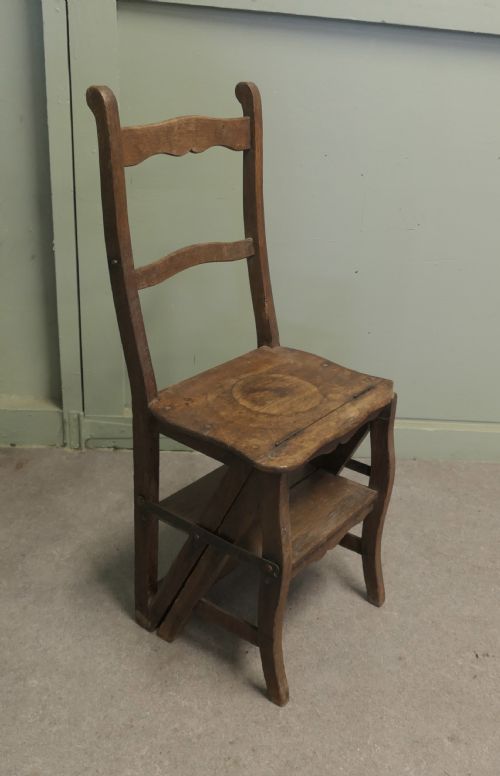
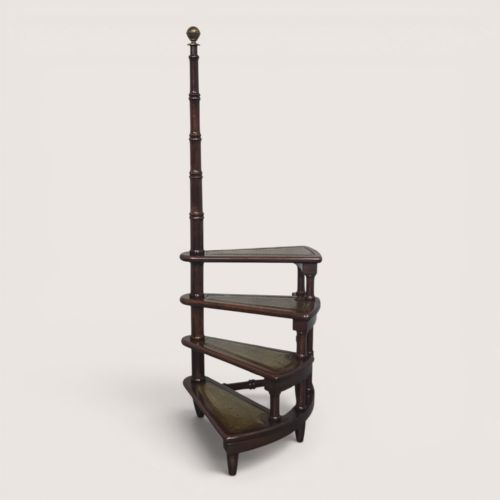
The prevailing forms on this page include standard multi-tier steps, spiral stair structures, and ingenious metamorphic chairs that transform into small staircases. Materials span traditional hardwoods like mahogany and oak alongside utility pine and iron fittings.
Origins stretch from the eighteenth century through the industrial utility periods of the early twentieth century. Buyers frequently meet mahogany variations featuring leather treads alongside sturdy pine and oak ladder structures.
Materials and construction methods
Cabinetmakers constructed these frames primarily from solid mahogany, oak, and pine, often integrating iron brackets, brass hinges, and leather-topped treads for grip and durability. Timber selection dictated the structural integrity required to support weight safely at height.
Metamorphic versions relied on precise pivoting mechanisms and locking brass upholstery studs or hinges to shift between seating and climbing configurations without compromising stability.
Wood Library Ladder Retail Price Guide 2026
Typical asking prices for wood library ladder among the pieces listed under this phrase on Sellingantiques today, from the lower quarter to the upper quarter. They describe what is for sale here now, not the wider market.
Listings feature wood library ladder items from the eighteenth century up to the 1930s, constructed in mahogany, oak, and pine.
Distinctions in craftsmanship
Quality rests in the precision of the joinery and the ingenuity of the metamorphic hardware that allows smooth conversion between a chair and a staircase. Superior examples exhibit seamless integration of moving wooden parts with robust brass or iron fixings.
The choice of primary timber also defines the tier of the piece, with richly grained mahogany and inset leather treads marking domestic library furnishings apart from utilitarian pine workshop or railway steps.
The Wood Library Ladder Glossary
- Metamorphic furniture
- Pieces designed to transform from one domestic object into another, such as a chair converting into a set of library steps.
- Treads
- The horizontal steps or surfaces upon which a person places their feet when climbing.
- Spiral steps
- A configuration of stairs winding around a central support column to save floor space in compact rooms.
- Upholstery studs
- Small decorative or functional metal nails used to secure leather inserts or fabric borders to wooden frames.
Wood Library Ladder: Frequently Asked Questions
How do metamorphic library chairs work?
These clever items use hinged wooden sections and brass pivots that allow the backrest and seat to unfold into a stable tiered staircase.
Once finished with reading, the steps fold back neatly into the profile of an ordinary armchair.
Were these ladders only used in libraries?
While designed primarily for reaching high bookshelves in grand Georgian and Victorian rooms, similar wooden steps served utility roles in offices and railway buildings.
Sturdy timber construction allowed them to function wherever vertical access was required.
How do I distinguish Georgian from Edwardian steps?
Georgian versions tend to feature dense mahogany timber with restrained classical lines and fine leather-inlaid treads.
Edwardian iterations often embrace lighter pine or oak construction alongside more utilitarian folding configurations.
Are these ladders safe to use today?
Most antique library steps remain structurally sound thanks to dense hardwood frames and robust metal hardware.
Checking the tightness of hinges and the stability of treads ensures safe daily use in modern homes.