
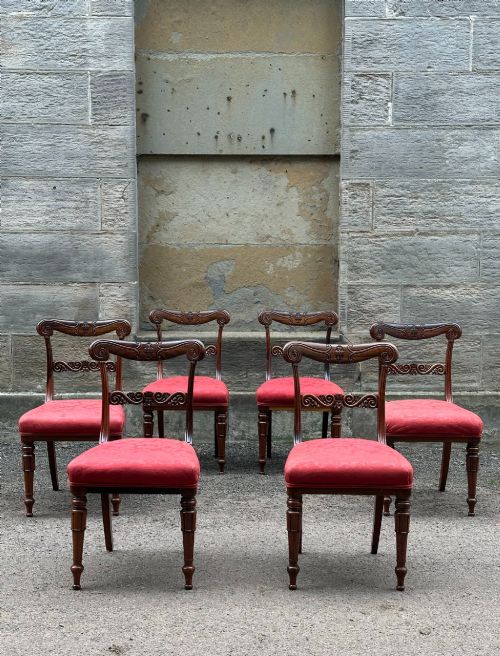

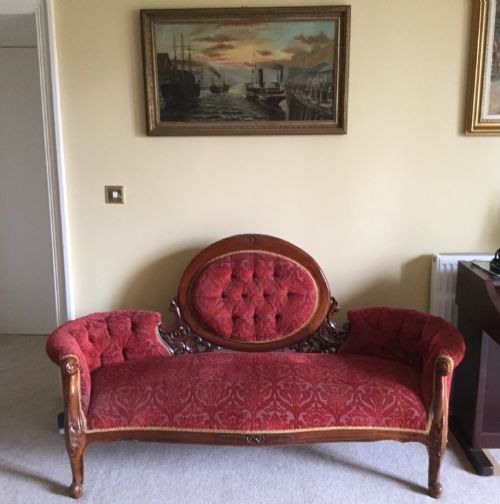
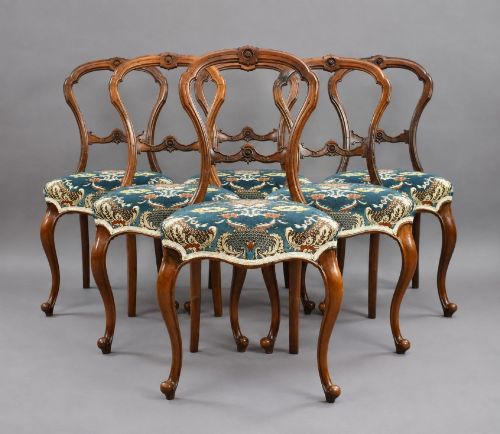
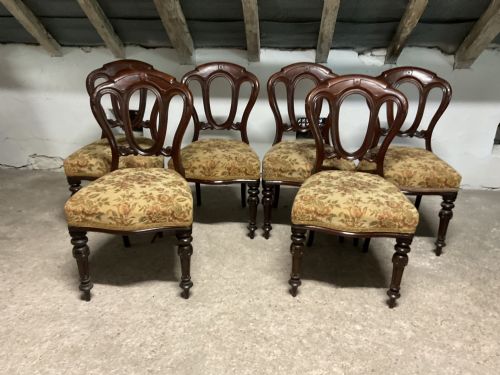
Wood Balloon Back Chair
When you search for a wood balloon back chair, you are seeking the elegant, curving silhouette that defined Victorian and Regency dining and drawing rooms.
Wood Balloon Back Chair
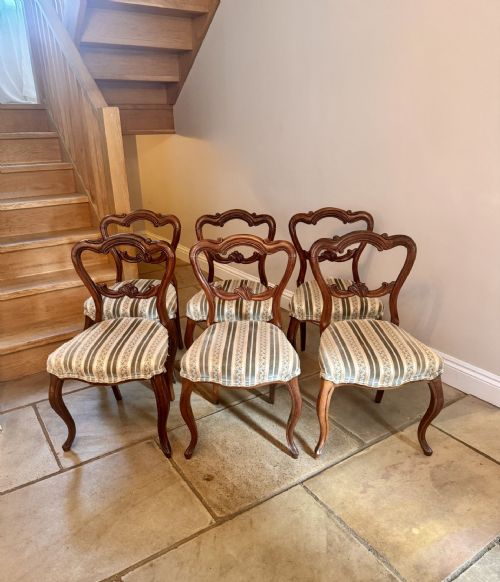
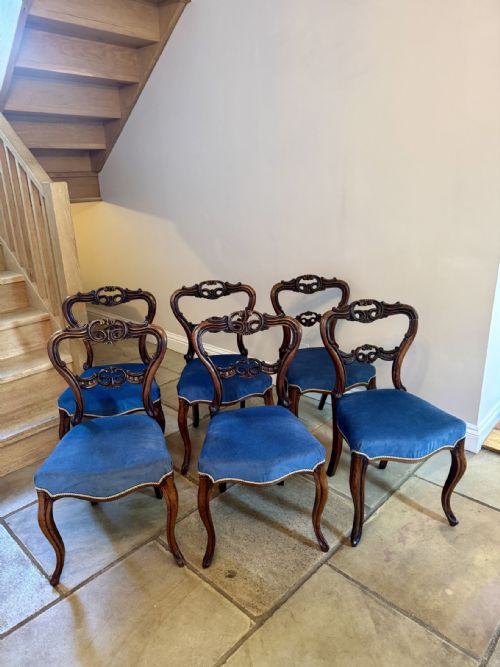
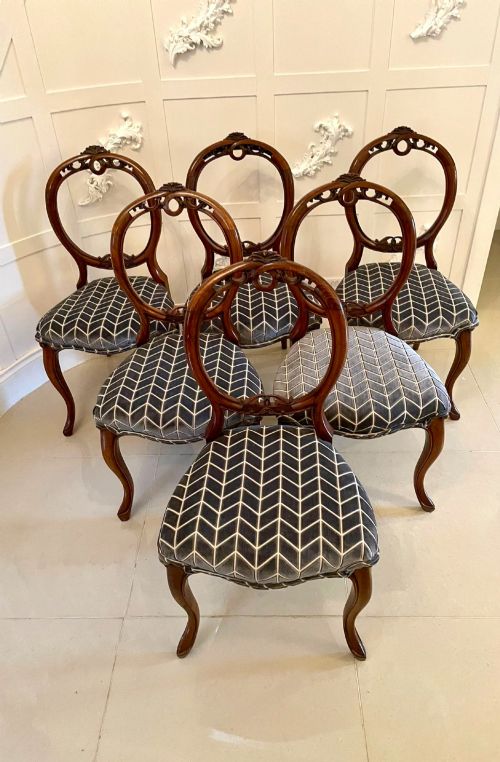
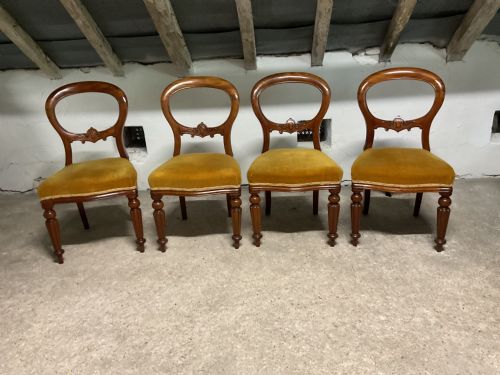
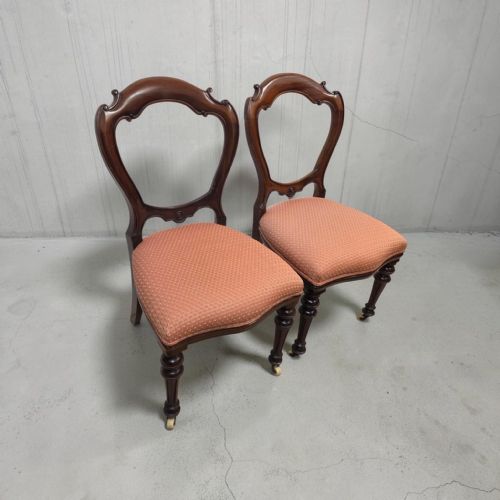
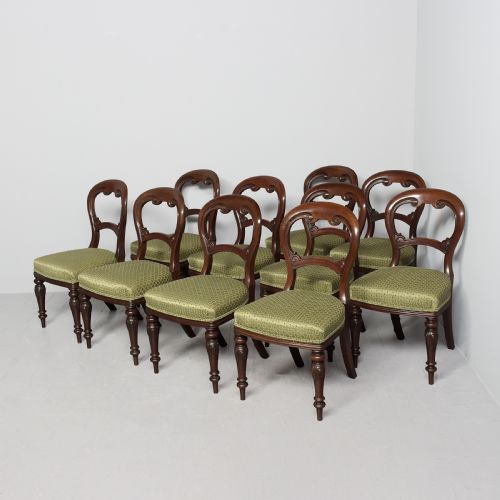
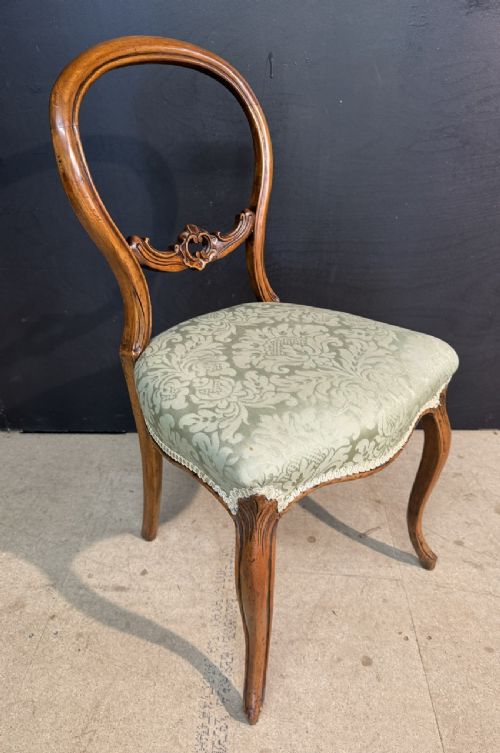
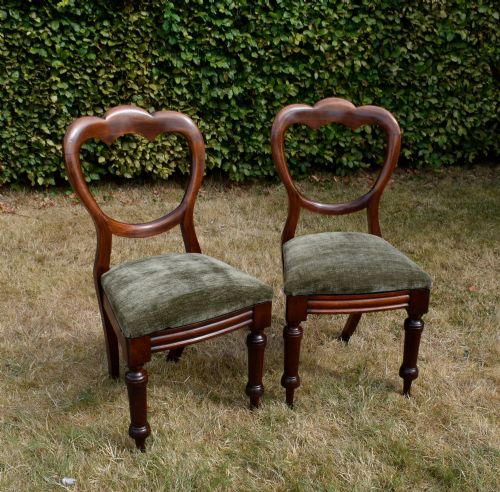
A wood balloon back chair displays a distinctive rounded, oval or looped backrest resembling an inflated balloon, appearing widely across Victorian and nineteenth-century dining and side chairs.
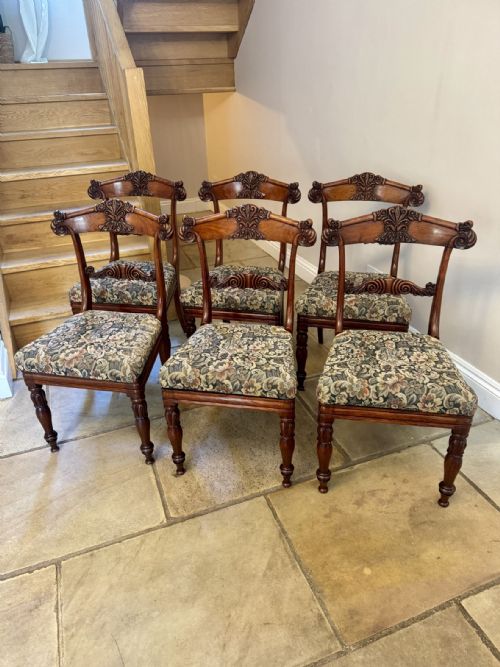
The form emerged during the Regency and William IV periods before reaching its height in Victorian parlours and dining spaces, constructed primarily as single chairs or matched sets for dining tables.
Makers shaped these seating forms in woods such as mahogany, rosewood and walnut, often pairing the curving timber frames with upholstered drop-in seats or needlepoint textiles.
How they were made
Cabinetmakers utilised dense timbers like mahogany and rosewood, frequently steaming and bending the wood to achieve the continuous curved outline of the balloon backrest.
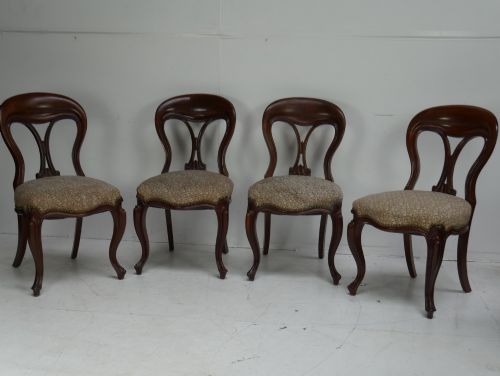
Frames incorporated carved details, cabriole legs or tulip legs, while seats relied on webbing, springs and traditional upholstery methods finished in fabric, velvet or brocade.
A solitary bedroom chair waits patiently to hold yesterday's discarded garments.
What varies in quality
The refinement of the carved details on the crest rail and the choice of solid timber, such as richly figured rosewood versus simpler hardwoods, define the upper tiers of production.
Completeness of a matched set and the integrity of the original frame construction separate standard single parlor seats from exceptional dining suites.
Blyth & Sons·J Kendell & Co
The Wood Balloon Back Chair Glossary
- Balloon back
- A chair back shaped in a continuous oval or loop resembling a balloon, characteristic of nineteenth-century seating design. This silhouette dominated Victorian dining and drawing room chairs.
- Cabriole leg
- A furniture leg that curves out and then narrows inward, terminating in a pad or scroll foot. This form appeared frequently on mid-nineteenth-century rosewood and mahogany seating.
- Rosewood
- A dense, heavily figured tropical timber prized for its dark grain and reddish-brown tones. Makers utilised this material for high-status Victorian and Regency dining chairs.
- Needlepoint
- A type of canvas embroidery used to create decorative seat covers. These textile pads often feature floral or geometric motifs on Victorian chairs.
- Simulated rosewood
- A painted or stained finish applied to a secondary timber to imitate the appearance of genuine rosewood. This technique provided a decorative surface at a lower cost.
Wood Balloon Back Chair: Frequently Asked Questions
How do I identify a balloon back chair?
Look for the characteristic rounded or oval wooden backrest that loops continuously from the seat rail and curves outward at the top.
This distinct silhouette distinguishes Victorian and nineteenth-century examples from earlier straight-backed geometric seating forms.
Were these chairs used only for dining?
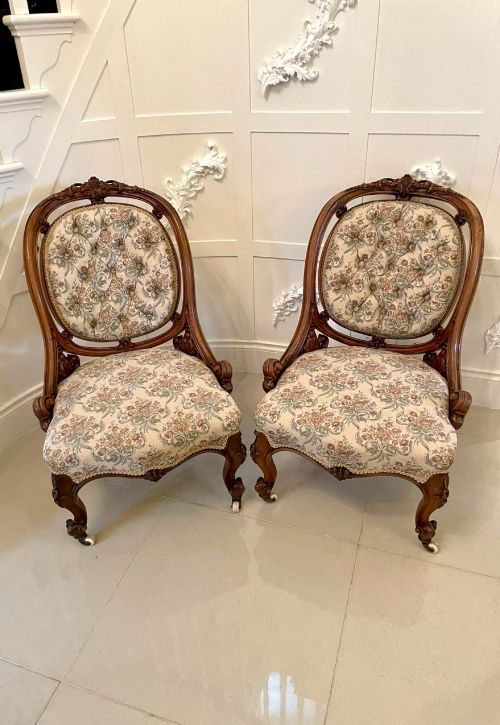
While most surviving examples form parts of dining sets, smaller versions served as bedroom, slipper, desk or reception chairs.
Makers tailored the scale and upholstery of these pieces to suit specific domestic rooms throughout the nineteenth century.
What woods were used for these chairs?
Mahogany and rosewood appear most frequently in the surviving evidence, alongside walnut, beech and simulated timber finishes.
Cabinetmakers selected these dense hardwoods to withstand the structural stress placed on the curved backrest joints.
How do I distinguish Regency from Victorian examples?
Regency and early pieces often display influences from the George IV and William IV periods with crisper linear proportions.
Victorian iterations from the 1850s and 1860s generally feature more pronounced curves, elaborate carved crest rails and cabriole legs.