



Winter Landscape Picture
A winter landscape picture captures the stillness of snow and ice, offering a quiet window into past seasons.
Winter Landscape Picture
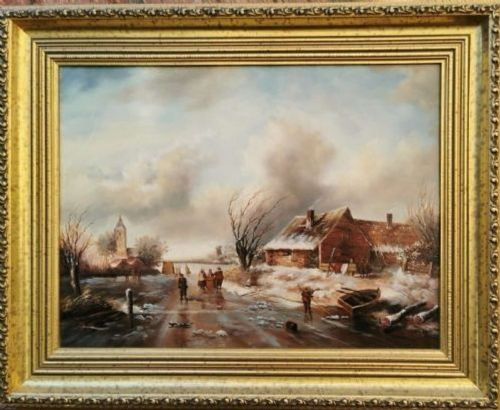
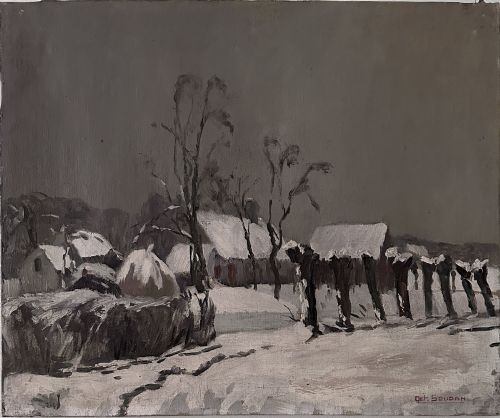
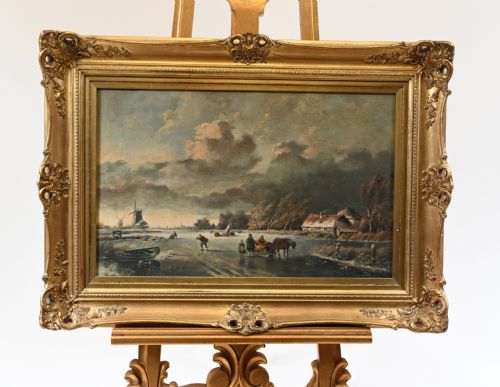
A winter landscape picture typically depicts snowy scenes, frozen lakes, and quiet villages under cold skies. These works range across the nineteenth century, the Edwardian era, and through the mid twentieth century.
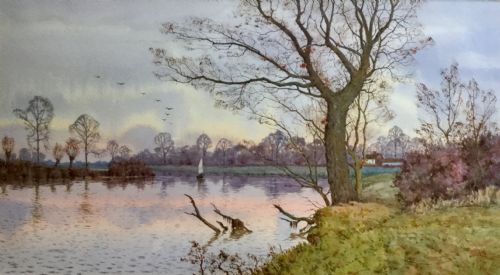
The selections on this page include Dutch School compositions, Victorian depictions, Impressionist works, and mid century modern pieces. Buyers frequently encounter framed oil paintings, watercolours, and pastels showing rural scenes and winter harbours.
Makers and artists represented span named painters working within distinct national traditions, from British pastoral views to French post impressionist pastels. Each piece records the seasonal weather and light of a bygone period through varied artistic lenses.
Materials and techniques
Artists create these works using oil paint on canvas or board, watercolour on paper, and pastel. Gold leaf often frames the oil paintings, enhancing the visual weight of the composition.
Support materials include sturdy wood panels, heavy paper, and stretched canvas. Pigments are applied with varying brushwork to capture the texture of snow, frozen water, and mist.
Assessing quality and execution
Quality rests in the handling of light and atmosphere, particularly how the artist renders the grey and white tones of snow and ice. Stronger pieces show confident brushwork and a balanced composition that draws the eye into the distance.
The condition of the paper, canvas, and original framing contributes significantly to the integrity of the work. Finer examples retain their original surface texture and pigment vibrancy without heavy restoration.
T. Bergman·John Hobson Nicholson·Ernest Uden·Pieter Cornelis Steenhouwer·Alexis De Leeuw·John Richard Worsdale·George Augustus Williams·Arthur Anderson Fraser·James Pollard
The Winter Landscape Picture Glossary
- Oil paint
- A slow drying paint made by mixing pigments with oils such as linseed. It allows for rich blending and textured applications on canvas or board.
- Watercolour
- A paint consisting of water soluble pigments on paper. It creates luminous, transparent washes often used for delicate landscape studies.
- Pastel
- A dry drawing medium made of powdered pigment and a binder. It produces velvety surfaces with soft colour transitions.
- Dutch School
- A grouping of artists influenced by seventeenth century painting traditions of the Netherlands. They frequently focused on detailed realism and atmospheric landscapes.
- Impressionism
- A nineteenth century movement characterised by relatively small, thin yet visible brush strokes. It prioritises accurate depiction of light and its changing qualities.
Winter Landscape Picture: Frequently Asked Questions
How are winter landscape pictures dated?
Dating relies on stylistic markers, artist signatures, and the materials used for the support and framing. Nineteenth century works often feature heavier gilt frames and darker varnishes.
Mid twentieth century examples display shifts towards brighter pastels or modernist watercolours. Comparing the signature to known active dates of the artist provides further confirmation.
What subjects appear in these paintings?
Common subjects include frozen lakes with figures, snowy village streets, stagecoaches in winter storms, and harbour scenes. Artists also depict rural fens and wooded paths under heavy snow.
These motifs reflect both British pastoral traditions and continental European landscape styles from different decades.
How do I care for a watercolour winter scene?
Watercolours on paper require protection from direct sunlight to prevent fading of the pigments. Framing behind glass with acid free mounts keeps the paper stable and prevents humidity damage.
Keep these artworks away from damp walls and extreme temperature fluctuations.
What is the difference between oil and pastel works?
Oil paintings use pigment suspended in oil on canvas or board, creating a durable and textured surface. Pastels consist of dry pigment sticks applied to paper, yielding a soft and matte finish.
Pastels demand careful framing under glass to protect the delicate powder surface from disturbance.