


Winter Landscape Artwork
Winter landscape artwork captures cold weather scenes on canvas, paper, and wood.
Winter Landscape Artwork
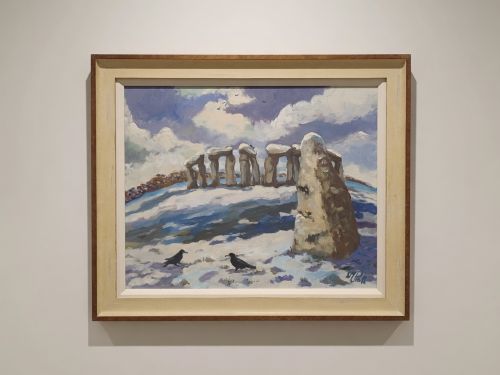
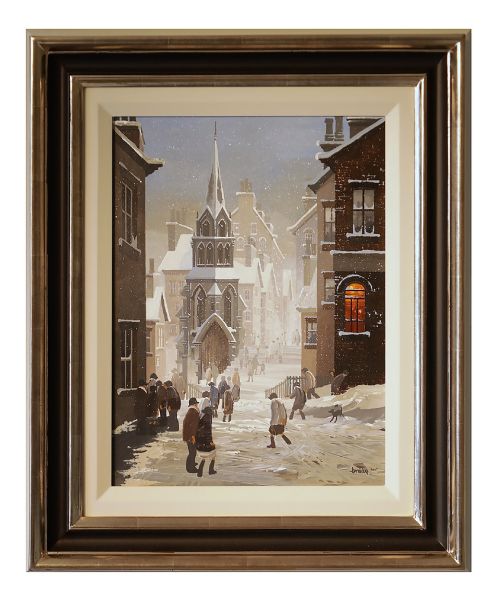
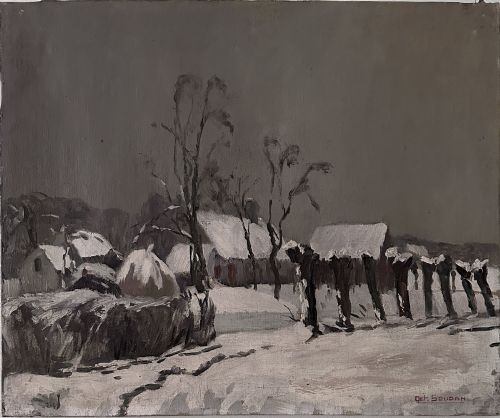
When you search for winter landscape artwork, you encounter depictions of snow, frost, and barren trees created across multiple decades. The pieces span the nineteenth century through the mid twentieth century, featuring British, Dutch, and French subjects.
You meet oil paintings on canvas and board alongside watercolours and charcoal drawings. Village scenes, frozen lakes, and rural farms dominate the forms available in this selection.
Materials and Technique
Artists apply oil paint to canvas or wood panels, building texture with brushwork to render snow and ice. Watercolours and gouache on paper capture lighter atmospheric effects in winter pastoral scenes.
Supports include prepared canvas stretched over wooden frames, heavy paper, and board. Gilt framing frequently accompanies the oil paintings and works on paper from these periods.
Several canvases faithfully record hunting hounds and mail coaches struggling heroically through unexpected snowstorms.
Assessing Quality
Quality rests in the handling of light and atmosphere across the painted surface. Superior works convey the chill of frost and the weight of snow through confident brushwork rather than rigid detail.
The integration of figures, animals, or architecture within the wintry setting distinguishes accomplished composition from simple repetition. Preservation of the original medium and frame also elevates the standing of a piece.
Herbert Royle·John Charles Maggs·William Tatton Winter·Lucy Pratt·Pieter Cornelis Steenhouwer
The Winter Landscape Artwork Glossary
- Canvas
- A heavy woven fabric used as a surface for oil painting. It is typically stretched over a wooden frame before application.
- Gouache
- An opaque water-based paint that dries to a matte finish. It produces dense highlights in works on paper.
- Impressionism
- A style of painting that focuses on capturing the visual impression of a moment, shifting light, and colour. Artists utilise visible brushstrokes and open compositions.
- Watercolour
- A paint consisting of pigment suspended in a water-based solution. It is applied to paper in transparent washes.
- Provenance
- The documented history of ownership of an artwork. It establishes authenticity and traces the path of the piece.
Winter Landscape Artwork: Frequently Asked Questions
What periods do these pieces date from?
The works span from the nineteenth century through the mid twentieth century. Various pieces reflect distinct regional movements such as British Impressionism and the Dutch School.
Dates range from early nineteenth century examples to mid twentieth century modernist interpretations. Each period employs specific palettes and techniques characteristic of its era.
How should I care for a watercolour winter landscape?
Works on paper require protection from direct sunlight to prevent fading of the pigments. Framing behind conservation glass shields the delicate surface from moisture and atmospheric pollutants.
Maintain stable indoor humidity levels where the artwork hangs. Avoid placing watercolours near heat sources that could warp the paper or dry out the pigments.
What subjects appear in these scenes?
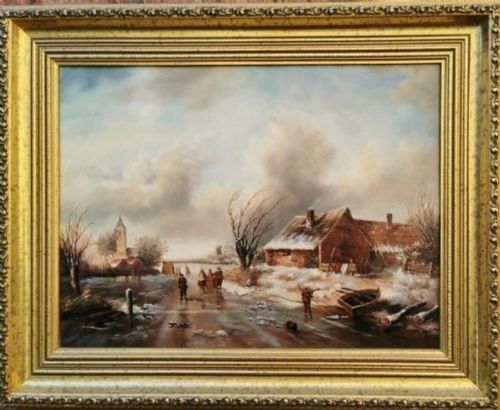
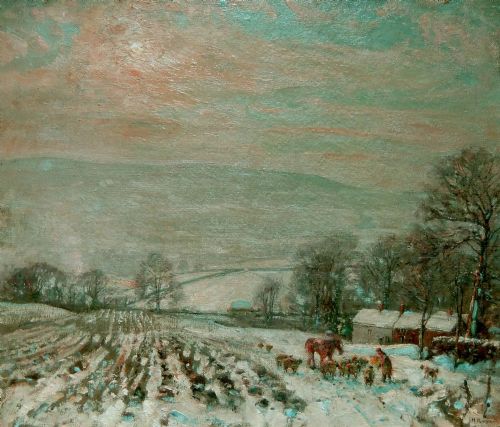
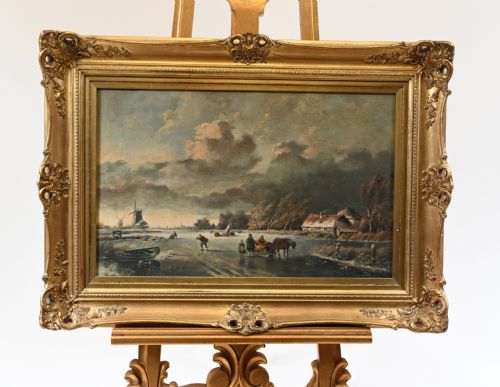
Common subjects include rural villages in snow, frozen lakes with figures skating, and livestock sheltering from the cold. Pastoral views feature stagecoaches, hunting dogs, and shepherds tending flocks.
Urban rooftops and European street scenes also appear among the painted compositions. Artists frequently record specific regional landscapes across Britain, France, and the Netherlands.
How do I identify a Dutch winter landscape?
Dutch School paintings often depict frozen canals, windmills, and figures engaged in seasonal activities on ice. The palette relies on muted greys, crisp whites, and deep browns.
Signatures on these pieces frequently point to established continental artists of the nineteenth and twentieth centuries. The atmospheric perspective captures flat northern horizons under heavy winter skies.