




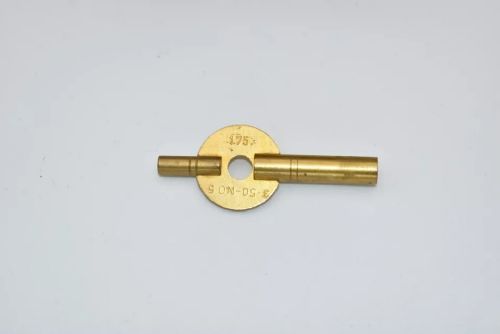
Winding Key Clock
A winding key clock brings mechanical timekeeping into daily life, offering the steady rhythm of a pendulum or balance wheel.
Winding Key Clock
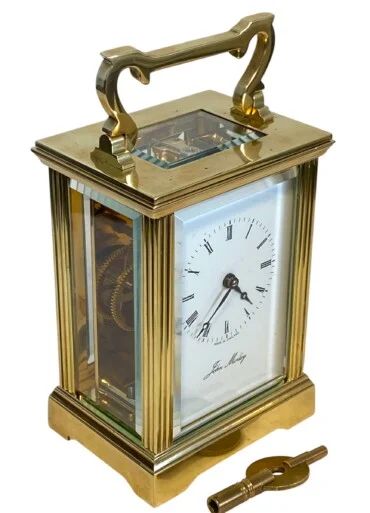
When you search for a winding key clock, you encounter a range of timepieces spanning from the nineteenth century through the mid-twentieth century. These items include wall clocks, mantel clocks, carriage clocks, and specific clock accessories driven by mechanical movements.
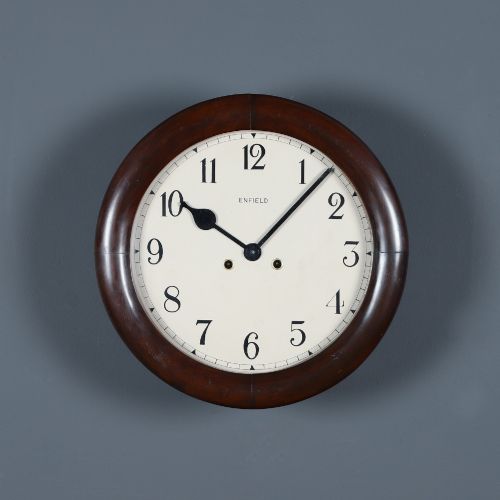
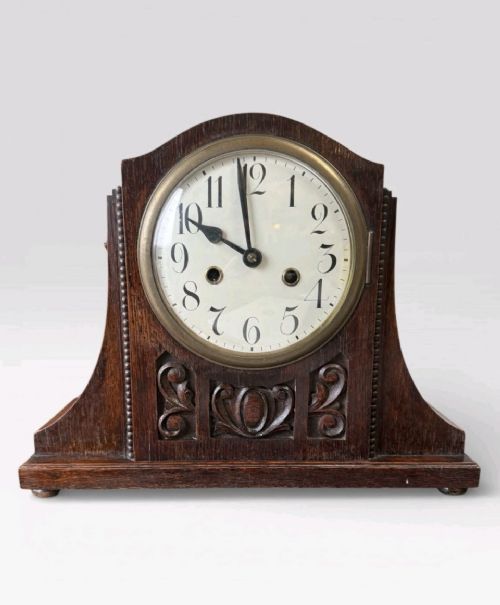
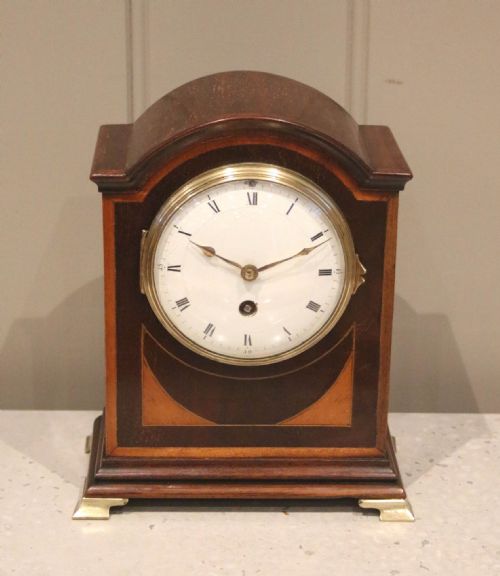
The selections available here lean heavily toward carriage clocks in brass and gilt bronze, alongside wooden wall and mantel clocks in mahogany, walnut, and oak. Styles vary from Victorian and Edwardian to Art Deco and Neoclassical Revival.
Origin points visible in the inventory include English, French, Swiss, and Japanese workshops. Each piece requires its specific key to tension the mainspring and sustain the movement.
How winding key clock objects were constructed
Cabinetmakers constructed wooden cases using mahogany, walnut, and oak, frequently incorporating satinwood inlay or glass panels to reveal the dial and movement. Brass and gilt bronze formed the structural framework and bezels for portable carriage clocks and desk timepieces.
Horologists fitted mechanical movements featuring enamel dials with Roman numerals, driving striking, repeating, or alarm complications. These brass gear trains rely on mainsprings wound manually via a matched key.
Some carriage clocks arrive so heavy they could double as doorstops.
What varies in quality
The grade of a winding key clock rests on the crispness of casting in the metal mounts or the precision of cabinet joinery in the timber case. Finer pieces demonstrate superior finishing on the internal gear train and more substantial plate thickness.
Subtleties in dial legibility, such as hand-painted enamel numbers and polished glass bevels, separate standard production models from workshop pieces bearing retail signatures.
John Morley·L Epee·Maple of London
The Winding Key Clock Glossary
- Carriage clock
- A portable timekeeper originally designed for travelling, featuring a rectangular brass case with glazed panels and a folding handle on top.
- Mantel clock
- A domestic clock designed to sit on the shelf above a fireplace, typically housed in wood such as mahogany, walnut, or oak.
- Mantel clock
- A domestic clock designed to sit on the shelf above a fireplace, typically housed in wood such as mahogany, walnut, or oak.
- Escapement
- The internal mechanism that controls the release of power in a clock, translating the spring tension into regulated beats.
- Enamel dial
- A clock face created by fusing powdered glass to a metal substrate at high heat, yielding a smooth, durable white surface for painted numerals.
Winding Key Clock: Frequently Asked Questions
How do I wind a winding key clock?
Insert the matching key into the winding square on the dial or backplate and turn it gently until you feel firm resistance. Do not force the spring past its limit.
Keep the key stored safely away from the clock once tensioned so the mechanism operates without interference.
Why does my clock lose time?
Mechanical clocks require regular adjustment of the regulating lever or pendulum length to keep accurate pace with the hours. Temperature changes and normal wear on the gear train also influence the speed.
Position the timepiece on a level, stable surface to ensure the escapement beats evenly.
How do I clean a brass carriage clock case?
Dust the glass panels and brass framework regularly with a soft, dry cloth to prevent grime accumulation. Avoid harsh chemical polishes that can strip the original lacquered finish from gilt bronze or brass.
Professional horological cleaning is best left for the internal movement rather than amateur intervention.
Can I leave a striking clock running overnight?
Most striking and repeating mechanisms are designed to operate continuously throughout the day and night without interruption. Simply ensure the strike train is wound alongside the time train if you want the audible hours.
If the chime disturbs your sleep, certain models permit you to silence the strike train independently.