



William IV Wooden Seat
A William IV wooden seat brings sturdy British timber and confident proportion into a room, offering both robust daily utility and distinct period character.
William IV Wooden Seat
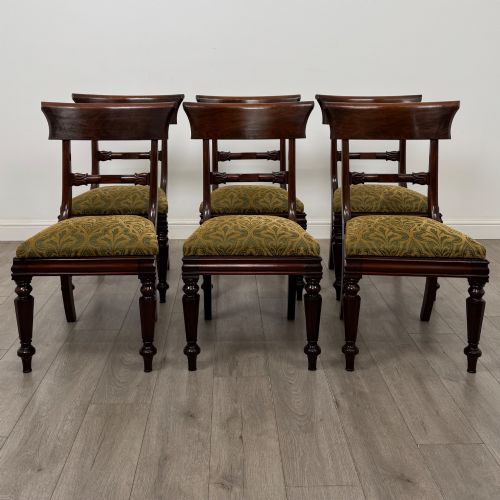
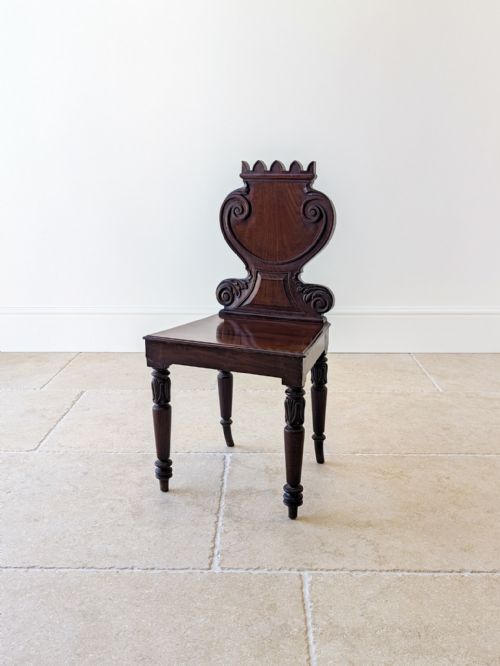
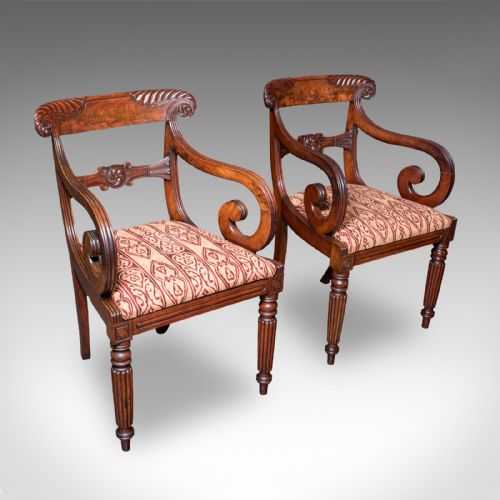
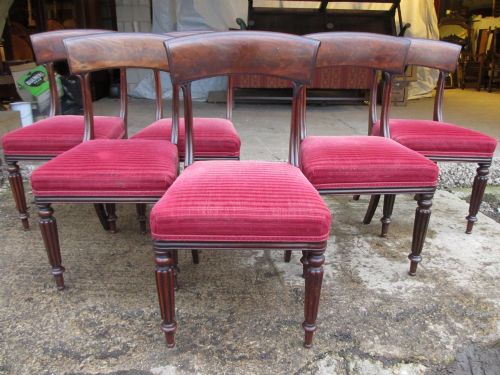
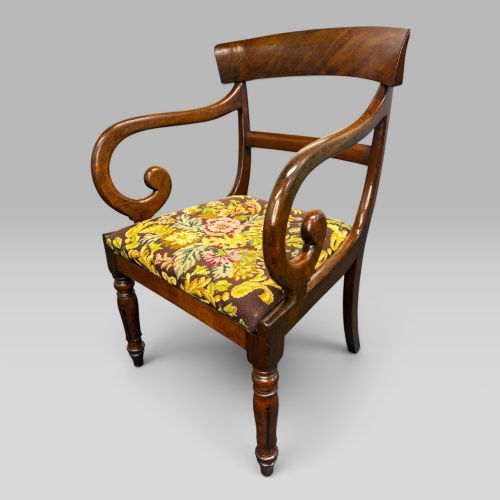
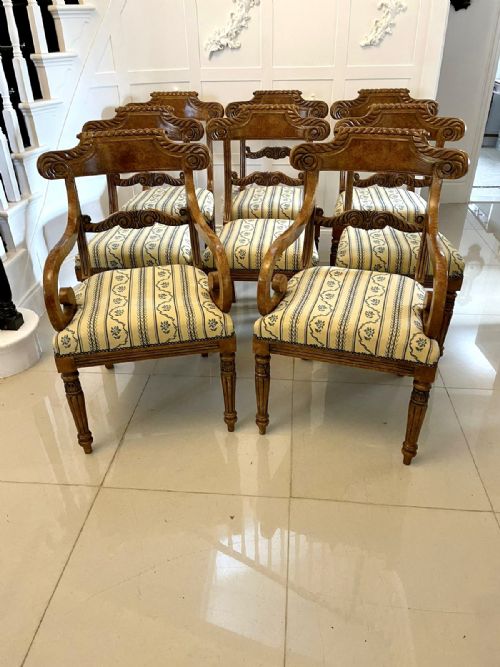
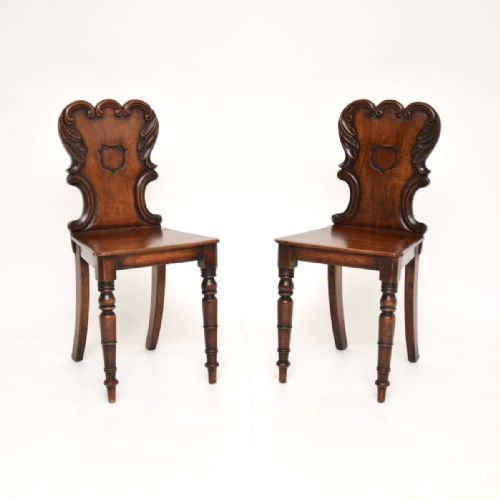
When you search for a William IV wooden seat, you encounter dining chairs, hall chairs, armchairs, benches, and stools spanning the nineteenth century. These forms reflect the heavy, robust proportions and architectural confidence typical of the era.
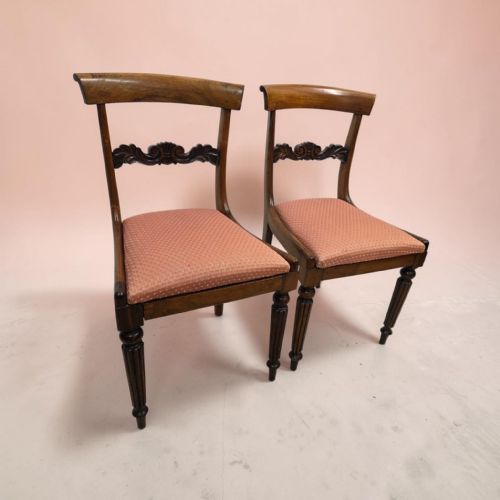
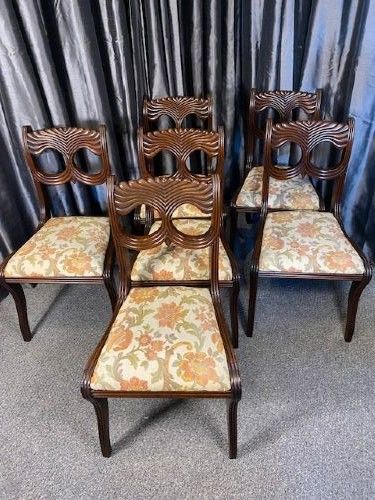
The pieces on this page appear predominantly in rich timbers like mahogany and rosewood, often associated with the William IV and Regency styles. Sets of dining chairs and pairs of hall chairs form the bulk of what you will meet.
Makers and workshops of the period utilised substantial pieces of timber for these seats, frequently pairing solid wood frames with drop-in or upholstered pads in fabric, velvet, or kilim.
Materials and construction
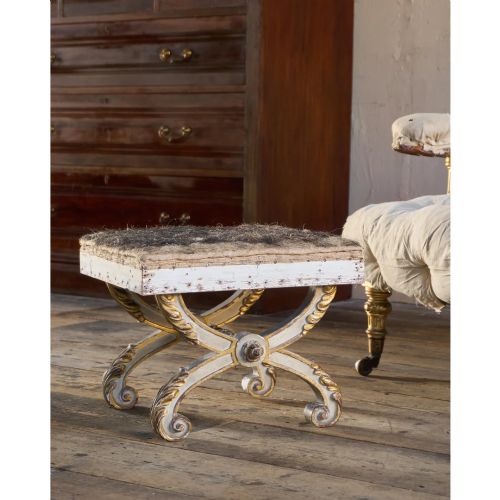
Cabinet makers relied heavily on solid mahogany and rosewood to build the frames for these seats, turning and carving the timber to achieve characteristic scroll backs, bar backs, and curule frames. Oak and simulated rosewood also appear among the listed items.
Joinery techniques included pegged mortise and tenon joints, ensuring the heavy frames could withstand daily use in dining rooms and halls. Brass details and castors were occasionally added to footstools and armchairs.
Upholstered versions incorporate webbing and horsehair stuffing beneath textile or velvet covers, while simpler hall chairs rely entirely on carved wooden seats.
Step into the nineteenth century with a chair designed so strictly for the hallway that comfort took a polite backseat.
Judging the standard
Quality in these seats rests upon the crispness of the carving, the selection of figured timber, and the integrity of the original framing. Finer examples display deeply carved scrolls and well-balanced proportions that separate them from plain vernacular pieces.
The completeness of a set greatly influences the character of dining chairs, as matched groups require uniform timber grain and consistent turning. Single hall chairs derive their appeal from the boldness of the solid wood panel and back.
Miles and Edwards·Gillows
The William IV Wooden Seat Glossary
- Bar back
- A chair back featuring a horizontal cross rail, often carved or reeded, which was widely used in dining chair design during the early nineteenth century.
- Curule
- A stool or chair design modelled on ancient Roman magistrate seats, featuring intersecting curved legs that form an X-shape.
- Hall chair
- A stiff-backed wooden seat designed for an entrance hall, usually featuring a solid timber seat and a carved or painted crest on the back.
- Metamorphic
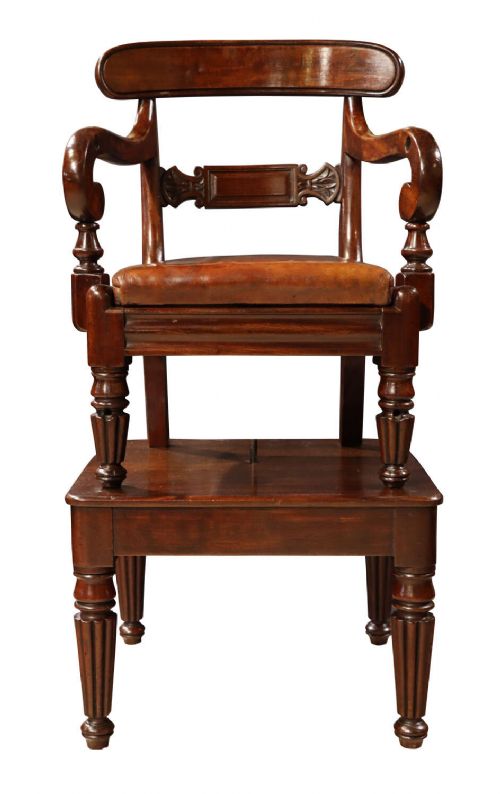
- Furniture constructed to transform from one form of seating into another, such as a child's high chair converting into a low chair.
- Kilim
- A flat-woven textile originating from the Middle East, frequently utilised as a durable upholstery material for nineteenth-century footstools and benches.
William IV Wooden Seat: Frequently Asked Questions
How do I identify a William IV chair?
Look for heavy proportions, carved scroll backs, and robust mahogany or rosewood timbers. These details distinguish the style from lighter eighteenth-century forms.
The use of turned legs and bold architectural lines further points to the distinctive taste of the eighteen-thirties.
Were hall chairs meant for sitting?
Hall chairs were primarily designed for entrance spaces as decorative furniture rather than long periods of comfort. Guests sat on them briefly while waiting to be announced.
Their solid wooden seats and stiff upright backs reflect this functional purpose in a grand nineteenth-century home.
Can I use these dining chairs daily?
These nineteenth-century dining chairs were built from solid timber with sturdy joinery intended for regular use. Modern dining requires checking that the frames remain tight and stable.
Many sets continue to serve everyday dining functions when properly maintained and cared for in a home.