
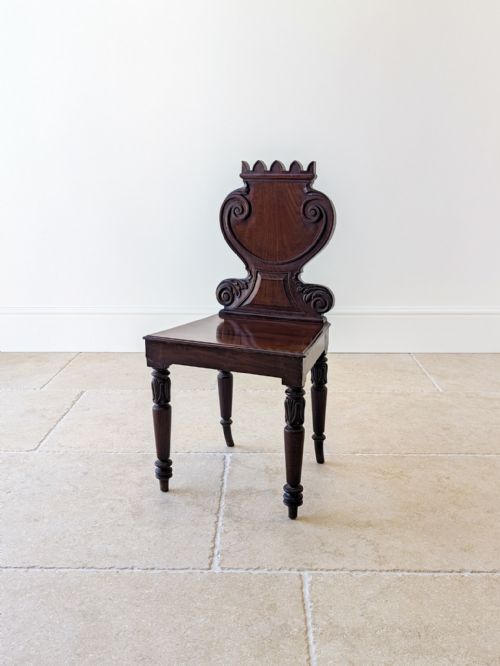
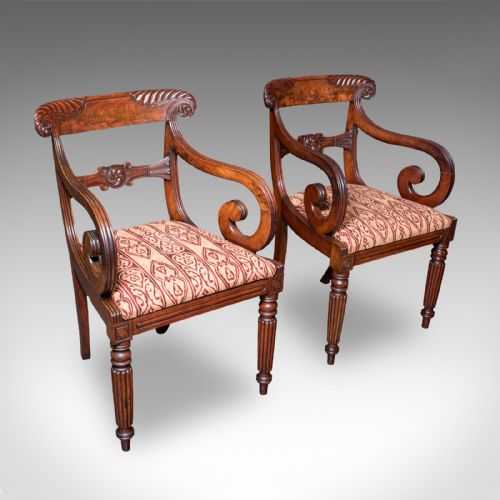
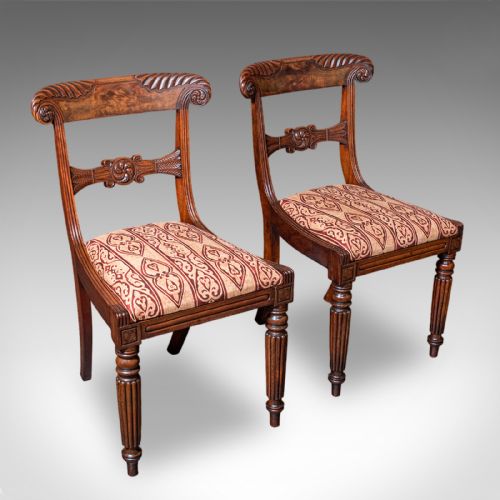
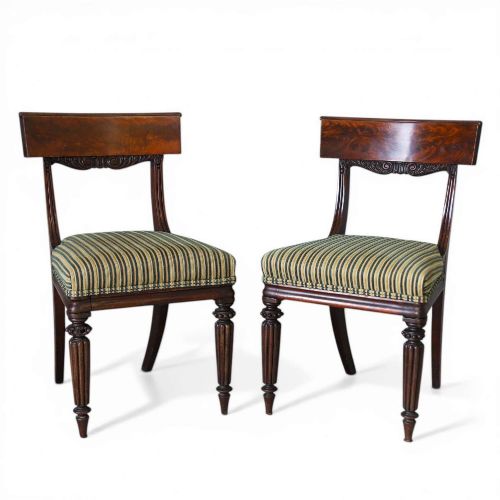
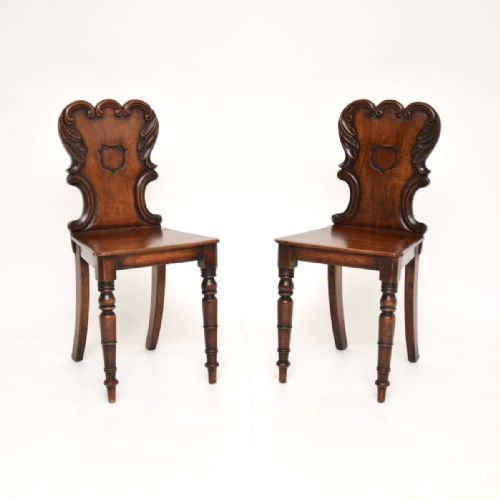


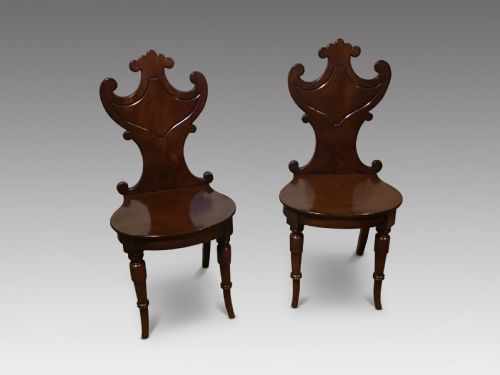


William IV Hall Seat
These William IV hall seats are sturdy reception furniture in mahogany and oak, built to make a formal statement in an entranceway.
William IV Hall Seat
A william iv hall seat generally takes the form of a sturdy wooden hall chair, side chair, armchair or long bench designed for the entrance hall. Most examples on this page date from the nineteenth century, with specific pieces attributed to the Regency and Victorian periods.
Buyers encounter single chairs, pairs and larger scale benches intended for reception rooms and hallways. The form spans traditional seat furniture in mahogany and oak, reflecting the heavy proportions typical of the era.
The selection includes specific variations such as morning room elbow chairs, window seats and benches with roll or rule ends. These pieces served practical purposes in hallways and reception spaces while displaying formal decorative carving.
Materials and construction
Makers constructed these seats primarily using dense timbers such as mahogany and oak, frequently shaping the wood with carved details. Some variants incorporate fabric upholstery and cane to finish the seats.
Carpenters utilised traditional joinery methods to build heavy benches and chairs capable of withstanding regular use in a hallway. The structural approach prioritised solid wooden frames, often enhanced with carved ornamentation on the backrests and legs.
Some benches feature rule ends that invite visitors to rest their hats rather than their elbows.
Judging quality
Quality rests in the crispness of the carved wood and the selection of dense mahogany or oak. Better examples display balanced proportions and refined execution across the back panels and frame.
Attribution to known workshops like Gillows elevates certain pieces, whilst simpler vernacular items rely purely on the integrity of their timber and joinery. The weight of the wood and the stability of the overall construction separate standard functional seating from superior examples.
Gillows
The William IV Hall Seat Glossary
- Hall chair
- A rigid wooden seat traditionally placed in an entrance hallway. These chairs typically feature solid wooden seats and decorative carved backs rather than upholstered comfort.
- Window seat
- A long bench or seat designed to fit within a window recess. They often share similar proportions and decorative details with hall benches.
- Roll end
- A scrolled or rounded termination at the arm or end of a bench. This stylistic feature provides a distinct silhouette on larger seating forms.
- Regency stripe
- A patterned fabric design featuring vertical stripes commonly associated with early nineteenth-century interiors. It frequently appears on upholstered variants of these chairs.
William IV Hall Seat: Frequently Asked Questions
Where were hall seats placed?
These seats stood in entrance halls, corridors and reception rooms to provide brief seating for visitors.
Their robust construction suited high-traffic areas near the main entrance of a home.
How do I identify a William IV seat?
Look for heavy proportions, dark mahogany or oak timbers and classical carved details on the backrest.
Many pieces date between the Regency period and the mid-nineteenth century, showing transitional classical styles.
Are these seats comfortable?
Most hall seats feature solid wooden boards and upright backs designed for posture rather than long lounging.
Certain variants include fabric upholstery or cushions to add softness for reception use.
What is the difference between a hall chair and a bench?
Hall chairs are single-seat items with rigid wooden backs meant for hallways.
Benches and window seats provide longer seating surfaces, occasionally featuring roll ends.