
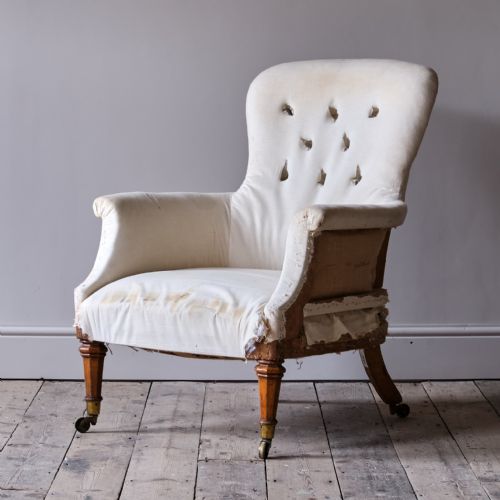

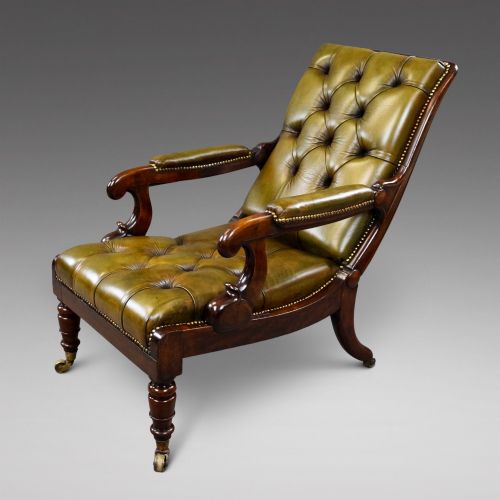
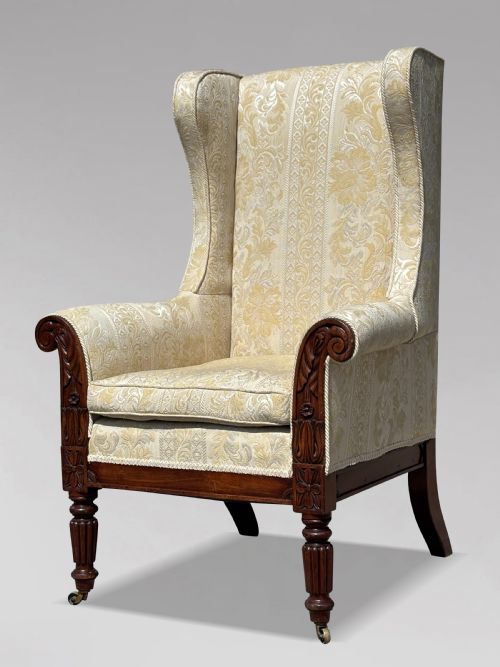


William IV Reading Chair
A william iv reading chair brings mechanical comfort and solid timber heft to a study, built for serious literature and long hours.
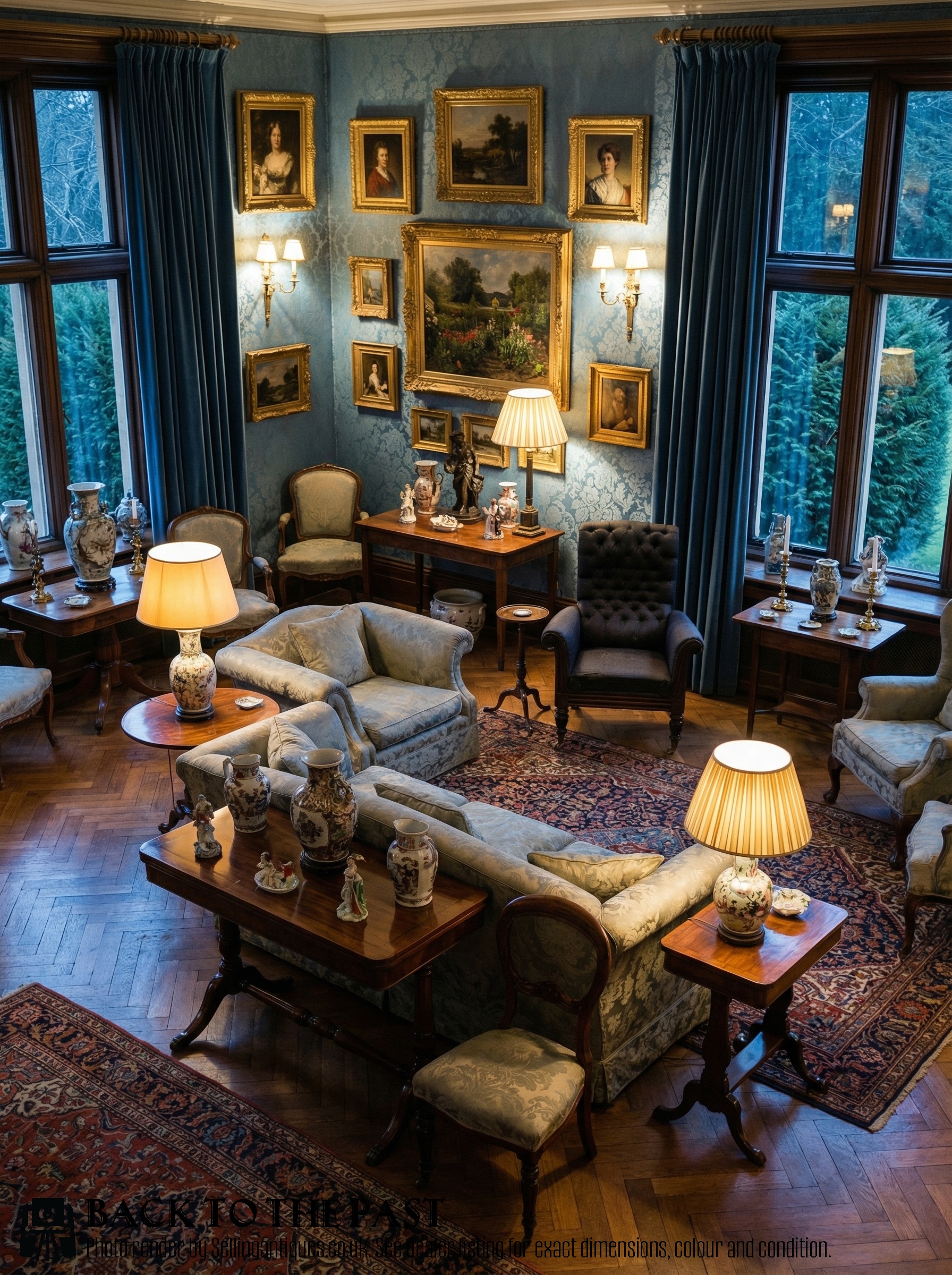
William IV Reading Chair
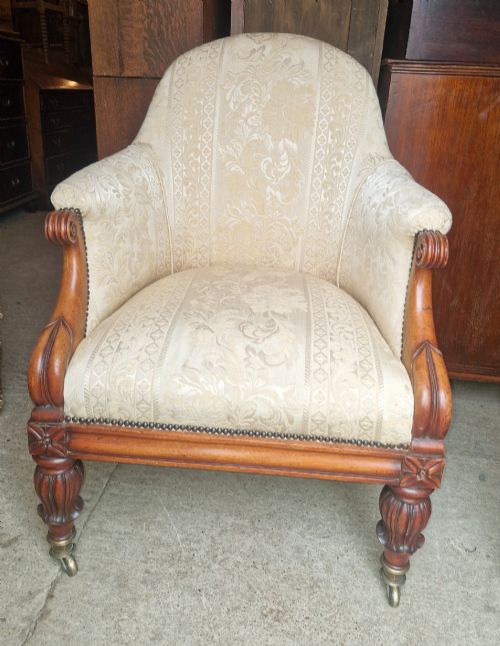
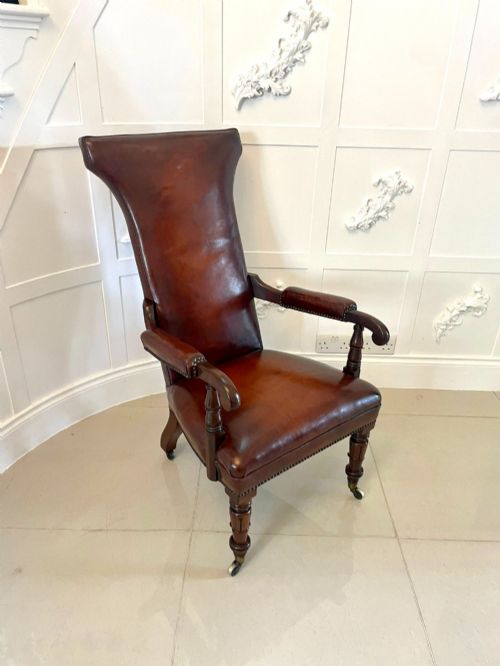
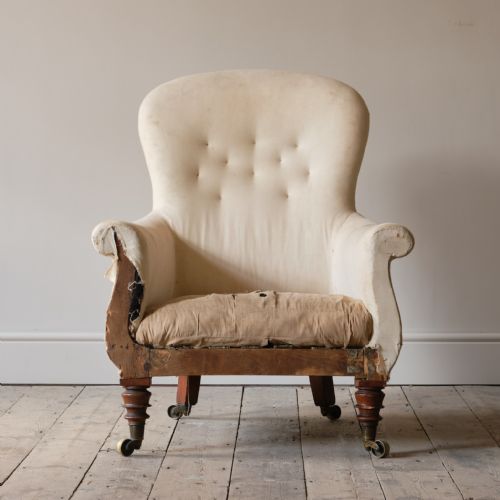
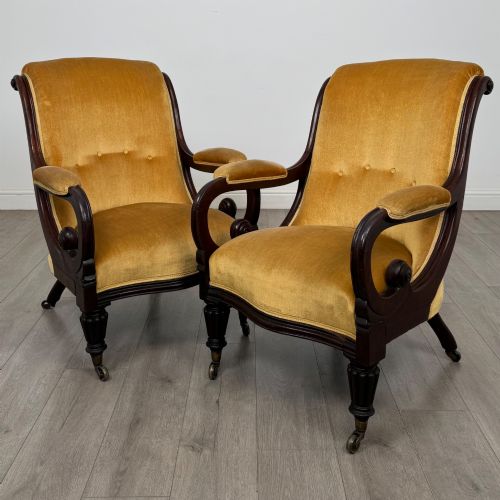
A william iv reading chair is typically a heavy library armchair designed with adjustable mechanisms for comfort and sustained study. These pieces emerge predominantly from the nineteenth century, carrying the stylistic weight of the regency and early victorian periods.
You will most commonly encounter mahogany and rosewood frames on this page, often fitted with original leather upholstery or caned panels. The armchairs often feature writing slopes or reclining actions engineered for the nineteenth century reader.
The selection ranges from country house armchairs to patent reclining designs bearing maker signatures. Most examples adhere closely to the substantial proportion and dark timber tones characteristic of the william iv era.
Materials and construction
Cabinetmakers built the frames primarily from dense mahogany and richly grained rosewood, selecting timbers for strength and deep colour. Brass mechanisms were integrated into reclining reading chairs to operate adjustable backs and book rests.
Upholstery relied on buttoned leather, velvet, calico, or fabric stretched over supportive springing and horsehair stuffing. Bergere caning appeared on open armchairs, woven closely to form resilient seats and backs.
William IV Reading Chair Retail Price Guide 2026
Typical asking prices for william iv reading chair among the pieces listed under this phrase on Sellingantiques today, from the lower quarter to the upper quarter. They describe what is for sale here now, not the wider market.
Listings feature nineteen nineteenth-century mahogany frames alongside select rosewood examples.
Judging quality
Quality rests on the integrity of the timber frame and the sophistication of any mechanical reclining action. Patent mechanisms by known makers distinguish exceptional reading chairs from standard library seating.
The crispness of carved details on the mahogany show frame indicates the hand of a skilled workshop. Original leather upholstery and intact brass fittings elevate a piece above later replacements.
Gillows·Robert Daws·Minter
The William IV Reading Chair Glossary
- Bergere
- A closed armchair with a cane-woven back and sides. This technique lightened the visual weight of heavy nineteenth century frames.
- Reclining chair
- An adjustable seat engineered with mechanical pivots. These allowed readers to alter their posture during extended study.
- Show frame
- The exposed timber surround of an upholstered armchair. Carvers shaped these sections to display the grain of mahogany or rosewood.
- X frame
- A structural base formed by intersecting timber members. This design provided rigid support for library armchairs.
- Patent
- A registered mechanical invention stamped upon metal hardware. Such marks denote documented nineteenth century engineering improvements.
William IV Reading Chair: Frequently Asked Questions
How do I operate a reclining reading chair?
Most nineteenth century reclining mechanisms rely on hidden ratchets or side levers that release the backrest into multiple positions.
Users adjust the angle by shifting their weight while engaging the brass hardware concealed within the timber frame.
What is the difference between library chairs and armchairs?
Library chairs generally incorporate wider arm rests and heavier mahogany or rosewood frames suited to institutional or large domestic study rooms.
Standard armchairs may feature lighter show frames or specific caned panels designed for lighter domestic spaces.
Are caned seats strong enough for daily use?
Bergere caning is surprisingly resilient when tightly woven from split rattan over a solid timber rebate.
Careful owners avoid concentrated kneeling pressure on the cane panels to preserve the historic weave.
How can I date a nineteenth century reading chair?
Dating relies on the transition from regency lightness to the heavier proportions of the william iv and early victorian eras.
Turned legs, carved scroll arms, and patent metal stamps help narrow the decade of manufacture.