
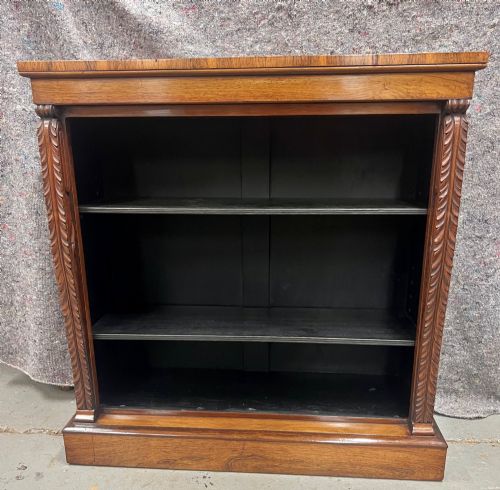


William IV Open Shelving
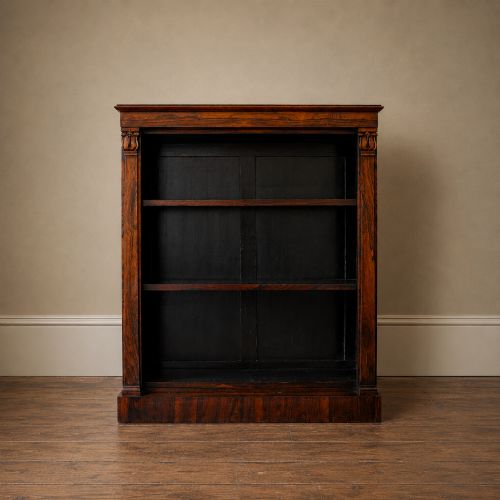
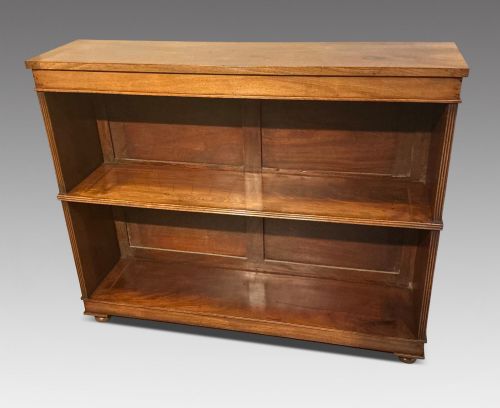
These william iv open shelving pieces bring architectural warmth to a room, offering sturdy open compartments designed for everyday volumes and display.
William IV Open Shelving
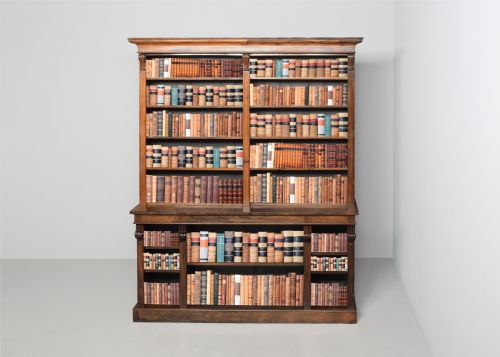
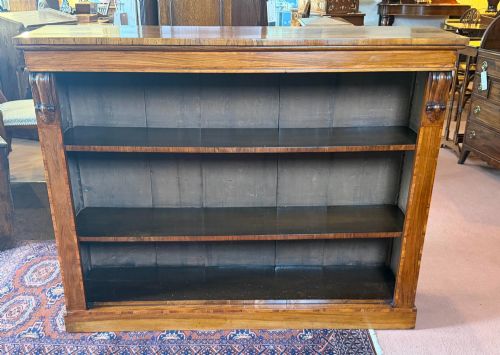
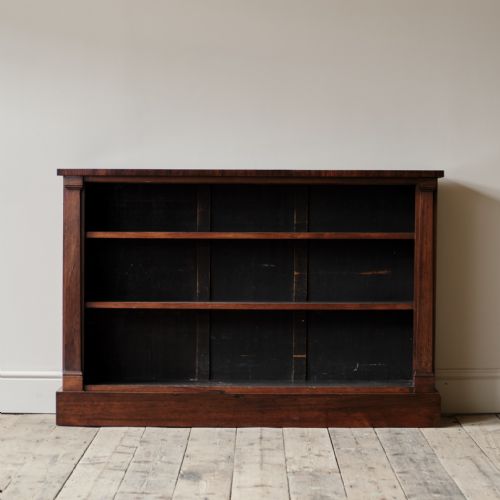
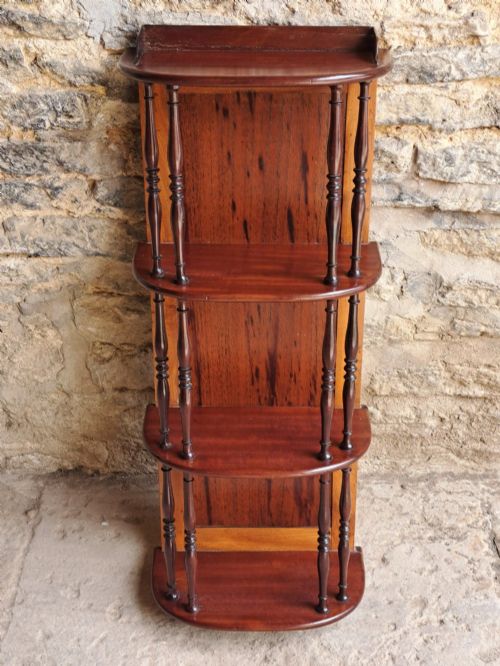
William iv open shelving encompasses bookcases, library bookcases, wall shelves, and tiered whatnots intended for the accessible storage of books and ornamental objects.
Buyers browsing this selection will frequently encounter rosewood and mahogany open bookcases alongside hanging wall shelves and occasional whatnots dating from the early nineteenth century.
The objects span periods from the Regency era through to Victorian times, reflecting the robust cabinet-making styles characteristic of the eighteen-thirties and eighteen-forties.
Materials and Construction
Cabinet makers utilised dense timbers such as mahogany, rosewood, walnut, and oak, often selecting figured veneers like burr walnut or flamed mahogany to emphasise the grain.
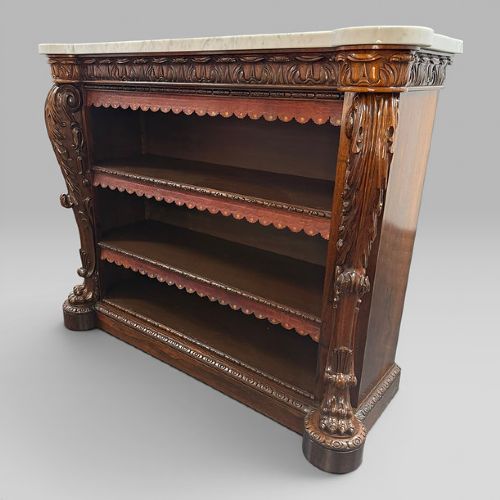
Structural elements frequently incorporated adjustable wooden shelves, brass details, and occasionally inset marble tops, particularly on low library bookcases and side pieces.
A linen rack serves as open shelving, proving that household storage could double as a grand architectural statement.
Judging Quality and Execution
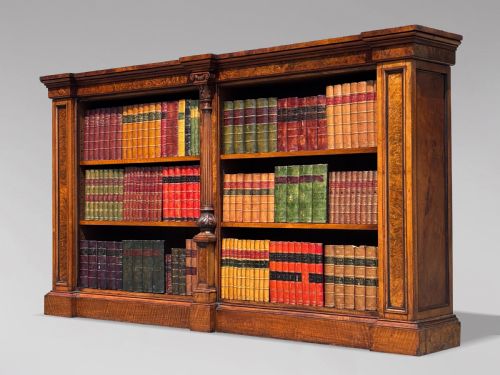
Superior examples distinguish themselves through the choice of timber figure, such as richly grained rosewood or meticulously matched mahogany veneers across wide breakfront proportions.
Refinement in execution appears in the handling of turned columns, carved corbels, and structural stability, separating standard functional storage from finer cabinet work.
Gillows·Richard Bridgens
The William IV Open Shelving Glossary
- Whatnot
- A moveable piece of furniture with several tiers of shelves for small objects and books. It typically stands on slender upright supports.
- Breakfront
- A cabinet or bookcase whose central section projects forward from the flanking wings. This architectural layout adds visual depth to larger library pieces.
- Waterfall bookcase
- A standing set of open shelves where each successive shelf steps back from the one below. The sides often follow a descending curved profile.
- Chiffonier
- A low cabinet featuring cupboards below and sometimes open shelving above. It developed during the nineteenth century as a versatile dining room or parlour piece.
- Corbel
- A projecting bracket of stone, wood, or metal supporting a weight above. In these pieces, carved wooden corbels often flank the upper corners of bookcases.
William IV Open Shelving: Frequently Asked Questions
How are these bookcases cleaned?
Dust surfaces regularly with a dry, soft cloth to prevent particulate accumulation in the wood grain.
Avoid liquid cleaners and silicone polishes, applying traditional wax sparingly only when the timber appears dry.
Can shelves be adjusted easily?
Many library bookcases and larger open units feature movable shelf supports set into traditional vertical ratchets.
Simpler wall shelves and smaller whatnots generally possess fixed tiers determined by their original construction.
Where should a whatnot be placed?
These tiered pieces suit corners or smaller wall spaces where floor area is limited.
Keep them away from direct heat sources and strong sunlight to protect the polished wood surfaces.
What defines the period style?
The furniture combines classical architectural restraint with heavier proportions, reflecting Regency and early Victorian tastes.
Details often include scrolling brackets, plain pilasters, and rich dark timbers rather than excessive ornamentation.