


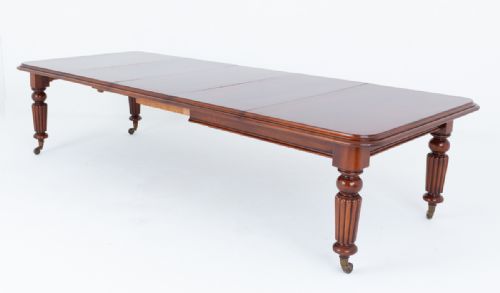


William IV Leaf Table
These william iv leaf table pieces are practical dining and occasional furniture designed for expansion and versatility, providing robust surfaces built to host gatherings.
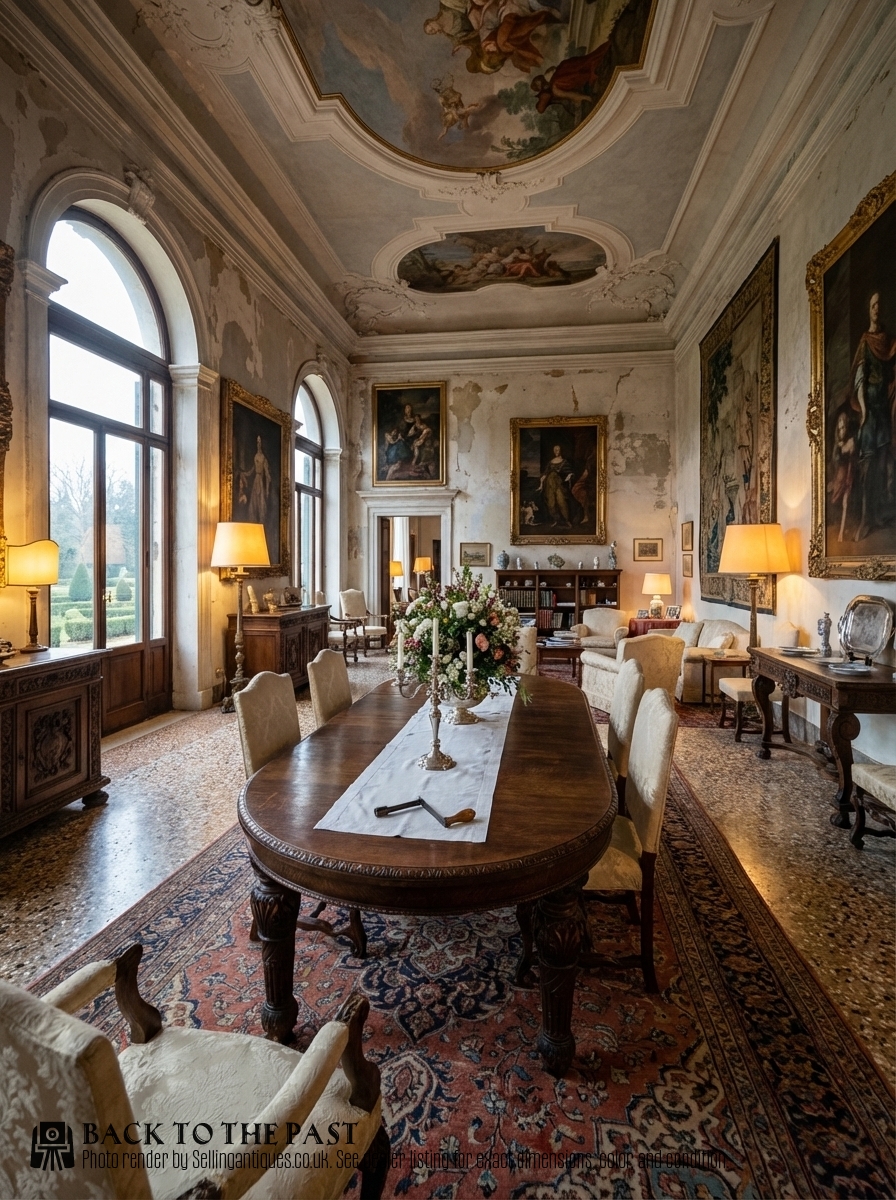
William IV Leaf Table
A william iv leaf table encompasses a variety of dining and occasional formats that feature folding, drop, or removable leaves to alter their surface area. The selection heavily revolves around extending dining tables designed to accommodate large numbers of guests, alongside smaller drop-leaf, pembroke, sofa, and games tables intended for parlour use.
The pieces emerge from the nineteenth century, spanning periods noted as Georgian, Regency, William IV, and early Victorian. Dining versions frequently utilise multiple inserted leaves on winding mechanisms, whilst smaller tables rely on hinged flaps or folding actions to alter their footprint.
How they were made
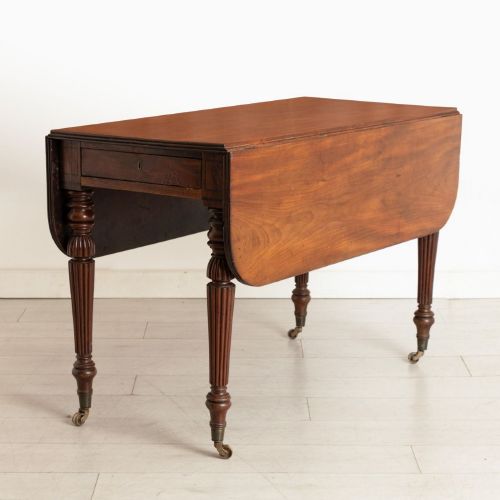
Cabinet makers built these tables predominantly using solid timber and veneers of mahogany, flame mahogany, and rosewood, occasionally incorporating exotic woods like goncalo alves. Structural stability in large dining formats relied on heavy timber frames, robust central pedestals, or robust turned legs, often accented with brass castors to aid movement.
Mechanisms for extending tables required precise engineering to support multiple leaves smoothly without sagging. Smaller occasional and sewing tables utilised clever folding pivots, drop-leaf brackets, and integrated internal compartments for storage.
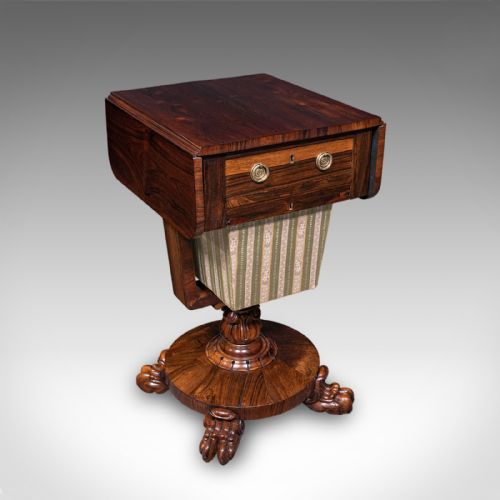
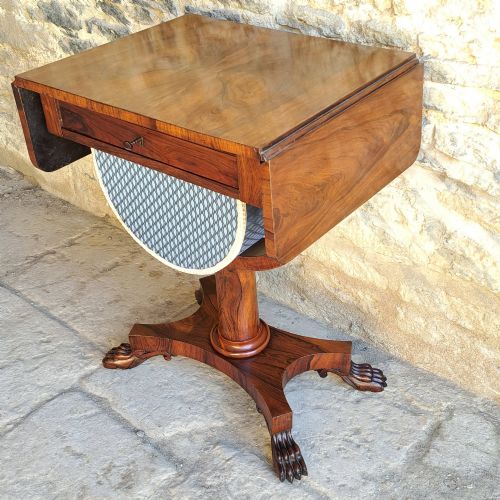
Several ladies hobby tables include built-in silk catch bags for sewing scraps, proving nineteenth-century parlour work required serious textile containment.
What varies in quality
The distinction between standard utility items and finer examples rests upon the selection of timber figures, such as highly figured flame mahogany or rich rosewood grain. Superior execution is evident in the crispness of hand-carved details, such as acanthus leaf feet or reeded pillar supports, rather than plain turned legs.
Engineering integrity dictates long-term value, visible in how seamlessly extension leaves align with the main top and how smoothly internal mechanisms operate. Tables retaining their original matching set of leaves command greater architectural coherence than those altered or supplemented later.
Gillows
The William IV Leaf Table Glossary
- Drop leaf
- A table featuring fixed central panels with hinged flaps on either side that can be raised and supported by swinging brackets.
- Extending table
- A dining table designed to pull apart on a central runner system to receive one or more removable leaves.
- Pembroke table
- A small occasional table characterised by two hinged drop leaves on opposite sides and typically a single drawer.
- Sofa table
- A rectangular occasional table traditionally designed to sit immediately in front of a sofa, featuring drop leaves and twin pedestals or trestle ends.
- Flame mahogany
- A highly decorative wood veneer cut from the fork of the mahogany tree, creating a distinctive flickering flame-like pattern.
William IV Leaf Table: Frequently Asked Questions
How do I operate a leaf table?
Extending dining tables typically utilise a hidden wooden runner mechanism that pulls apart from the centre to create a gap for insertion leaves. Once the leaves are secured in place with brass pins or clips, the winding handle closes the top tightly together.
Smaller drop-leaf and pembroke tables rely on hinged wooden brackets called rule joints or fly brackets. You simply lift the flap until the support swings outward to lock it firmly underneath.
What is flame mahogany?
Flame mahogany is a decorative veneer obtained from the junction where branches meet the main trunk of the tree. This specific cut produces a striking, rippled pattern resembling flickering fire flames.
Cabinet makers during the nineteenth century prized this timber for prominent surfaces like table tops and cabinet fronts. It provides a rich optical depth that standard straight-grained mahogany lacks.
How many people can an extending table seat?
The seating capacity depends entirely on the length of the table when fully populated with its leaves. Standard configurations in this period range from compact formats seating six up to grand banquet tables accommodating ten to twelve diners.
Reviewing the number of original leaves provides a reliable guide to the extended proportions. Extra leaves add significant length, transforming a daily breakfast table into a formal dining centerpiece.
Where were pembroke and sofa tables used?
Pembroke and sofa tables served as versatile occasional furniture in nineteenth-century drawing rooms and parlours. Their drop leaves allowed them to sit compactly against a wall when space was tight and expand quickly for writing, sewing, or serving tea.
Sofa tables were specifically proportioned to stand directly behind or beside upholstered seating. Their drawers and compartments held writing materials, needlework, or games equipment.