
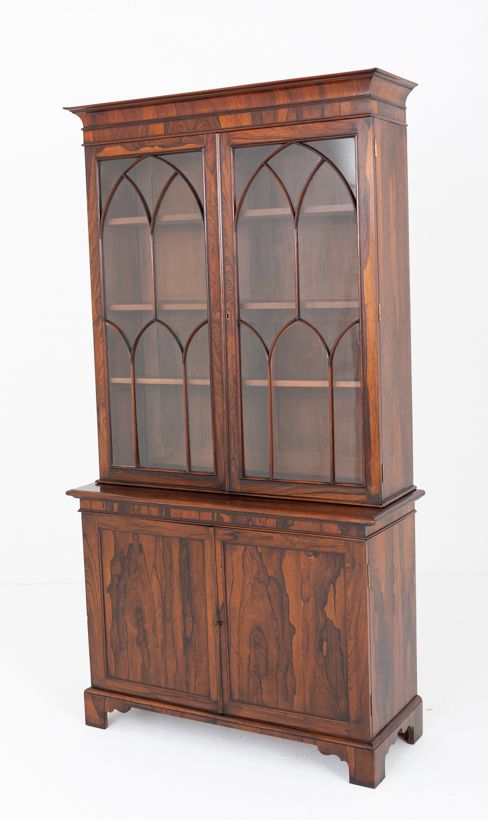
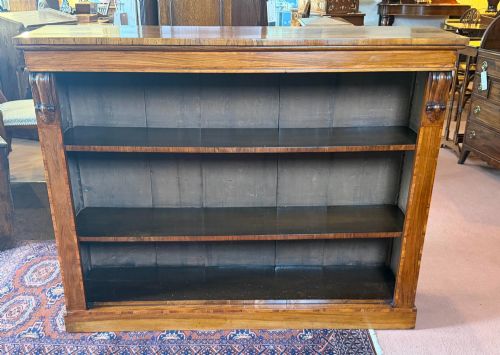
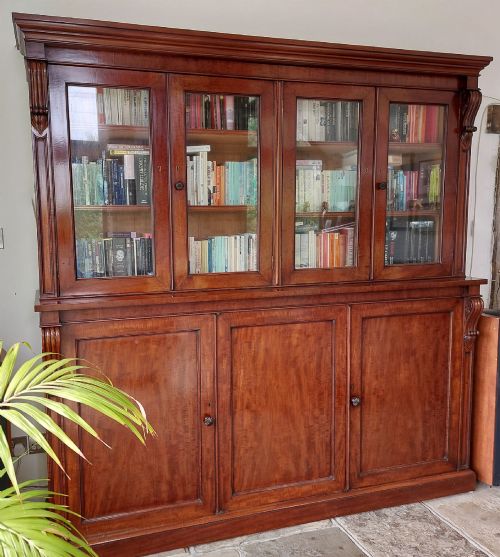
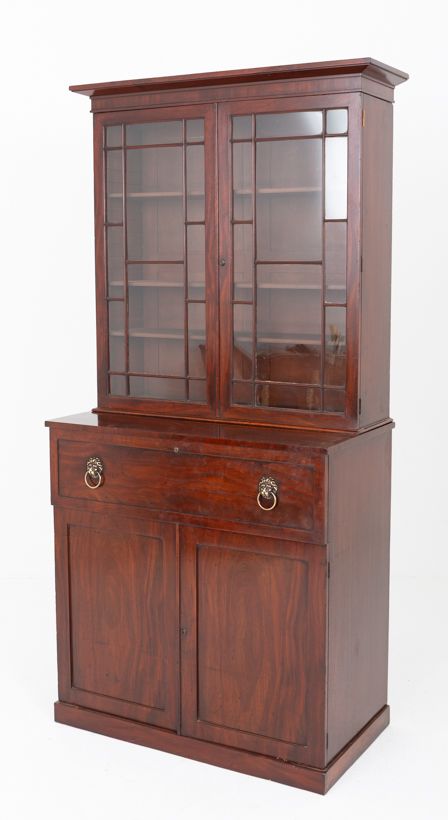




William IV Display Cabinet
A William IV display cabinet offers grand timber and clear glass, housing collections with the heavy elegance of the 1830s.

William IV Display Cabinet
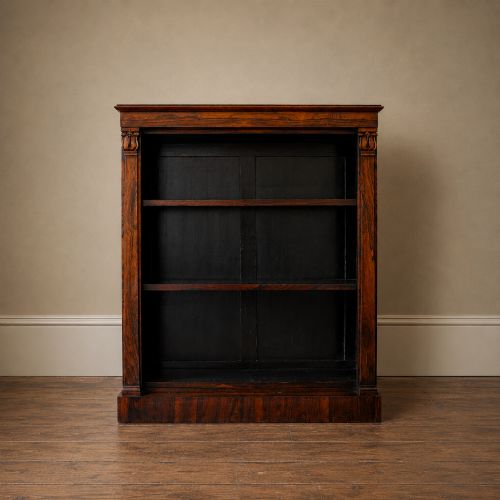
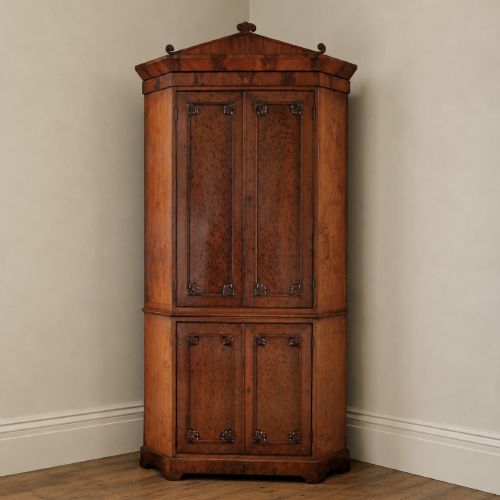
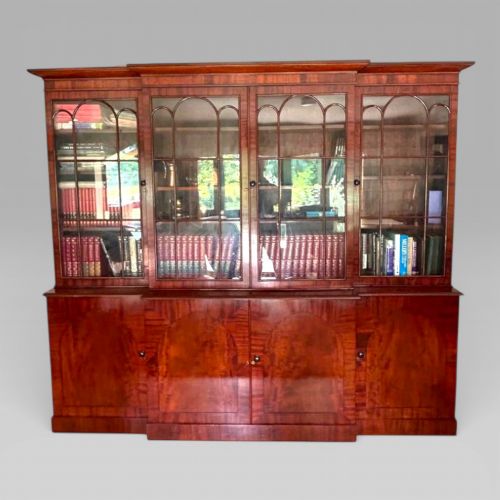
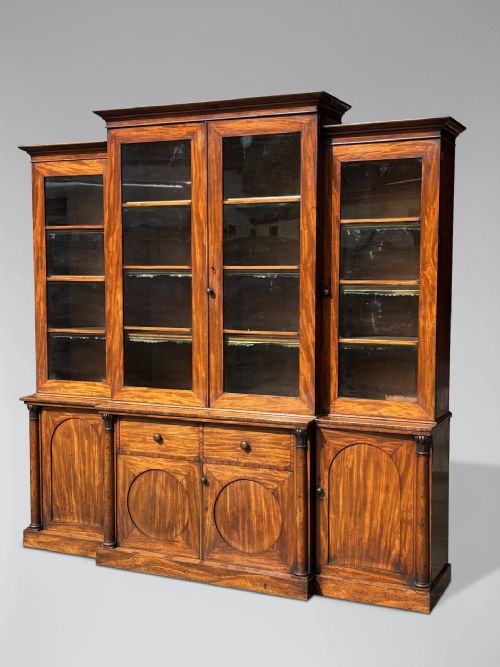
When you search for a William iv display cabinet, you encounter substantial library bookcases, breakfront cabinets, and glazed side pieces that date primarily from the early 19th century. These items were built to showcase prized volumes and porcelain behind secure glass doors, utilising rich hardwoods suited to formal rooms.
The versions you meet most frequently on this page combine architectural cornices with glazed upper sections and lower wooden cupboards. Mahogany, rosewood, and walnut dominate the selection, often arranged in breakfront configurations or fitted with adjustable shelves and integrated writing drawers.
Materials and construction
Cabinetmakers of the period relied heavily on solid and veneered mahogany, rosewood, and walnut, selecting figured timbers like plum pudding mahogany and flame mahogany for prominent surfaces. Brass inlay and hardware provided structural contrast, while glass panes were glazed by hand into wooden framing bars.
Construction techniques prioritised stability for heavy library volumes, incorporating panelled backs, dovetailed drawers, and brass mechanisms such as locking keys. Secondary timbers like oak and pine were utilised for internal shelving and drawer linings beneath the polished exterior woods.
Listings feature woods including mahogany, rosewood, walnut, oak, pine, and goncalo Alves across 19th-century periods.
The measure of quality
Distinction across the range lies in the choice of timber and the ambition of the architectural proportions. Cabinets built with highly figured veneers, such as dense flame mahogany or matched rosewood grains, sit at a higher level than those constructed from plain stock.
James Winter And Sons·Gillows
The William IV Display Cabinet Glossary
- Breakfront
- A piece of furniture whose central section projects forward from the flanking wings. This configuration creates visual depth and allows for varied internal storage.
- Secretaire
- A cabinet incorporating a pull-down drawer front that serves as a writing desk. These fittings often conceal small pigeonholes and subsidiary drawers inside.
- Chiffonier
- A low sideboard or cabinet featuring doors enclosing shelves, popular during the Regency and William IV periods. They frequently stood against dining room or parlour walls.
- Goncalo Alves
- A dense tropical hardwood displaying rich figuring, sometimes utilised for high-status nineteenth-century library furniture. It takes a high polish and resembles rosewood in weight.
- Crenelated
- A decorative architectural moulding resembling battlements along a cornice or edge. This Gothic Revival detail appears on specific bookcases of the era.
William IV Display Cabinet: Frequently Asked Questions
What defines a William IV cabinet?
These cabinets date from the 1830s and combine classical architectural elements with heavy, dark timbers like mahogany and rosewood. They often feature glazed doors, brass mounts, and substantial cornices.
Unlike lighter Georgian pieces, they display a robust presence intended for formal libraries and substantial townhouses.
How do I use a secretaire bookcase?
The top drawer folds downward on hinges to reveal a leather-lined writing surface and an internal arrangement of small drawers and pigeonholes. This allows the cabinet to function as both a bookcase and a compact desk.
When closed, the drop-front locks flush to maintain the clean appearance of the lower cabinet doors.
Are shelves adjustable in these cabinets?
Many library bookcases and open shelving units from this era feature adjustable wooden shelves supported by wooden ratchets or metal pins. This system allowed owners to alter shelf heights for varying sizes of bound volumes.
Original adjustable shelving remains a desirable feature that indicates practical design for working libraries.
Where should I place a display cabinet?
These large timber pieces require stable environmental conditions away from direct sunlight and dramatic temperature fluctuations to protect veneered surfaces and antique glass. Placing them against a secure interior wall in a library or dining room provides the necessary support.
Ensure adequate floor space for doors to swing open fully without striking adjacent furniture.