
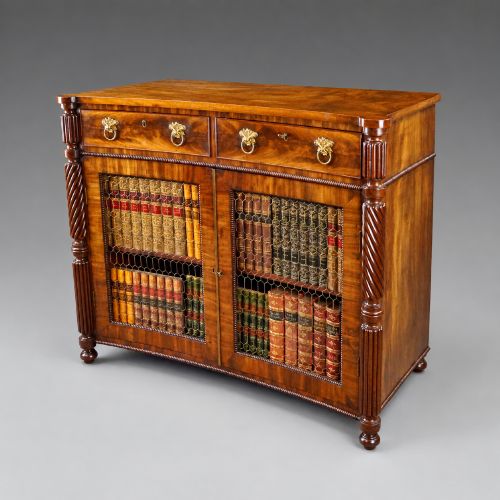
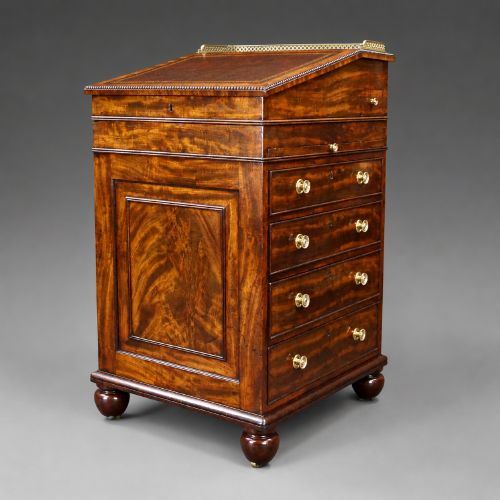
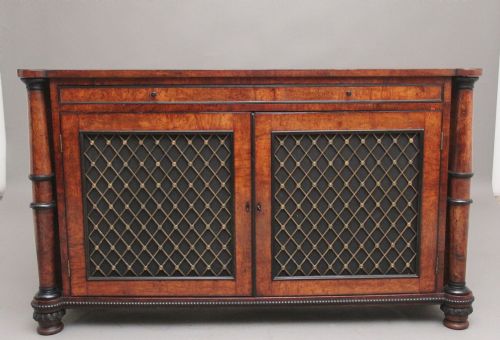
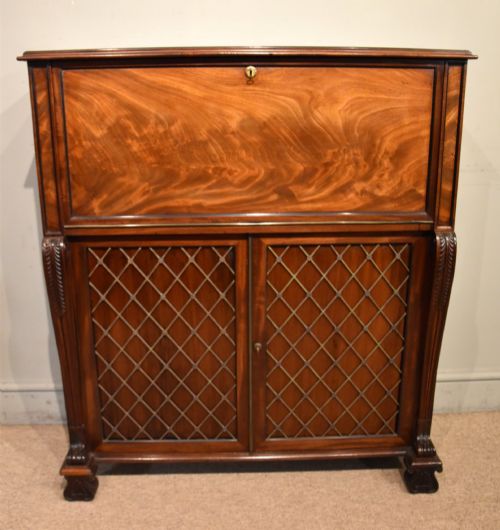


William IV Brass Cabinet
William IV brass cabinet examples combine rich timbers and metal inlay, offering practical display space suited to traditional interiors.
William IV Brass Cabinet
A William IV brass cabinet represents a distinct period of 19th-century cabinet making, drawing on preceding Regency styles while developing heavier, more robust proportions. These pieces primarily take the form of side cabinets, bookcases, and chiffoniers designed for refined domestic storage and display.
The materials recorded in these listings rely heavily on dense tropical hardwoods like mahogany and rosewood, frequently contrasted with inlaid brass stringing or brass grilles. Pieces span various 19th-century production dates, capturing both formal William IV workshop output and adjacent Regency or Victorian transitional designs.
Buyers seeking this phrase encounter formats ranging from low-standing cupboards with marble tops to glazed bookcases and fitted desks. The overarching character remains grounded in architectural symmetry, dark timber grains, and polished metal detailing.
Distinctions in quality and execution
Quality rests upon the selection of timber veneers, such as richly figured flame mahogany or carefully matched rosewood grains, alongside the precision of the brass inlay work. Smoother execution of fine brass stringing and the integration of fitted interiors distinguish higher grade cabinet making.
Structural integrity and the retention of original components, from brass grilles to marble tops and hardware, govern the standing of individual items. The sophistication of secondary woods and the clarity of architectural mouldings further separate workshop output.
Listings feature rosewood, mahogany, flame mahogany, and pollard oak, frequently enhanced with brass inlay and glass.
Gillows·J.C.Loudon
The William IV Brass Cabinet Glossary
- Chiffonier
- A low sideboard or cabinet featuring shelves or enclosed cupboards, frequently topped with a marble slab or a raised mirror back during the 19th century.
- Flame mahogany
- A veneer cut from the fork of the mahogany tree, producing a distinctive flickering flame-like pattern highly prized for cabinet fronts.
- Brass grille
- A metal mesh fitted into cabinet doors instead of wood or glass, allowing ventilation while concealing contents behind a decorative metallic screen.
- Pollard oak
- Timber taken from trees that have been pollarded, resulting in a gnarled, clustered grain full of small knots used for decorative veneer panels.
- Secretaire
- A desk or cabinet containing a pull-down writing drawer fitted with small pigeonholes and subsidiary drawers.
William IV Brass Cabinet: Frequently Asked Questions
How do I identify a William IV cabinet?
William IV pieces are defined by heavy proportions, dark timbers like rosewood and mahogany, and restrained classical ornament. They bridge the gap between Regency elegance and Victorian solidity.
Look for architectural elements such as carved scroll corbels, recessed panels, and contrasting brass inlay or grilles that characterise the period's output.
What is a chiffonier used for?
A chiffonier served as a compact storage unit in dining rooms and drawing rooms for glassware, linens, or books. Their low profile made them suitable for placement beneath windows or against side walls.
Many examples include enclosed cupboards below and display shelving or marble surfaces above, combining utility with formal appearance.
Where was brass used on these cabinets?
Brass appears primarily as fine stringing inlaid directly into rosewood or mahogany surfaces, outlining panels and drawers. It is also found formed into woven grilles on cupboard doors.
These metal elements provide bright linear contrast against the dark, polished grain of the surrounding hardwood timbers.
Are these pieces suitable for modern homes?
These cabinets offer practical enclosed storage and display surfaces that function well in contemporary hallways, living rooms, and studies. Their modest footprints suit various spatial layouts.
Pairing dark timber cabinets with neutral walls allows the natural grain and brass details to stand out clearly within a room.