




William IV Banquet Table
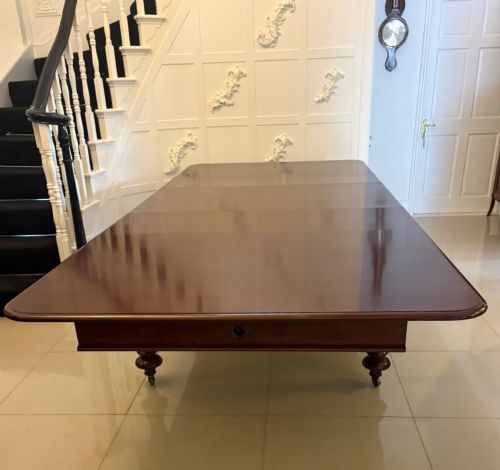
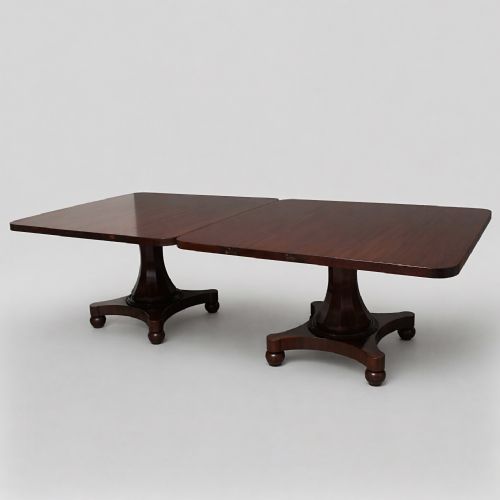
A william iv banquet table brings generous proportions and robust timbers to grand dining rooms.
William IV Banquet Table
A william iv banquet table is a substantial dining piece designed to seat large numbers of guests comfortably for formal meals. These tables belong primarily to the nineteenth century, bridging late regency tastes and early victorian production.
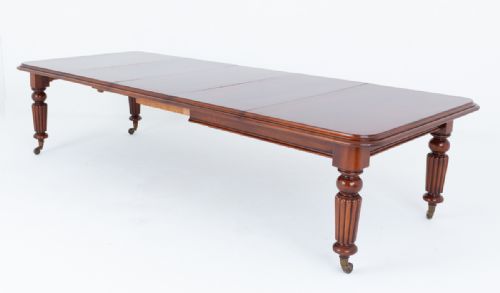
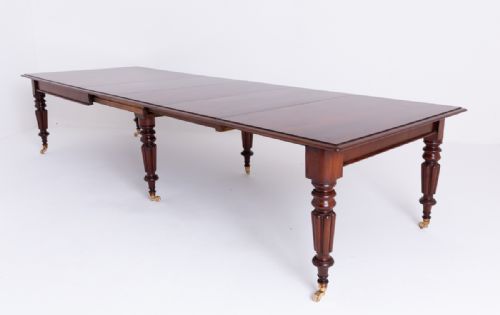
Buyers inspecting this selection encounter extendable formats equipped with multiple leaves to accommodate large gatherings. Mahogany dominates the examples present, appearing in figured, flame, and plum pudding grain variations alongside occasional oak construction.
Materials and construction
Cabinet makers utilised dense timbers such as mahogany and oak to build frames capable of supporting heavy extending mechanisms and multiple removable leaves. These woods were selected for structural stability and rich natural grain patterns.
Brass fittings frequently appear on castors and mechanical slides, allowing heavy dining sections to move smoothly apart for leaf insertion. Joinery techniques ensured that extended tables maintained balance and rigidity across significant lengths.
Makers occasionally incorporated plum pudding mahogany into tabletops, creating natural spots that resemble a traditional British dessert.
Distinctions in quality
Quality rests in the selection of timber veneers, where flame and plum pudding figures display superior visual depth compared to plain stock. The presence of original matching leaves and functional winding mechanisms elevates a piece considerably.
Attribution to notable workshops like Gillows indicates higher tier craftsmanship in structural joinery and hardware. The precision of the extension mechanism and the stability of the legs when fully loaded mark the standard of execution.
Gillows of Lancaster
The William IV Banquet Table Glossary
- Extending dining table
- A dining table designed with a central gap and removable leaves to increase overall seating capacity. This mechanism allows the surface to expand for large dinner parties.
- Flame mahogany
- A decorative veneer cut from timber fork joints that produces undulating flame patterns. Cabinet makers prized this figure for principal table surfaces.
- Leaf
- A portable board inserted into an extending table to lengthen the top. Sets often include multiple leaves stored separately when not in use.
- Regency style
- A design period spanning the early nineteenth century characterised by classical restraint and substantial proportions. Tables from this era often show heavy turned legs.
William IV Banquet Table: Frequently Asked Questions
How many people do these tables seat?
These large dining tables typically accommodate anywhere from eight up to fifteen diners depending on the number of inserted leaves. Lengths extend significantly to suit expansive dining rooms.
Buyers should measure their available floor space with the maximum number of leaves deployed to ensure comfortable chair clearance around the perimeter.
Are the leaves original to the table?
Many surviving tables retain their matching original leaves made from the same timber stock as the main top. These boards match the fading and grain pattern precisely.
Replacement leaves occasionally appear in older pieces, which makers constructed to match the height and wood species of the primary sections.
How do the extension mechanisms operate?
Nineteenth century tables utilise wooden runners and brass mechanisms that slide apart to create a gap for the leaves. Winding handles often operate screw devices to close the gap securely.
Proper alignment pins ensure the leaves lock flush into the surface without sagging under weight.
Where should I place a large banquet table?
These substantial pieces require a dedicated dining room with ample clearance for movement around all sides when fully extended. Placing them away from direct heat sources protects the timber and veneer.
Positioning the grain to run lengthwise enhances the visual impact under natural light from windows.