


William Greaves Painting
A william greaves painting captures Northern landscapes and pastoral scenes through the lens of late nineteenth and early twentieth century British art.
William Greaves Painting
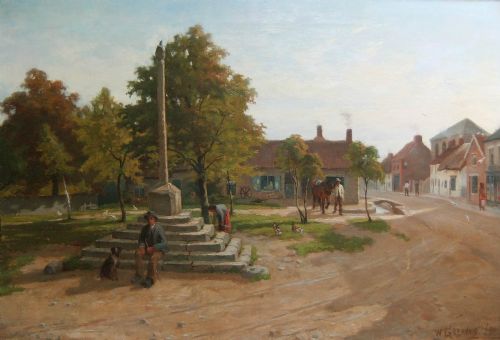
A william greaves painting typically portrays identifiable Yorkshire views, rural villages, and coastal settings such as East Keswick, Wharfedale, and Filey. The works span from the 1880s through the 1930s, encompassing both oil paintings on canvas or board and pastel or watercolour drawings on paper.
The most common formats on this page are landscape oil paintings depicting local rivers, churches, and country lanes. These pieces reflect Victorian realism and British impressionism, focusing on regional topography and seasonal changes.
Collectors also encounter still life studies featuring flowers in vases alongside coastal scenes from locations beyond Yorkshire, including Wales and Nottinghamshire. The compositions range from intimate pastoral sketches to wider pastoral vistas with figures and livestock.
Materials and Technique
The works rely primarily on oil paint applied to canvas, wood, or board, capturing the textures of rural terrain and foliage. Pastels and watercolours on paper provide a lighter medium for swift landscape sketches.
Artists of this period utilised traditional stretching and mounting techniques, often housing the finished canvases in decorative gilt period frames that complement the naturalistic palette.
A solitary cat might not be painted, but ducks, hens, and cattle frequently wander into the fields.
Distinctions in Quality and Execution
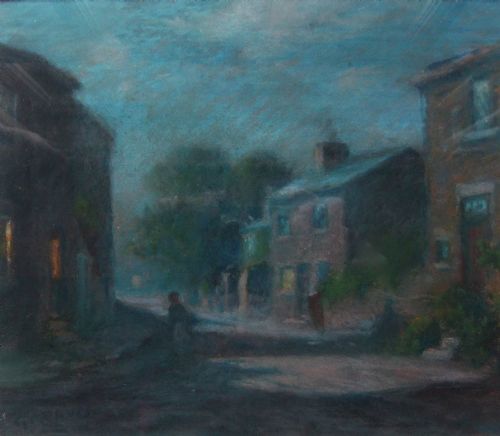
Quality in these regional landscapes depends upon the handling of light and atmospheric conditions, particularly in winter scenes or evening views where capturing the fading natural light dictates the success of the composition.
Works that incorporate specific narrative details such as figures, cattle, or architectural elements like mills and bridges often demonstrate a more developed spatial depth than simpler topographical views.
William Greaves
The William Greaves Painting Glossary
- British Impressionism
- A painting style influenced by the French movement but characterised by a more subdued palette suited to British weather and light.
- Pastoral
- An artistic genre that romanticises rural life, agriculture, and pastoral landscapes.
- Gilt Frame
- A wooden picture frame covered with a thin layer of gold leaf or gold paint, common in Victorian presentation.
William Greaves Painting: Frequently Asked Questions
What locations appear in these paintings?
The works frequently depict Yorkshire locations including East Keswick, Wharfedale, Leeds, and Knaresborough alongside coastal spots like Filey and Whitby.
Other regional settings include parts of Nottinghamshire, Westmorland, and Wales.
What mediums were used by the artist?
Oil paint on canvas, board, and wood forms the majority of the surviving output.
Watercolours and pastels on paper also appear for smaller drawings and studies.
Which periods do these artworks represent?
The pieces date from the late nineteenth century through the Edwardian era and into the early 1930s.
This timeframe bridges Victorian realism and early twentieth century British impressionist styles.
How should these paintings be framed?
Many examples are found in their original decorative gilt frames which reflect the period aesthetic.
Ensuring proper glass protection for pastel and watercolour works on paper is essential for their preservation.