


Yorkshire Rural Artwork
Yorkshire rural artwork captures northern agricultural life and northern topography through oils and watercolours spanning the Victorian era to mid-century.
Yorkshire Rural Artwork
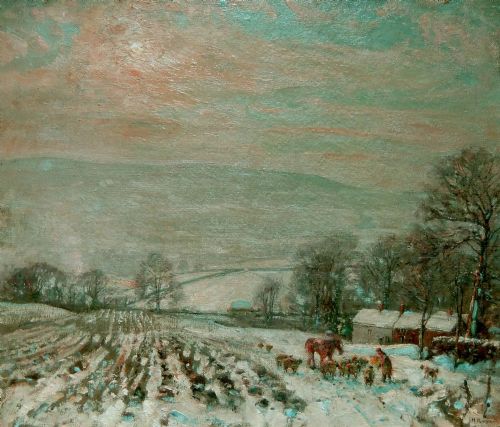
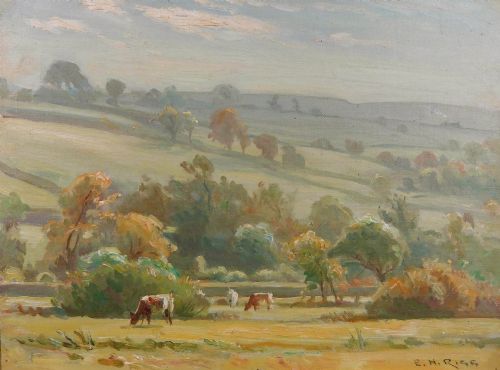
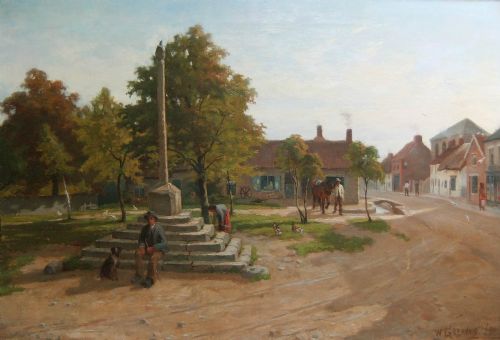
When you examine yorkshire rural artwork, you are looking at oil paintings and watercolours depicting Dales farmsteads, moorland paths, haymaking scenes, and village views across northern counties. The material gathered here relies heavily on oils on canvas or board, alongside delicate watercolour pigments on paper, capturing local settings from Bolton Abbey to Wharfedale.
The version you are most likely to meet on this page is an early twentieth century oil painting or a watercolour from the Edwardian period onward. These pieces document specific Yorkshire locations, naming local farmsteads, rivers, and winter pastures directly in their titles.
The subjects focus on the daily routines of the countryside, recording ploughing teams, sheep grazing on moorland, and agricultural harvesting. Painters working within this regional school prioritized direct observation of northern light over grand historical themes.
How They Were Made
The works utilise oil paint applied to stretched canvas, wooden panels, or rigid boards, allowing artists to build rich impasto and textured surfaces. Canvas provides a flexible support that accommodates larger compositions of dales and farmyards, while panels suit smaller panel studies.
Watercolour pigment on paper forms the other major technical foundation, executed with fluid washes and precise brushwork to capture atmospheric weather across open terrain. Artists combined these mediums with traditional framing methods appropriate to early twentieth century British schools.
Sheep appear frequently enough across these Dales pastures that local wool practically floats off the canvas.
What Varies in Quality
The strength of yorkshire rural artwork rests on the artist's handling of local light, atmospheric depth, and the specific character of northern topography. Works that demonstrate confident brushwork and accurate tonal relationships set themselves apart from routine topographical recording.
Compositional balance and the vitality of the painted surface dictate the upper tier of these regional paintings. Stronger examples capture the tangible weight of winter feeding or the specific textures of haymaking with assured paint handling.
Herbert Royle·Ernest Higgins Rigg·William Greaves·Fred Lawson·Owen Bowen·Frederick W Jackson
The Yorkshire Rural Artwork Glossary
- Oil painting
- A work created using pigments bound in a drying oil medium, typically applied to canvas, panel, or board. This versatile medium allows for both smooth blending and thick impasto texture.
- Watercolour
- A painting method where water-soluble pigments are suspended in a water-based solution, usually applied to paper. It relies on the white of the paper showing through transparent washes to create luminosity.
- British Impressionism
- A late nineteenth and early twentieth century painting movement influenced by French techniques, focusing on natural light, outdoor settings, and everyday rural scenes. Practitioners prioritized loose brushwork over academic finish.
- Panel
- A rigid support for painting, often made of wood or board, utilised by artists working on a smaller scale. Panels provide a firm resistance against the brush compared to flexible woven canvas.
Yorkshire Rural Artwork: Frequently Asked Questions
What periods do these paintings cover?
The collection spans from the late nineteenth century through the Edwardian era and into the mid-century modern period. Most pieces date from the early decades of the twentieth century.
This timeframe captures the transition of British art through Victorian realism toward early twentieth century regional schools and impressionist techniques.
Where were these scenes painted?
The compositions focus specifically on Yorkshire locations, including Wharfedale, Swaledale, Wensleydale, and local farmsteads near places like Hinderwell and Nesfield. Artists recorded actual rural topography and identifiable northern landmarks.
Titles frequently reference specific valleys, villages, and farm properties, grounding each artwork in a precise geographical context.
How should I display a watercolour?
Watercolours on paper require protection from direct sunlight to prevent the pigments and paper support from fading over time. Professional conservation framing with acid-free mounts ensures the paper remains safe.
Positioning these works away from strong light sources preserves the delicate washes characteristic of early twentieth century paper pieces.
How do oils differ from watercolours here?
Oil paintings utilise heavy pigments on canvas, panel, or board, offering robust surfaces and textured brushwork suited to deep northern landscapes. Watercolours employ transparent pigment washes on paper for lighter atmospheric effects.
Both mediums were utilised concurrently by regional artists to capture the shifting weather and topography of the Dales.